
5s
+1
Submission successful!

|
| Brand Name: | DLX |
| Model Number: | Nimonic 80A |
| MOQ: | 5kg |
| Payment Terms: | L/C,D/A,D/P,T/T,VTB |
| Supply Ability: | 1200 tons per month |
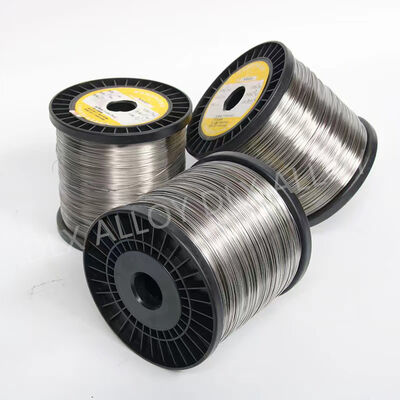
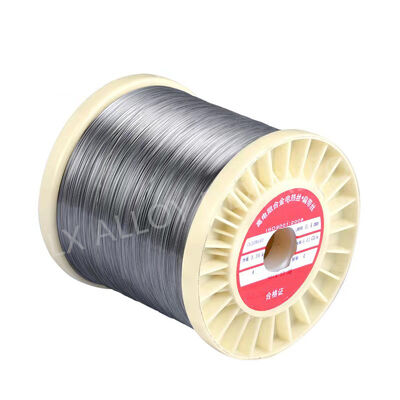
Engineered for extreme duty, this 1.0mm Nimonic 80A precipitation-hardened nickel alloy spring wire delivers unmatched relaxation resistance and mechanical stability in continuous operating environments up to 815°C (1500°F).

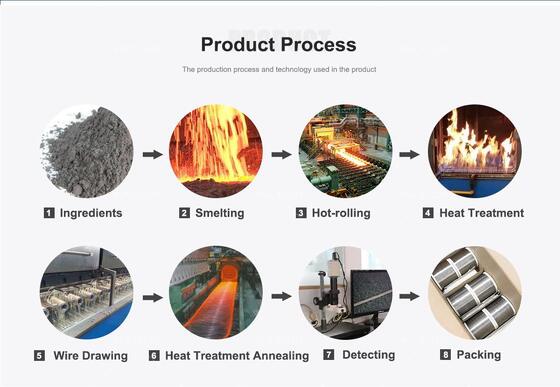
When conventional stainless steel and standard alloy wires succumb to thermal relaxation and creep deformation, high temperature nickel alloy spring wire Nimonic 80A 1.0mm provides the necessary elastic modulus stability and structural integrity. Manufactured through advanced Vacuum Induction Melting (VIM) followed by Electroslag Remelting (ESR), the material achieves ultra-low non-metallic inclusion levels, preventing subsurface fatigue initiation during high-frequency cyclic loading.
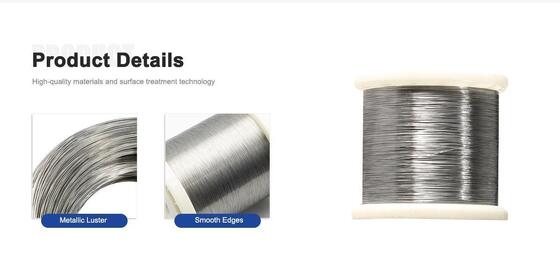
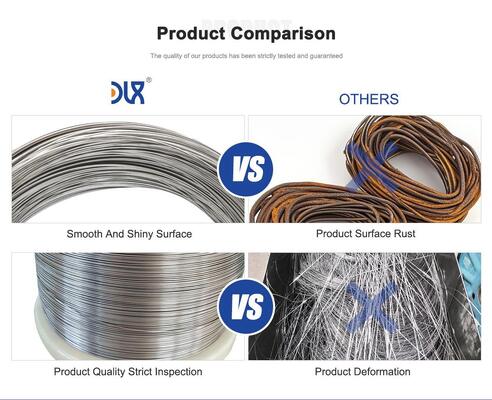
Our 1.0mm Nimonic 80A wire undergoes multi-pass cold drawing with intermediate bright annealing and diamond die calibration, ensuring a flawless, scratch-free surface finish and uniform spring-back characteristics during automated high-speed coiling. Whether supplied in cold-drawn spring temper or solution-treated condition ready for post-coiling precipitation hardening, this industrial spring wire ensures predictable spring rate performance throughout extended service campaigns.
| Element | Content Range (%) | Functional Role |
|---|---|---|
| Nickel (Ni) | Balance (~70.0 - 75.0) | Austenitic matrix, high-temperature corrosion resistance |
| Chromium (Cr) | 18.00 - 21.00 | Surface passivation, oxidation and sulfidation resistance |
| Titanium (Ti) | 1.80 - 2.70 | Primary gamma prime (γ′) precipitation hardener |
| Aluminum (Al) | 1.00 - 1.80 | Co-precipitation hardener, enhances elevated strength |
| Iron (Fe) | ≤ 3.00 | Residual control for thermal stability |
| Cobalt (Co) | ≤ 2.00 | Solid solution matrix reinforcement |
| Carbon (C) | ≤ 0.10 | Grain boundary carbide stabilization |
| Silicon (Si) / Manganese (Mn) | ≤ 1.00 each | Deoxidation and melt refining control |
| Trace (B, Zr) | Controlled ppm | Grain boundary ductility & creep rupture enhancement |
| Property Parameter | Metric Value | Imperial / Notes |
|---|---|---|
| Density | 8.19 g/cm³ | 0.296 lb/in³ |
| Melting Range | 1320°C - 1365°C | 2410°F - 2490°F |
| Modulus of Elasticity (Tension, 20°C) | ~222 GPa | 32.2 × 10⁶ psi |
| Modulus of Rigidity (Shear Modulus, G, 20°C) | ~85 GPa | 12.3 × 10⁶ psi |
| Torsional Modulus (at 600°C) | ~68 GPa | Elevated temperature performance |
| Curie Temperature | Below -100°C | Non-magnetic in all operational conditions |
| Electrical Resistivity (20°C) | ~1.24 μΩ·m | 746 Ω·circ mil/ft |
| Specification Item | Value / Standard Range | Technical Remarks |
|---|---|---|
| Nominal Diameter | 1.0 mm | Custom gauges available from 0.10 mm to 8.0 mm |
| Diameter Tolerance | ±0.008 mm | Class A ultra-tight precision fine wire grade |
| Ovality (Out-of-Roundness) | ≤0.004 mm | Controlled within 50% of total diameter tolerance |
| Cold Drawn (Spring Temper) Tensile Strength | 1150 - 1450 MPa | As-drawn condition for automatic CNC spring coiling |
| Precipitation Aged Tensile Strength | 1350 - 1680 MPa | Maximum strength achieved post-aging heat treatment |
| Aged Hardness | 36 - 44 HRC (340 - 410 HB) | High fatigue & plastic deformation resistance |
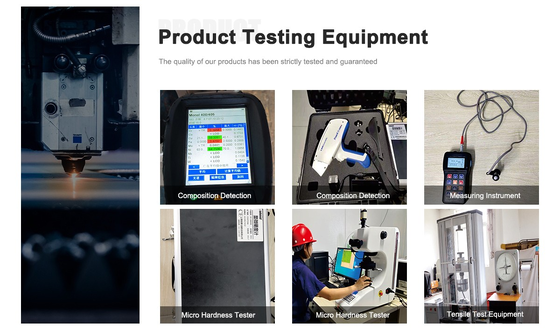
| Surface Finish & Inspection | Bright polished, micro-shaved | 100% eddy current inspected (Defect depth <1% diameter) |
Unlike standard spring materials that lose load-bearing capability above 400°C, this high temperature nickel alloy spring wire maintains over 80% of its room-temperature yield strength at continuous temperatures up to 815°C (1500°F). The optimized titanium-to-aluminum ratio prevents grain boundary sliding under continuous high static and dynamic tension.
Through controlled reduction ratios and specialized stress-relief protocols, our 1.0mm Nimonic 80A wire demonstrates minimal load loss (<5% after 1,000 hours at 600°C under typical operating stress). It provides long-term dimensional repeatability for compression, extension, and torsion springs.
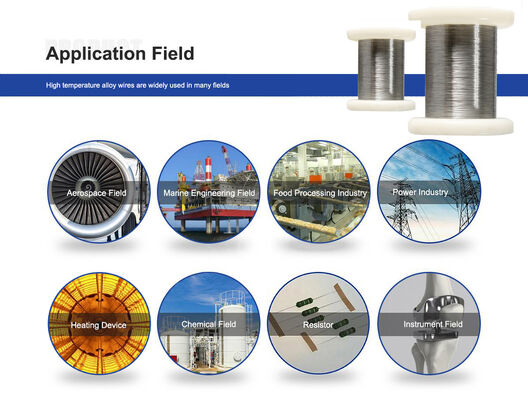
The high chromium content (18-21%) forms a dense, self-healing chromia (Cr2O3) scale upon exposure to elevated temperatures. It resists hot gas degradation, exhaust fuel combustion byproducts, and industrial oxidizing atmospheres without spalling.
Homogeneous grain structure (ASTM 6-8 micro-grain equivalent achieved via advanced thermal processing) guarantees consistent deformation during CNC spring winding. Winding breakage and pitch variance are effectively eliminated.
A: For cold-drawn spring temper wire, a direct single-stage precipitation aging treatment is commonly applied after coiling: heat at 700°C ±10°C (1292°F) for 16 hours, followed by air cooling. This develops maximum tensile strength and optimizes relaxation resistance. If solution-treated wire is used, a two-stage heat treatment (solution treatment at 1080°C followed by aging) may be performed depending on spring design requirements.
A: While both are precipitation-hardened nickel-based alloys, Nimonic 80A contains higher levels of titanium and aluminum specifically formulated for high creep-rupture strength and high stress levels between 600°C and 815°C. Inconel X-750 is widely utilized up to 700°C, but Nimonic 80A offers superior creep performance and lower relaxation rates at the upper temperature boundaries.
A: Our standard production tolerance for 1.0mm wire is ±0.008 mm, with custom tight-tolerance runs achievable down to ±0.005 mm upon request. Ovality is strictly kept within half of the total diameter tolerance band to ensure zero feed jamming in high-speed automatic coiling machines.
A: Standard batch MOQ starts at 10–25 kg for standard stock or trial qualification orders, and 50–100 kg for customized temper runs. Wire is packaged on precision plastic spools with desiccant protection and sealed vacuum foil bags, then packed into reinforced export cartons or fumigated wooden crates.


 english
 français
 Deutsch
 Italiano
 Русский
 Español
 português
 Nederlandse
 ελληνικά
 日本語
 한국
 中文
 العربية
 हिन्दी
 Türkçe
 indonesia
 tiếng Việt
 ไทย
 বাংলা
 فارسی
 polski