logo
player background
live avator

5s
Total
0
Today
0
Total
0
Today
0
  • What would you like to know?
    Company Advantages Sample Service Certificates Logistics Service
Online Chat WhatsApp Inquiry
Auto
resolution switching...
Submission successful!

products details

Created with Pixso. Home Created with Pixso. Products Created with Pixso.
High Temperature Nickel Alloy
Created with Pixso.

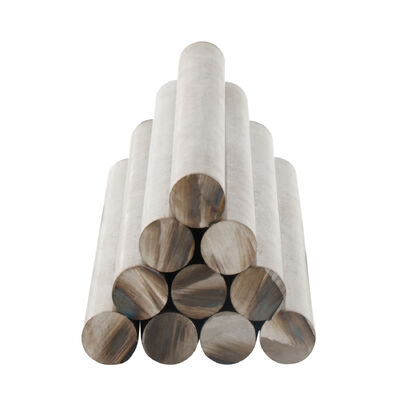
Creep-Resistant Nimonic 80A Nickel Alloy Solution Forged Bar for Marine Valves

Creep-Resistant Nimonic 80A Nickel Alloy Solution Forged Bar for Marine Valves

Brand Name: DLX
Model Number: Nimonic 80A
MOQ: 10kg
Payment Terms: L/C,D/P,D/A,T/T,VTB
Supply Ability: 1200 tons per month
Detail Information
Place of Origin:
China Jiangsu
Certification:
CE,ROHS
Packaging Details:
Spool package with Carton box, Coil package with polybag, Wooden case package
Supply Ability:
1200 tons per month
Product Description

Precision-engineered for heavy-duty marine diesel engines and severe-duty exhaust valve spindles, delivering exceptional creep resistance, microstructural stability up to 815°C, and certified internal sound integrity.

Nimonic 80A Nickel Alloy Customized service available

Creep-Resistant Nimonic 80A Metallurgy for Marine Engine Exhaust Valves

Modern marine diesel engines and heavy-duty propulsion systems operate under extreme thermal cycles, intense mechanical impact, and corrosive exhaust gas streams. Standard valve steels suffer from rapid microstructural coarsening, accelerated creep elongation, and catastrophic surface burning under these severe conditions.

Our solution-treated, creep-resistant Nimonic 80A nickel alloy forged bars deliver an advanced metallurgical solution:

  • Gamma Prime Precipitation Hardening Matrix: A high-purity nickel-chromium base alloyed with precisely balanced titanium (~2.4%) and aluminum (~1.4%) generates coherent γ′ precipitates that effectively pin dislocation movements at elevated operating temperatures.
  • Controlled Solution Annealing & Aging Regimen: Fully solution-treated at high temperatures to completely homogenize alloying elements, followed by precision precipitation aging to optimize creep rupture endurance without grain boundary embrittlement.
  • Superior Resistance to Heavy Fuel Ash Corrosion: A dense 18.0–21.0% chromium content creates a self-healing, adherent chromia (Cr2O3) passivation film, offering exceptional defense against vanadium pentoxide (V2O5) and sodium sulfate (Na2SO4) hot corrosion common in low-grade heavy fuel oils (HFO).

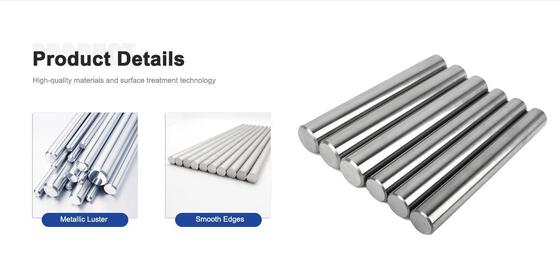
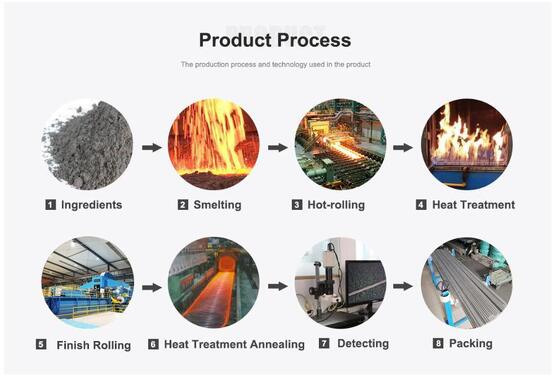
Nimonic 80A Nickel Alloy details

Technical Specifications
Nominal Chemical Composition (Weight %)
Element Ni Cr Ti Al C Fe Co Mn Si B Zr Cu
Controlled Range (%) Bal. 18.0–21.0 1.8–2.7 1.0–1.8 0.04–0.10 ≤ 3.0 ≤ 2.0 ≤ 1.0 ≤ 1.0 ≤ 0.008 ≤ 0.15 ≤ 0.20
High-Temperature Mechanical & Creep Rupture Properties
Property Parameter Metric Value Testing Condition / State
Tensile Strength (Rm) ≥1000 MPa Room Temperature (20°C)
Yield Strength (Rp0.2) ≥620 MPa Room Temperature (20°C)
Elongation at Break (A5) ≥20% Gauge Length 5.65√S0
Reduction of Area (Z) ≥20% Transverse / Longitudinal
Hardness (Brinell / Rockwell) 300–350 HBW / 32–38 HRC Fully Aged Condition
Elevated Temperature Yield (Rp0.2) ≥500 MPa High Temperature (700°C)
Creep Rupture Life ≥100 Hours 750°C @ 300 MPa Applied Stress
Physical Constants & Dimensional Capabilities
  • Theoretical Density: 8.19 g/cm3
  • Magnetic Permeability: Non-magnetic (μ≤1.002)
  • Thermal Conductivity: 11.2 W/(m·K) at 20°C; 21.5 W/(m·K) at 800°C
  • Forged Bar Diameters: Φ15 mm to Φ300 mm (Peeled, centerless ground, or smooth turned)
  • Dimensional Tolerance: High-precision dimensional control within +0.2 mm/−0 mm (Custom tight tolerance grades available)

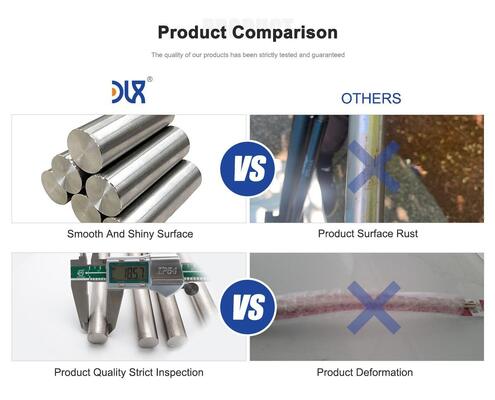
Nimonic 80A Nickel Alloy comparison

Key Engineering Features 
  • Outstanding High-Temperature Creep Resistance: Retains exceptional structural rigidity and resists localized necking or elongation under continuous multi-axial stresses at temperatures exceeding 750°C.
  • Exceptional Thermal Fatigue Endurance: Uniform, fine-grained forged microstructure prevents microcracking initiated by rapid combustion thermal shock and high-frequency valve seating impacts.
  • Robust Hot Corrosion and Oxidation Barrier: Withstands aggressive sulfur-bearing combustion environments and high-temperature gas wash in marine propulsion systems.
  • Double-Melt Metallurgical Purity (VIM+ESR): Vacuum melting and electro-slag refining eliminate non-metallic inclusions and chemical segregation, achieving a 100% ultrasonic flaw detection pass rate.
  • Excellent Hot Upsetting & Friction Weldability: Optimized forging plasticity allows easy hot-heading into valve shapes and creates high-integrity solid-state friction-welded joints with stem steels.

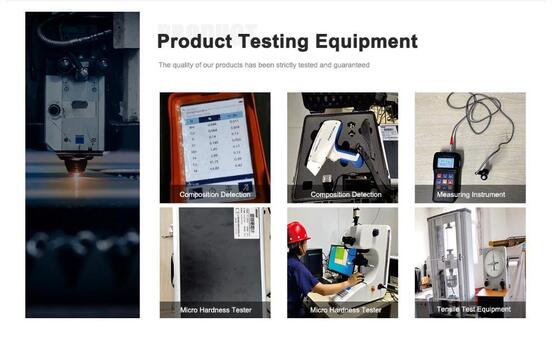
Nimonic 80A Nickel Alloy testing equipment

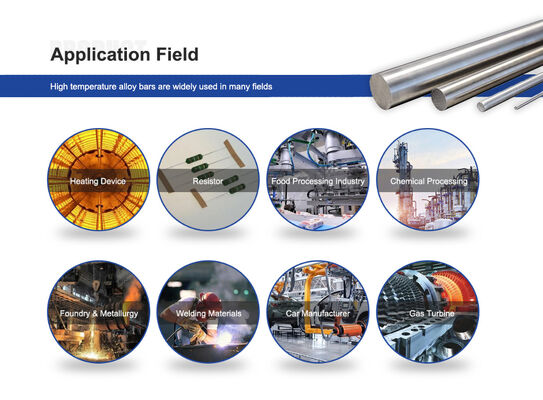
Industrial Applications
  • Two-Stroke & Four-Stroke Marine Exhaust Valves: Primary choice for main engine and auxiliary generator exhaust valve spindles, valve heads, and seat rings exposed to high thermal-mechanical fatigue.
  • Heavy-Duty Gas Turbine Components: High-tensile turbine rotor bolts, casing fasteners, locking rings, and combustion chamber tie-rods operating in corrosive gas paths.
  • High-Performance Motorsport Engine Valves: Turbocharged and racing engine exhaust valves demanding superior hot strength and high-RPM mechanical durability.
  • Hot-Work Die & Extrusion Tooling: High-temperature die-casting core pins, hot-extrusion inserts, and tube-forming tools requiring high thermal fatigue resistance without softening.

Nimonic 80A Nickel Alloy application field

Why Partner with Us for Superalloy Solutions: Manufacturing & Technical Authority
  • 1,200 Tons Monthly Capacity: Scalable, high-volume production supported by vacuum induction melting, electro-slag remelting, multi-directional radial forging presses, and automated continuous heat treatment lines.
  • End-to-End In-House Quality Assurance: Full metallurgical traceability from raw pure nickel charge to finished forged round bars. Every heat undergoes vacuum spectrometer analysis, full-body immersion ultrasonic inspection, and high-temperature stress-rupture verification.
  • Tailored Forging & Heat Treatment Solutions: Custom forged rounds, stepped shafts, rings, and near-net billets supplied in specific solution-treated or aged conditions to match your hot-upsetting and CNC machining parameters.
  • Dedicated B2B Engineering Support: Experienced metallurgical support teams ready to assist marine engine component OEMs with material selection, hot-heading parameters, and friction-welding technical consultation.

company profile

Frequently Asked Questions 
Q1: Why is Nimonic 80A preferred over conventional heat-resistant steels for marine engine exhaust valves?

A: Unlike conventional austenitic or martensitic valve steels that soften rapidly above 600°C, Nimonic 80A utilizes gamma prime precipitation hardening. It retains a yield strength exceeding 500 MPa at 700°C and exhibits remarkable creep rupture strength and hot corrosion resistance, significantly extending valve service intervals under heavy fuel combustion.

Q2: What delivery condition and surface finishes are available for Nimonic 80A forged bars?

A: Bars are supplied in either solution-treated condition (ideal for customer hot-upsetting or forging) or fully solution-treated + aged condition (ready for direct precision CNC machining). Surface options include peeled, centerless ground, polished, or rough-turned to meet tight engineering tolerances.

Q3: How is internal metallurgical sound integrity verified for heavy-section valve forging billets?

A: Every forged bar undergoes 100% volumetric high-frequency ultrasonic immersion testing and eddy current surface inspection to guarantee complete freedom from internal cracks, center porosity, or non-metallic inclusions. Complete chemical and mechanical test certificates are provided with every shipment.

Q4: Can Nimonic 80A valve heads be successfully friction-welded to lower-alloy stem materials?

A: Yes. Nimonic 80A exhibits good solid-state friction weldability with structural stem steels. Following proper post-weld stress relieving and aging heat treatment, the bimetallic joint achieves equal or superior shear and fatigue endurance compared to the parent stem material.

OEM services