
5s
+1
Submission successful!
|
| Brand Name: | DLX |
| Model Number: | CoCrMo |
| MOQ: | 10KG |
| Price: | 121/KG |
| Payment Terms: | L/C,D/A,D/P,T/T |
| Supply Ability: | 10,000 tons per year |
CoCrMo master alloy bar is cast in round sections from 8.0 mm to 200 mm and can be ordered in a sample quantity first, so a foundry settles the grade on its own melt before a production lot is placed.

Adding a grade to a foundry's melt is a decision made on evidence, and the evidence has to come from the foundry's own furnace. A datasheet describes what a supplier intends to ship. A sample shows what it does ship. That is the reason small quantities are offered at all: the buyer gets material to test, and the supplier keeps a customer who has already seen the bar.
What follows sets out the scope of a sample. It is a real input, cast and packed the way a production lot is packed, and it settles questions a document cannot settle. It also carries limits, and knowing them keeps a first order from being over-read.
| Grade | CoCrMo |
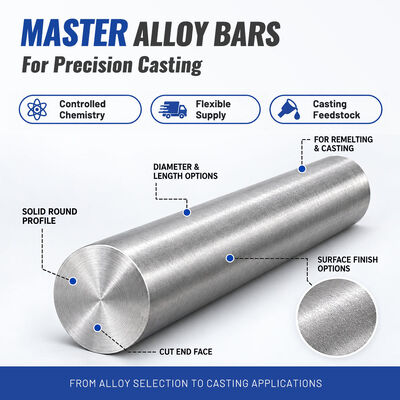
| Product Form | Cast master alloy bar, round section |
| Diameter | 8.0 mm to 200 mm |
| Melting Route | Vacuum melting |
| Casting Route | Bar casting |
| Grade Agreement | Composition and impurity limits fixed on the order |
| Sample Quantity | Available ahead of a production lot |
| Cut Length | Made to the charging length used at the foundry |
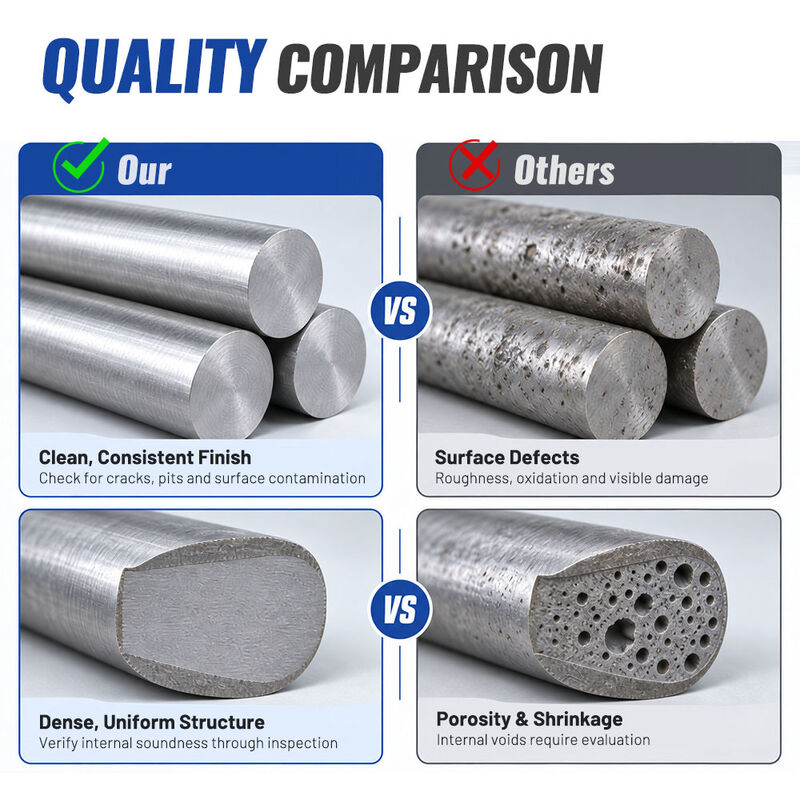
| Internal Quality | Uniform structure assessed where the order requires it |
| Surface | Clean, consistent finish |
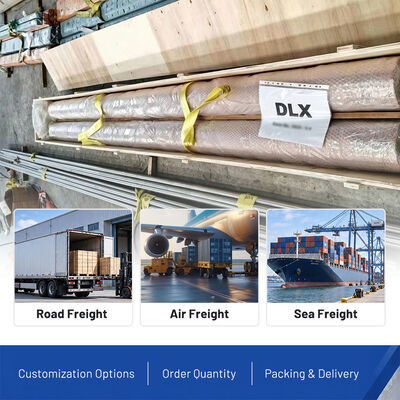
| Packing | Rod bundles with protective wrapping, export wooden cases |
| Documents | Mill test certificate, packing list, invoice, bill of lading |
A sample arrives as a case of cut bar, not as a loose piece. It carries the same markings as a production lot, so the grade and the lot number on the case match the certificate that travels with it. That matters for the foundry, because a sample that reaches the melt shop without a document cannot be entered into an incoming inspection and has to be treated as unidentified material.
A sample settles the questions the foundry can answer from holding the bar: whether the cut length suits the charging bucket, whether the section feeds the crucible without a second step, how the surface looks after handling and transport, and whether the composition on the certificate matches what the foundry measures on arrival. Those four answers decide most of what a first order hinges on.
A sample proves one cast. It does not prove the behaviour of every later cast, and it does not carry a production rate. A single case cannot show whether the grade is castable in the tonnage the programme needs. Treating a sample as a substitute for a first production lot leads to the wrong conclusion: the sample is there to remove doubt about the material, and the first scheduled lot is there to settle the supply side.
Once the sample has been put through the foundry's own checks, the order moves to a cast size. Quantity and diameter are fixed together at that point, since the two set how much metal is melted for the lot. The grade agreement stays as it was on the sample, which is what makes the later consignment comparable with the piece that was tested.
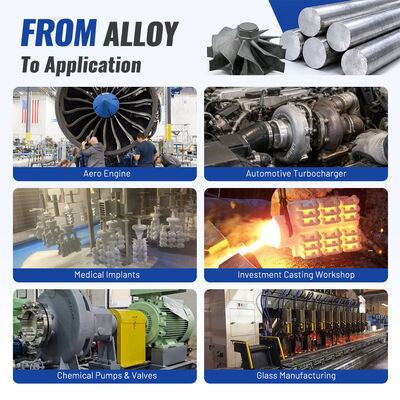
Firms that cast heat-exposed or wear-facing parts buy the bar as an input to their own melt, and the castings that follow reach aero engine work, turbocharger wheels for automotive use, pump and valve castings for chemical service, and hardware for glass production.
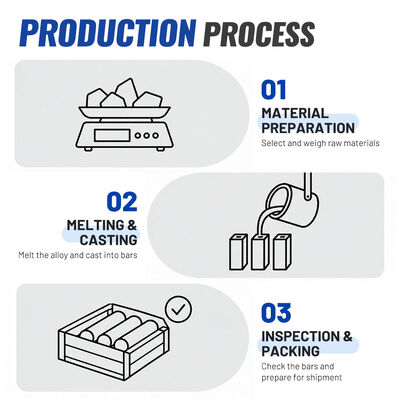
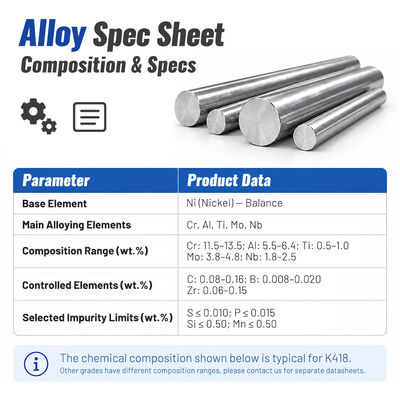
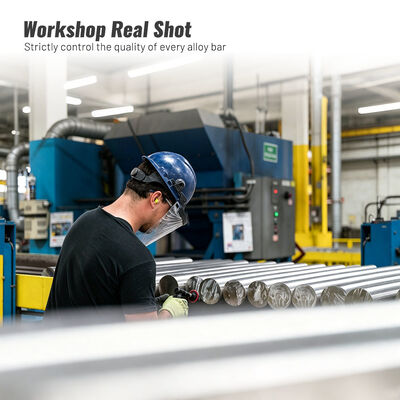
The composition of each cast is checked against the grade agreed on the order, the surface is inspected before packing, and internal soundness is assessed where the order asks for it. A sample is released on the same basis as a scheduled lot, with a certificate that describes the material as packed, so the piece tested and the consignment ordered later can be read side by side.
The grade designation used on this page belongs to the cast grade series for high-temperature alloys in the Chinese standard system. Composition and impurity limits are set against the grade agreed on the order, and the chemistry and structure of each cast are read against the works inspection record and the certificate released with it.
Bar is bundled with protective wrapping and packed in export wooden cases marked with the grade, the diameter and the lot number. A production lot is placed 15-30 days after order confirmation, and a sample quantity is scheduled ahead of the production run. Freight is quoted to the destination port named on the enquiry, on FOB, CFR or CIF terms.
Customers in more than 60 export countries buy from Changzhou DLX Alloy Co., Ltd., which has melted and processed alloys since 2002 and holds ISO 9001 with SGS certification across a 12,000 m² site and an annual capacity of 10,000 tons. Master alloy grades sit within that supply, and a buyer who wants to see the material before committing to a cast can start with a sample quantity instead.
State the grade, the diameter, the cut length and the quantity wanted, whether that first quantity is a sample or a full lot.
Q: Can a CoCrMo master alloy bar be ordered in sample quantity?
A: Yes. A sample quantity is offered ahead of a production lot, and it is cast and packed on the same basis as a scheduled one.
Q: What comes with a sample?
A: Cut bar in a case, marked with the grade and the lot number, together with the certificate for that cast and the packing list.
Q: What should be checked on a sample before ordering a full lot?
A: Whether the cut length feeds the charging bucket as it is, whether the section suits the crucible, and whether the composition measured on arrival matches the certificate. Those three answers close out most first orders.
Q: What does a sample not tell the buyer?
A: How later casts will behave, and how the grade performs at the tonnage a programme needs. That belongs to the first scheduled lot.
Q: Can the sample and the production lot be compared?
A: Yes. The grade agreement is the one used for both, and the sample certificate is retained so the later consignment can be read against it.
Q: What is the minimum order quantity?
A: A sample quantity is the smallest entry, and the production minimum follows from the grade and the diameter, which set the size of the cast.
Q: What is the delivery time?
A: A production lot is placed 15-30 days after order confirmation, and a sample quantity is scheduled ahead of the production run.
Q: Which shipping terms are quoted?
A: FOB, CFR or CIF to the port named on the enquiry, quoted with the order.


 english
 français
 Deutsch
 Italiano
 Русский
 Español
 português
 Nederlandse
 ελληνικά
 日本語
日本語
 한국
한국
 中文
中文
 العربية
 हिन्दी
 Türkçe
 indonesia
 tiếng Việt
 ไทย
ไทย
 বাংলা
বাংলা
 فارسی
فارسی
 polski