
5s
+1
Submission successful!
|
| Brand Name: | DLX |
| Model Number: | K418 (713C) |
| MOQ: | Trial quantity available; production minimum confirmed per grade and diameter |
| Price: | Quoted per order against grade, diameter and quantity |
| Supply Ability: | 10,000 tons per year |
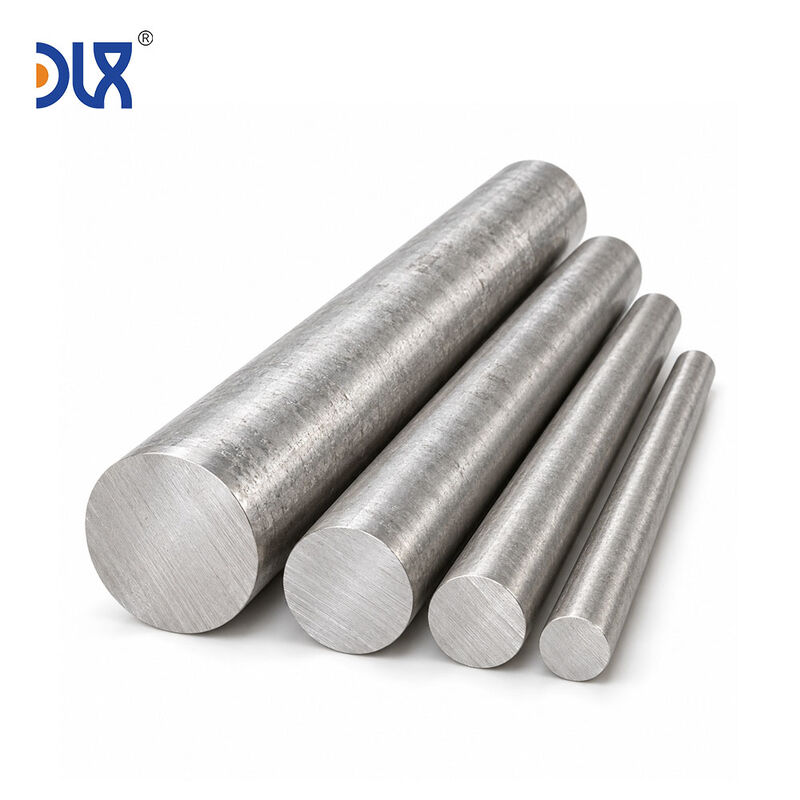
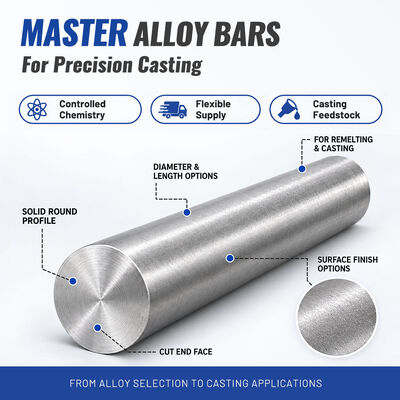
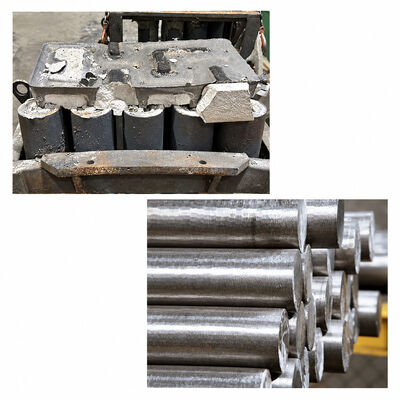
K418 (713C) master alloy bar is cast in diameters from 8.0 mm to 200 mm for foundries that introduce alloying elements at the melt. Vacuum melting and bar casting run on one site, the composition of each lot is verified against the grade agreed on the order, and trial quantities can be supplied ahead of a production lot.

A master alloy is an intermediate material. It is added to a melt to introduce selected alloying elements and to bring the heat to the target composition, and it is consumed at that stage instead of being machined into a component. That places it in a different category from a finished alloy bar, a wire or a strip. Those products are bought for the geometry and the properties of the part being made. This one is bought for what it carries into the melt and for how consistently it carries it.
The grade name is a melt addition specification. K418 (713C) master alloy bar is ordered by grade and diameter, and acceptance is set by the composition and the impurity limits agreed for that grade rather than by a component drawing.
| Grade | K418 (713C) |
| Product Form | Master alloy bar, cast round bar |
| Diameter Range | 8.0 mm to 200 mm |
| Melting Route | Vacuum melting |
| Casting Route | Bar casting |
| Composition Control | Verified against the grade agreed on the order |
| Impurity Control | Limits defined for the critical elements of the grade |
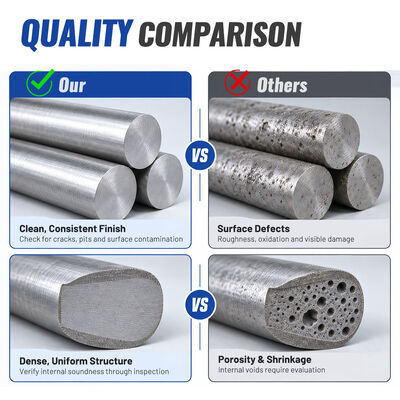
| Internal Quality | Uniform structure assessed where the order requires it |
| Surface | Clean, consistent finish |
| Length | Cut to order |
| Trial Quantity | Supplied ahead of a production lot |
| Packing | Rod bundles with protective wrapping, export wooden cases |
Three requirements travel with a master alloy. The elements it carries have to arrive in the proportion the heat needs. The elements that must stay low have to stay low, because a small quantity of a tramp element introduced at this stage spreads through the entire heat. And the bar has to behave predictably when it is charged, which depends on the melting route and on how the bar is dimensioned for the charging practice in use.
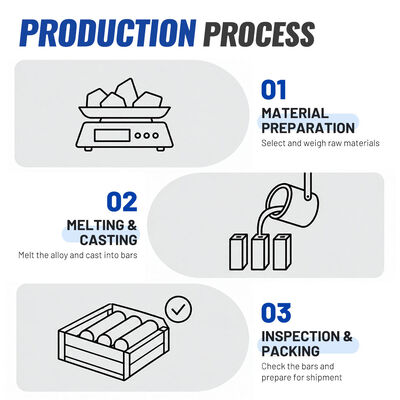
The route runs in seven steps, from material selection through vacuum melting, composition control and bar casting to cutting and cleaning, then inspection and packing of the finished master alloy bar. The melt is made under vacuum, and the composition check sits between the melt and the casting step, so any correction is made before the bar is cast.
A foundry charging a new grade usually wants one heat's worth of material first. Trial quantities are supplied for that purpose and are cast through the same route as a production lot, so the trial heat represents what follows. The grade, the diameter and the quantity are agreed at that stage and carried forward to the production order.
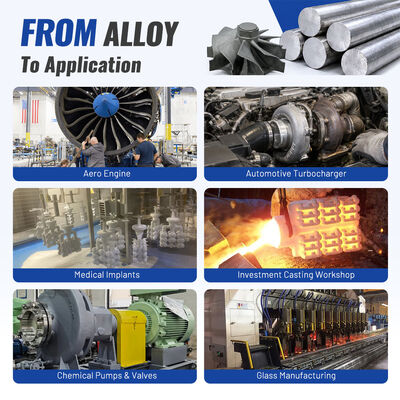
Master alloy bar in K418 (713C) is charged in investment casting operations and in the production of cast components for high-temperature duty. Typical settings include aero engine castings, automotive turbocharger wheels, chemical pumps and valves, and glass manufacturing hardware.
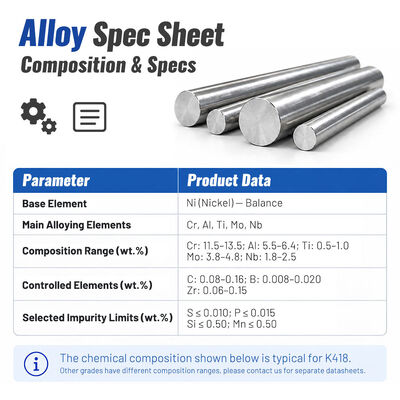
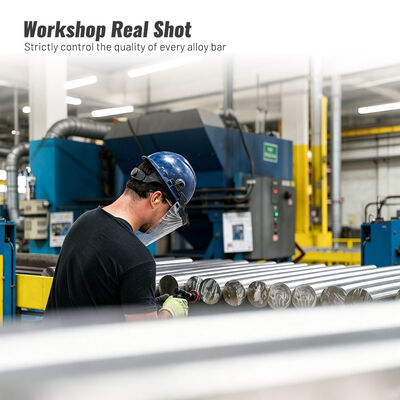
Each lot is analysed for composition and verified against the grade agreed on the order. Surface is checked for cracks, pits and contamination, and internal soundness is confirmed by inspection where the order requires it. The mill test certificate issued for the lot states the composition of the material supplied, so the bar and the certificate can be checked against each other on arrival.
Grade classification follows the cast superalloy grade series used in the Chinese standard system for high-temperature alloys. Composition and impurity limits are verified against the grade agreed on the order, and batch-level chemistry and structure are checked against in-house inspection records and the mill test certificate issued with each lot.
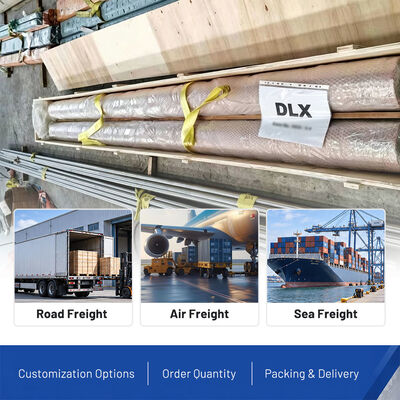
Bar is supplied in rod bundles with protective wrapping, packed in export wooden cases and labelled with the grade, the diameter and the lot number. Production runs are scheduled 15-30 days from order confirmation, and trial quantities are scheduled ahead of the production run. Freight is quoted to the destination port.
Changzhou DLX Alloy Co., Ltd. has melted and processed alloys since 2002, on a 12,000 m² site with ISO 9001 and SGS certification and an annual capacity of 10,000 tons. The master alloy line applies the same melting and casting discipline used across the alloy range: the composition of the heat is fixed before the bar is cast, and the lot record follows the material to the customer.
Send the grade, the diameter, the quantity and the destination port for a quotation.
Q: What is a master alloy bar used for?
A: It is added to a melt to introduce selected alloying elements and to bring the heat to the target composition. It is consumed at the melting stage.
Q: Should a foundry order K418 (713C) master alloy bar or a finished alloy bar?
A: The two are bought for different reasons. A finished bar is bought for the geometry and the properties of the part made from it. A master alloy bar is bought for the elements it carries into the melt.
Q: How is the composition controlled?
A: Each lot is verified against the grade agreed on the order, and the mill test certificate issued with it states the composition of the material supplied.
Q: Which diameters can be supplied?
A: 8.0 mm to 200 mm as standard, with the cut length made to order.
Q: Can a trial quantity be ordered before a production lot?
A: Yes. Trial quantities are cast through the same route as a production lot, and the grade, diameter and quantity agreed at that stage carry forward to the production order.
Q: What is the minimum order quantity?
A: The minimum is set by the diameter and the quantity required, and is confirmed together with the grade when the order is placed.
Q: Which documents come with a lot?
A: A mill test certificate stating the composition of the lot, with the packing list and the export documents for the destination.
Q: How is the bar packed for shipment?
A: Rod bundles with protective wrapping in export wooden cases, labelled with the grade, the diameter and the lot number.


 english
 français
 Deutsch
 Italiano
 Русский
 Español
 português
 Nederlandse
 ελληνικά
 日本語
日本語
 한국
한국
 中文
中文
 العربية
 हिन्दी
 Türkçe
 indonesia
 tiếng Việt
 ไทย
ไทย
 বাংলা
বাংলা
 فارسی
فارسی
 polski