5s
+1
Submission successful!

|
| Brand Name: | DLX |
| Model Number: | FeCrAl Alloy Wire 0Cr27Al7Mo2 |
| MOQ: | 5 kg |
| Payment Terms: | L/C,D/A,D/P,T/T,Western Union |
| Supply Ability: | 1200 tons per month |
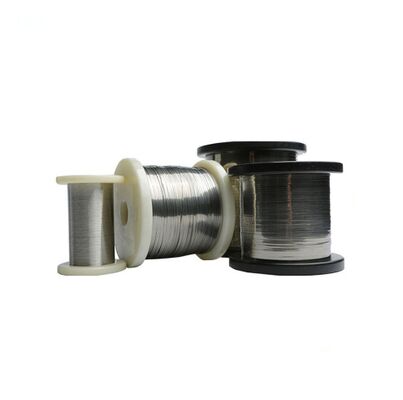
DLX 0Cr27Al7Mo2 is a high-grade iron-chromium-aluminum-molybdenum (FeCrAlMo) electric resistance heating and functional alloy wire engineered for demanding water electrolysis and high-temperature hydrogen generation systems. Featuring an alloy balance of 26.5%–27.8% Chromium, 6.0%–7.0% Aluminum, and approximately 2.0% Molybdenum, 0Cr27Al7Mo2 forms a self-healing, adherent α-Al2O3 surface protective layer during operation. It delivers high continuous operating temperatures (up to 1400°C), stable electrical resistivity (1.53 μΩ·m), and robust structural resistance against hot corrosive vapors and cyclic thermal stress.
As the global transition toward decarbonized energy accelerates, water electrolysis and solid oxide electrolysis cell (SOEC) systems demand heating elements and functional alloy components capable of withstanding aggressive moist environments, thermal fatigue, and prolonged electrical loading. Standard heating wires frequently suffer from accelerated oxidation, scale spallation, and high-temperature sagging under continuous operation.
DLX 0Cr27Al7Mo2 alloy wire is developed to solve these operational challenges. Produced via precision vacuum induction melting and controlled multi-pass cold drawing, the wire exhibits uniform grain structure, tight cross-sectional tolerances, and excellent surface cleanliness. The strategic addition of molybdenum strengthens the ferritic crystal lattice, substantially improving high-temperature creep strength and preventing element deformation in horizontal and vertical configurations across industrial green hydrogen production plants.
| Grade / Element | Chromium (Cr) | Aluminum (Al) | Molybdenum (Mo) | Rare Earth (Re) | Carbon (C) | Iron (Fe) |
|---|---|---|---|---|---|---|
| 0Cr27Al7Mo2 | 26.5 – 27.8 | 6.0 – 7.0 | ~2.0 (1.8–2.4) | Optional Additions | ≤ 0.06 | Balance |
| 0Cr25Al5 (Ref) | 23.0 – 26.0 | 4.5 – 6.5 | — | Optional Additions | ≤ 0.06 | Balance |
| 0Cr21Al6Nb (Ref) | 21.0 – 23.0 | 5.0 – 7.0 | Nb: 0.5 – 1.0 | Optional Additions | ≤ 0.06 | Balance |
| Property Parameter | Metric Benchmark Value | Imperial Equivalent |
|---|---|---|
| Density | 7.10 g/cm³ | 0.256 lb/in³ |
| Electrical Resistivity (20°C) | 1.53 μΩ·m | 920.4 Ω·cmil/ft |
| Tensile Strength (σb) | 680 – 830 MPa | 98.6 – 120.4 ksi |
| Elongation at Break (δ5) | ≥ 10% | ≥ 10% |
| Melting Point | ~1500°C | ~2732°F |
| Microstructure | Ferritic (BCC) | Ferritic (BCC) |
| Performance Metric | 0Cr27Al7Mo2 Value | Operational Advantage |
|---|---|---|
| Max. Continuous Service Temperature | 1400°C (2552°F) | Outperforms standard FeCrAl and NiCr alloys |
| Surface Protective Oxide | α-Al2O3 (Alumina) | Dense, non-volatile, high dielectric resistance |
| Creep & Sag Resistance | High (Mo-reinforced) | Minimizes sagging in unsupported spans |
| Atmospheric Compatibility | Air, Steam, Oxidizing, Dry H₂ | High resistance to sulfurous and oxidizing gases |
| Product Form | Dimension Range (mm) | Supply Condition | Packaging Format |
|---|---|---|---|
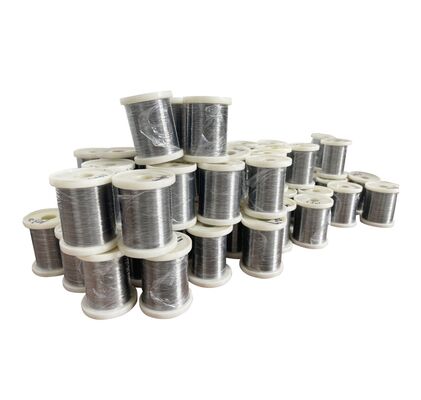
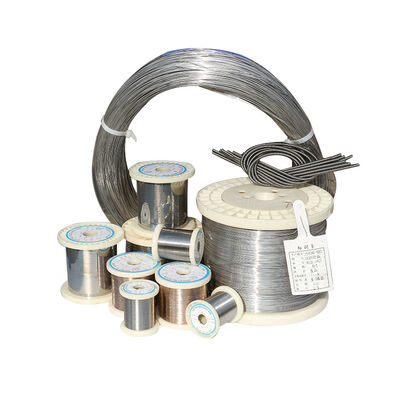
| Drawn Round Wire | Φ 0.05 mm – 7.50 mm | Bright Annealed / Oxidized | Plastic Spool (DIN100–DIN250) / Coil |
| Heavy Rod / Bar | Φ 8.0 mm – 50.0 mm | Hot Rolled / Peeled / Drawn | Straight Lengths / Heavy Bundles |
| Flat Ribbon | (0.05–0.35) × (0.5–6.0) mm | Bright Cold Rolled | Continuous Spool / Coil in Carton |
| Wide Strip | (0.5–2.5) × (5–180) mm | Annealed / Pickled / Slit | Steel Core Coil / Wooden Crate |
At elevated operating temperatures, the high aluminum activity in 0Cr27Al7Mo2 wire facilitates the continuous formation of an impervious, tightly adhering aluminum oxide (α-Al2O3) scale. Unlike chromium oxide scales that volatilize at temperatures above 1000°C in high-humidity atmospheres, this alumina scale provides uninterrupted barrier protection against high-temperature oxidation and internal material degradation.
Exceptional Corrosion Resistance in Electrolytic EnvironmentsElectrolysis hydrogen production generates harsh hot water vapor and alkaline moisture conditions. The dense chemical barrier formed on 0Cr27Al7Mo2 significantly reduces baseline corrosion rates and prevents premature scaling, ensuring stable electrical contact and minimizing maintenance downtime in long-cycle hydrogen generation cells.
High-Temperature Durability with Molybdenum Solid-Solution StrengtheningThe incorporation of molybdenum provides substantial solid-solution lattice strengthening. This metallurgical design retards grain boundary sliding and suppresses rapid grain growth above 1000°C, delivering enhanced mechanical creep resistance and superior dimensional stability for heating elements and structural wire supports.
Precise Electrical Resistivity and Mechanical StabilityWith a nominal resistivity of 1.53 μΩ·m, 0Cr27Al7Mo2 allows high power output in compact space envelopes. Controlled multi-die diamond wire drawing guarantees cross-sectional uniformity and tight dimensional tolerances, preventing local resistance variations, hot-spot generation, and premature wire burnout.
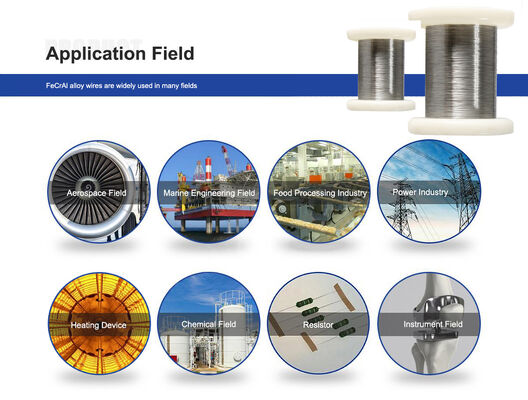
Applied as core heating elements, preheaters, and functional structural wires in Alkaline Water Electrolysis (AWE) and Solid Oxide Electrolysis Cells (SOEC), maintaining uniform heat zones and stable electrical conduction in hydrogen-generating stacks.
Hydrogen Fuel Cell Auxiliaries & Thermal SystemsIntegrated into thermal management modules, start-up heaters, and high-temperature gas preheating units for stationary and transport hydrogen fuel cell systems where high thermal responsiveness and long-term durability are critical.
High-Temperature Energy Storage & Power-to-Gas SystemsEmployed in thermal energy storage modules and power-to-gas conversion infrastructure, converting renewable electric power into thermal and chemical energy under continuous high-temperature cycling.
Industrial Hydrogen Applications & Chemical MetallurgyUtilized in industrial hydrogen-based steel reduction furnaces, ammonia cracking units, and chemical synthesis preheaters requiring stable resistance heating elements capable of operating continuously up to 1400°C.
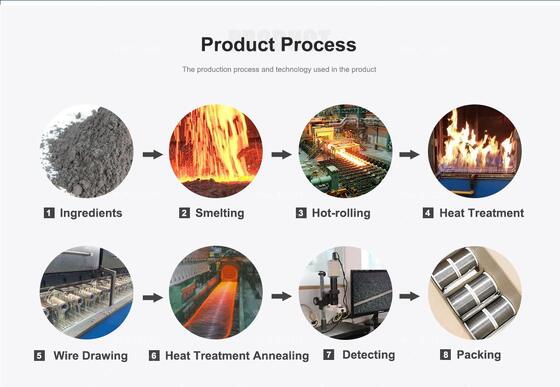
DLX operates a fully integrated manufacturing facility covering vacuum induction melting (VIM), precision electroslag refining, hot forging, intermediate annealing, and multi-stage cold drawing. Complete metallurgical control ensures batch-to-batch chemical uniformity and tight physical property consistency.
Scalable Capacity with Reliable Supply (500 Tons/Month)With a monthly production capacity of 500 tons across our electric heating and resistance alloy production lines, DLX provides robust supply chain security, stable lead times, and flexible batch scheduling for both prototype engineering and high-volume commercial deployments.
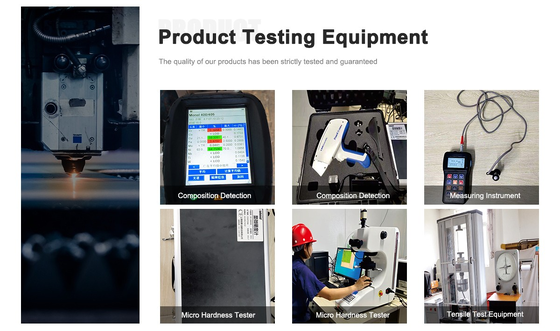
Full-Process Quality Inspection & TraceabilityEvery production batch of 0Cr27Al7Mo2 undergoes comprehensive quality testing, including optical emission spectrometry (OES) chemical analysis, continuous laser diameter measurement, room-temperature tensile verification, and electrical resistance testing. Full material test certificates are issued with every shipment.
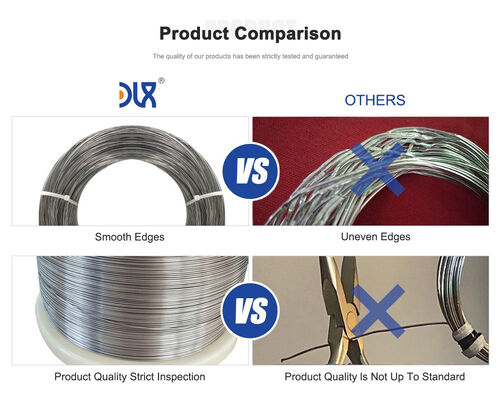
Tailored Engineering Solutions and Custom Wire ProfilingDLX supports B2B project requirements with custom wire diameters, special surface treatments (bright annealed, oxidized golden finish, or pickled), custom spooling configurations, and pre-formed heating element geometries manufactured to engineering drawings.
Q1: What are the primary advantages of 0Cr27Al7Mo2 over standard NiCr and basic FeCrAl alloys in hydrogen electrolysis?
A1: 0Cr27Al7Mo2 combines a maximum service temperature of 1400°C with high aluminum (6.0%–7.0%) and molybdenum (~2.0%) content. In high-temperature steam and humid gas environments, it forms a protective α-Al2O3 scale that is chemically more stable and resistant to volatilization than chromia scales. Additionally, molybdenum enhances high-temperature creep strength, preventing element sagging during extended operation.
Q2: What is the maximum continuous working temperature of DLX 0Cr27Al7Mo2 wire?
A2: The maximum continuous working temperature for 0Cr27Al7Mo2 elements is 1400°C (2552°F). For optimal service life in specialized atmospheres, element design parameters and surface watt loadings should be selected in consultation with our engineering team.
Q3: What diameter ranges and supply formats are available for 0Cr27Al7Mo2?
A3: We supply drawn wire in diameters from 0.05 mm up to 7.50 mm on standard DIN spools or in coils. In addition, we produce heavy rods (8.0 mm–50.0 mm), flat ribbons, slit strips, and custom pre-formed spiral heating elements based on customer specifications.
Q4: How does DLX ensure dimensional uniformity and resistance stability along the wire length?
A4: We utilize multi-stage precision diamond drawing dies paired with continuous dual-axis laser diameter monitoring systems. This ensures strict gauge tolerances and prevents localized cross-sectional variations, eliminating the risk of electrical hot spots during service.
Q5: What are the standard MOQ, lead time, and export packaging specifications?
A5: Our standard MOQ is 10 kg for regular wire sizes (with 1–5 kg available for prototype trials). Standard in-stock gauges dispatch within 3–7 days, while custom-drawn specifications typically ship within 7–15 days. All products are packaged on precision spools, sealed in moisture-proof barrier foil with desiccant, and secured in export-grade wooden cases or reinforced cartons.


 english
 français
 Deutsch
 Italiano
 Русский
 Español
 português
 Nederlandse
 ελληνικά
 日本語
 한국
 中文
 العربية
 हिन्दी
 Türkçe
 indonesia
 tiếng Việt
 ไทย
 বাংলা
 فارسی
 polski