5s
+1
Submission successful!

|
| Brand Name: | DLX |
| Model Number: | FeCrAl Alloy Wire 0Cr23Al5 |
| MOQ: | 10kg |
| Payment Terms: | L/C,D/A,D/P,T/T,Western Union |
| Supply Ability: | 1200 tons per month |
DLX 0Cr23Al5 is an advanced iron-chromium-aluminum (FeCrAl) electrical resistance alloy specifically engineered for high-durability heating elements and specialized hydrogen electrolysis applications. Featuring a balanced composition of 20.5%–23.5% Chromium and 4.2%–5.3% Aluminum with micro-alloyed rare earth elements, this wire rapidly develops a non-porous, regenerative aluminum oxide (Al₂O₃) surface barrier at operating temperatures. This structure ensures superior resistance against alkaline electrolyte vapors, sulfur corrosion, and high-temperature oxidation up to 1250°C, offering long-term stability in clean energy infrastructure and industrial electrolytic cells.
In commercial water electrolysis cells and high-temperature steam splitting systems, electrode and heating components face severe degradation from corrosive electrolyte mists, rapid thermal cycling, and high electrical loads. DLX 0Cr23Al5 FeCrAl wire overcomes these engineering challenges through its superior chemical balance and high-purity metallurgical structure.
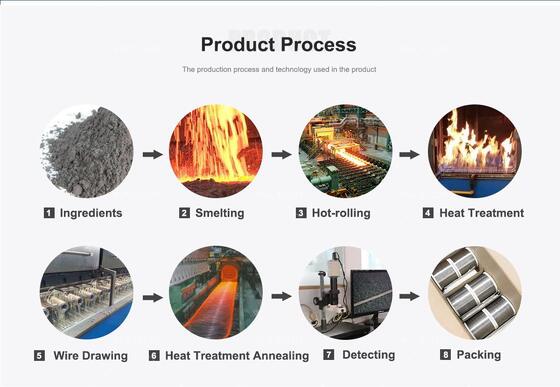
Manufactured via Vacuum Induction Melting (VIM) followed by precision multi-pass diamond die drawing and continuous protective atmosphere annealing, our 0Cr23Al5 wire delivers uniform electrical resistivity (1.35 ± 0.05 μΩ·m) and consistent tensile strength across every production spool. With a lower density (7.25 g/cm³) than conventional nickel-based resistance wires, it achieves significant weight savings and cost efficiencies while extending component service life under continuous industrial operation.
| Element | Chromium (Cr) | Aluminum (Al) | Rare Earth (Re) | Carbon (C) | Silicon (Si) | Manganese (Mn) | Iron (Fe) |
|---|---|---|---|---|---|---|---|
| Content (%) | 20.50 - 23.50 | 4.20 - 5.30 | Micro-alloyed | ≤ 0.06 | ≤ 0.60 | ≤ 0.70 | Balance |
| Parameter | Benchmark Value | Operating / Test Condition |
|---|---|---|
| Max. Continuous Operating Temperature | 1250°C (2282°F) | Continuous atmospheric heating |
| Melting Point | ~1510°C | Solidus / liquidus reference |
| Electrical Resistivity at 20°C | 1.35 ± 0.05 μΩ·m | Standard double-bridge test |
| Temperature Coefficient of Resistance | Low Positive Coefficient | 20°C to 1000°C linear cycle |
| Surface Oxide Formation | Dense α-Al₂O₃ Barrier | Self-regenerating above 800°C |
| Property | Metric Value |
|---|---|
| Density | 7.25 g/cm³ |
| Tensile Strength (Annealed State) | 630 - 780 MPa |
| Elongation at Break (A50) | ≥ 12% |
| Hardness (Soft Annealed) | 180 - 220 HB |
| Thermal Conductivity (20°C) | ~13.5 W/(m·K) |
| Supply Format | Wire Diameter / Dimension Range | Dimensional Tolerance | Surface Finish & Delivery Temper |
|---|---|---|---|
| Precision Fine Wire | 0.05 mm - 0.20 mm | ±0.003 mm | Bright Annealed / Precision Spool |
| Medium Gauge Wire | 0.20 mm - 1.50 mm | ±0.010 mm | Bright Soft / Spool or Coil |
| Heavy Gauge Heating Wire | 1.50 mm - 8.00 mm | ±0.025 mm | Acid Pickled / Oxidized / Heavy Coil |
| Precision Ribbon / Flat Wire | (0.05–0.50) * (0.5–6.0) mm | T: ±0.005 mm, W: ±0.05 mm | Bright Rolled / Spool |
At temperatures above 800°C, Aluminum selectively migrates to the outer surface to form a dense, impermeable Al₂O₃ layer. This protective barrier provides superior resistance against hot corrosion, high-humidity steam, and alkaline vapor penetration encountered during continuous hydrogen electrolysis.
Featuring a baseline resistivity of 1.35 ± 0.05 μΩ·m, DLX 0Cr23Al5 ensures steady resistance throughout its lifecycle. This stable electrical profile minimizes unwanted energy loss, maintains thermal equilibrium across electrolysis stacks, and reduces power consumption.
Unlike standard heating alloys that suffer from premature embrittlement, our micro-alloyed rare earth grain refinement maintains structural integrity and prevents thermal sagging under continuous thermal loads up to 1250°C.
With a lower material density (7.25 g/cm³) compared to nickel-chromium alloys (8.40 g/cm³), 0Cr23Al5 provides greater linear wire yield per kilogram, directly reducing total manufacturing and raw material procurement costs for large-scale projects.
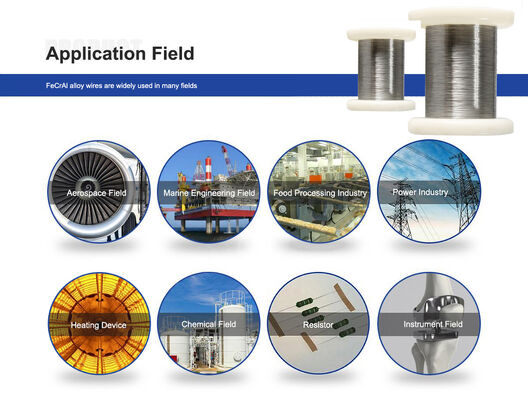
Integrated as specialized heating elements and structural conductive wire in alkaline and high-temperature electrolysis stacks, providing steady thermal management and resisting corrosive electrolytic vapors.
Utilized in fuel cell stack preheating systems and high-temperature thermal management units to maintain optimal operating temperatures during cold-start and steady-state phases.
Applied in ammonia cracking reactors, hydrogen purification furnaces, and petrochemical heating elements requiring long oxidation life under reducing and neutral atmospheres.
Serving as durable electrical resistance components in green hydrogen generation pilot plants, microgrid power-to-gas conversion units, and synthetic fuel synthesis plants.
DLX Alloy operates a 12,000 m² integrated production line encompassing vacuum induction melting, hot forging, precision diamond-die drawing, continuous hydrogen atmosphere annealing, and CNC slitting, ensuring stringent batch consistency.
With an established monthly production capacity of 500 tons across our electrical resistance and specialty alloy lines, DLX provides robust supply chain security, rapid fulfillment, and flexible scheduling for global Tier-1 and OEM partners.
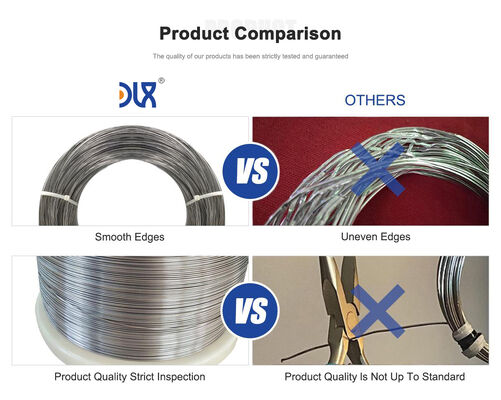
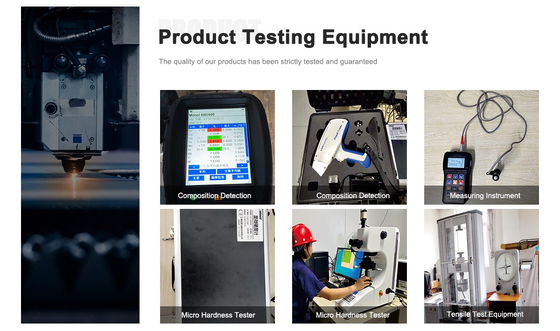
Every production heat is subject to comprehensive quality testing, including direct-reading optical emission spectrometry (OES), laser diameter profiling, digital resistance bridge verification, and mechanical elongation testing.
Our technical specialists work directly with B2B engineering teams to customize wire diameters, coil packaging, and annealing tempers tailored to specific hydrogen production geometries and electrical stack designs.
Q1: Why is 0Cr23Al5 FeCrAl wire recommended for high-temperature electrolysis systems?
A1: 0Cr23Al5 spontaneously generates a dense, self-healing Al₂O₃ (alumina) surface layer at operating temperatures. This ceramic-like passivation layer effectively blocks corrosive electrolyte vapors and oxidation, ensuring stable electrical performance and extended service life in water splitting applications.
Q2: What is the maximum continuous operating temperature of DLX 0Cr23Al5 wire?
A2: The maximum continuous operating temperature is 1250°C (2282°F). Its solidus melting point is approximately 1510°C, providing a wide thermal safety margin under fluctuating industrial heating loads.
Q3: How does FeCrAl alloy compare to NiCr (Nichrome) wire in heating efficiency and cost?
A3: 0Cr23Al5 FeCrAl provides higher maximum operating temperatures (1250°C vs. 1150°C for NiCr 80/20), higher electrical resistivity, and a lower density (7.25 g/cm³ vs. 8.40 g/cm³), which delivers more wire meters per kilogram and significant raw material savings.
Q4: What are the available packaging options and lead times for export shipments?
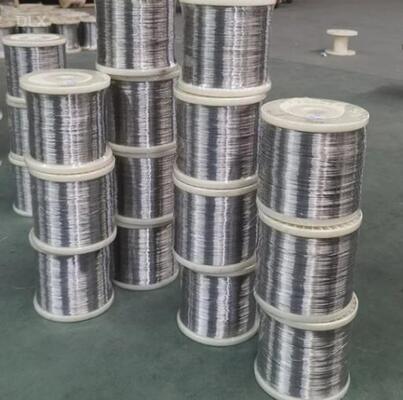
A4: Fine wires are wound on standard precision spools (DIN 100, DIN 160, DIN 200, DIN 250); medium and heavy gauges are packed in moisture-proof shrink-wrapped coils within seaworthy wooden crates. Standard stock sizes ship in 3–7 business days, while custom drawn sizes require 12–18 days.
Q5: What is the Minimum Order Quantity (MOQ) for 0Cr23Al5 wire?
A5: We offer low trial MOQs starting from 1 kg for in-stock evaluation samples and fine wire gauges, and 5 kg for standard custom drawing batches, enabling flexible R&D validation and low-risk prototyping.


 english
 français
 Deutsch
 Italiano
 Русский
 Español
 português
 Nederlandse
 ελληνικά
 日本語
 한국
 中文
 العربية
 हिन्दी
 Türkçe
 indonesia
 tiếng Việt
 ไทย
 বাংলা
 فارسی
 polski