5s
+1
Submission successful!

|
| Brand Name: | DLX |
| Model Number: | FeCrAl Alloy Wire 0Cr21Al6 |
| MOQ: | 10kg |
| Payment Terms: | L/C,D/A,D/P,T/T,Western Union |
| Supply Ability: | 500 tons per month |
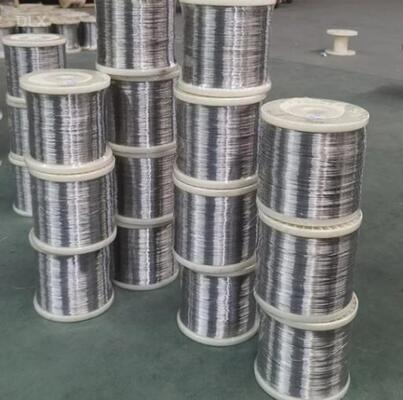
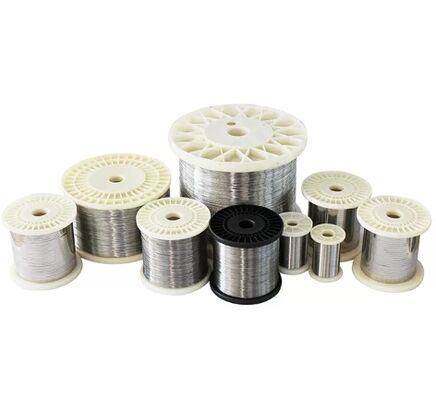
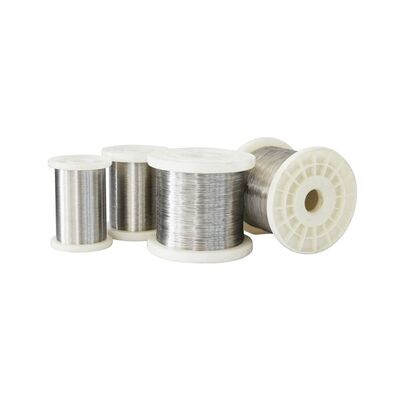
Composed of 19.0%–22.0% Chromium, 5.0%–7.0% Aluminum, micro-alloyed Rare Earth elements, and an Iron balance, 0Cr21Al6 forms a dense, self-healing Alpha-Alumina (Al₂O₃) protective surface layer at elevated temperatures. This oxide barrier delivers superior oxidation resistance, low surface electrical degradation, and high thermal stability up to a maximum continuous service temperature of 1250°C. With a high electrical resistivity of 1.42 μΩ·m and low material density of 7.16 g/cm³, DLX 0Cr21Al6 alloy wire provides high thermal output with reduced overall element weight compared to conventional heating alloys.
| Alloy Nomenclature Performance | 1Cr13Al4 | 0Cr25Al5 | 0Cr21Al6 | 0Cr23Al5 | 0Cr21Al4 | 0Cr21Al6Nb | 0Cr27Al7Mo2 |
|---|---|---|---|---|---|---|---|
| Chemical Composition (%) - Cr | 12.0-15.0 | 23.0-26.0 | 19.0-22.0 | 20.5-23.5 | 18.0-21.0 | 21.0-23.0 | 26.5-27.8 |
| Chemical Composition (%) - Al | 4.0-6.0 | 4.5-6.5 | 5.0-7.0 | 4.2-5.3 | 3.0-4.2 | 5.0-7.0 | 6.0-7.0 |
| Chemical Composition (%) - Re | Opportune | Opportune | Opportune | Opportune | Opportune | Opportune | Opportune |
| Chemical Composition (%) - Fe | Rest | Rest | Rest | Rest | Rest | Rest | Rest |
| Max. Continuous Service Temp. of Element (°C) | 950 | 1250 | 1250 | 1250 | 1100 | 1350 | 1400 |
| Resistivity at 20°C (μΩ.m) | 1.25 | 1.42 | 1.42 | 1.35 | 1.23 | 1.45 | 1.53 |
| Density (g/cm³) | 7.4 | 7.1 | 7.16 | 7.25 | 7.35 | 7.1 | 7.1 |
| Thermal Conductivity (KJ/m.h) | 52.7 | 46.1 | 63.2 | 60.2 | 46.9 | 46.1 | -- |
| Coefficient of Linear Expansion (αx10⁻⁶/℃) | 15.4 | 16 | 14.7 | 15 | 13.5 | 16 | 16 |
| Melting Point Approx (°C) | 1450 | 1500 | 1500 | 1500 | 1500 | 1510 | 1520 |
| Tensile Strength (N/mm²) | 580-680 | 630-780 | 630-780 | 630-780 | 600-700 | 650-800 | 680-830 |
| Elongation at Rupture (%) | >16 | >12 | >12 | >12 | >12 | >12 | >10 |
| Variation of Area (%) | 65-75 | 60-75 | 65-75 | 65-75 | 65-75 | 65-75 | 65-75 |
| Repeat Bending Frequency (F/R) | >5 | >5 | >5 | >5 | >5 | >5 | >5 |
| Hardness (H.B.) | 200-260 | 200-260 | 200-260 | 200-260 | 200-260 | 200-260 | 200-260 |
| Continuous Service Time (Hours/°C) | -- | ≥80/1300 | ≥80/1300 | ≥80/1300 | ≥80/1250 | ≥80/1350 | ≥80/1350 |
| Micrographic Structure | Ferrite | Ferrite | Ferrite | Ferrite | Ferrite | Ferrite | Ferrite |
| Magnetic Properties | Magnetic | Magnetic | Magnetic | Magnetic | Magnetic | Magnetic | Magnetic |
| Product Shape | Dimension Range (mm) | Surface Finish & Temper | Packaging Type |
|---|---|---|---|
| Fine & Round Wire | Φ 0.05 mm – Φ 1.20 mm | Bright Annealed / Pickled | DIN 100, DIN 125, DIN 160 Spools |
| Heavy Gauge Wire | Φ 1.20 mm – Φ 7.50 mm | Bright Annealed / Oxidized | Coils / Heavy Wooden Cases |
| Flat Wire & Ribbon | (0.05–0.35) × (0.5–6.0) mm | Bright Cold Rolled | Plastic Spools in Cardboard Boxes |
| Slit Strip | (0.50–2.50) × (5.0–180.0) mm | Cold Rolled / Annealed | Strapped Coils on Wooden Pallets |
| Straight Rod | Φ 8.0 mm – Φ 50.0 mm | Ground / Peeled / Smooth | Bundle in Wooden Crates |
The wire's high chromium and aluminum content provides excellent resistance to corrosion and oxidation, while its high thermal stability ensures it performs reliably under high-temperature conditions in electrolysis systems.
0Cr21Al6 Alloy Wire can withstand temperatures up to 1250°C, making it suitable for high-temperature electrolysis applications.
The wire maintains stable electrical resistance over time, minimizing energy losses and maximizing the hydrogen production rate in electrolysis systems.
Yes, DLX offers customizable wire diameters and lengths to meet the specific needs of your electrolysis system.
Thanks to its excellent corrosion resistance and high-temperature stability, 0Cr21Al6 Alloy Wire has a long service life, reducing the need for frequent replacements.
The wire is used in hydrogen production systems, fuel cells, energy storage applications, and various high-temperature industrial processes.
The wire improves electrolysis efficiency, reduces operational costs, enhances system reliability, and contributes to the sustainable production of green hydrogen.
The hydrogen economy is expected to expand significantly as global demand for clean energy increases, with electrolysis being a key technology in scaling up hydrogen production.


 english
 français
 Deutsch
 Italiano
 Русский
 Español
 português
 Nederlandse
 ελληνικά
 日本語
 한국
 中文
 العربية
 हिन्दी
 Türkçe
 indonesia
 tiếng Việt
 ไทย
 বাংলা
 فارسی
 polski