logo
player background
live avator

5s
Total
0
Today
0
Total
0
Today
0
  • What would you like to know?
    Company Advantages Sample Service Certificates Logistics Service
Online Chat WhatsApp Inquiry
Auto
resolution switching...
Submission successful!

products details

Created with Pixso. Home Created with Pixso. Products Created with Pixso.
High Temperature Nickel Alloy
Created with Pixso.

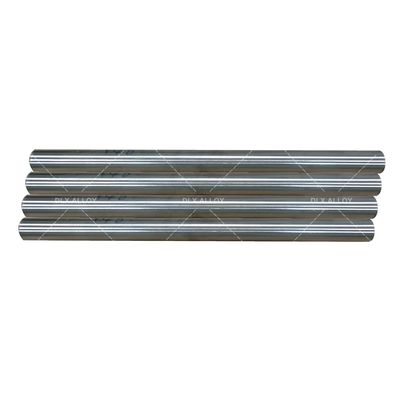
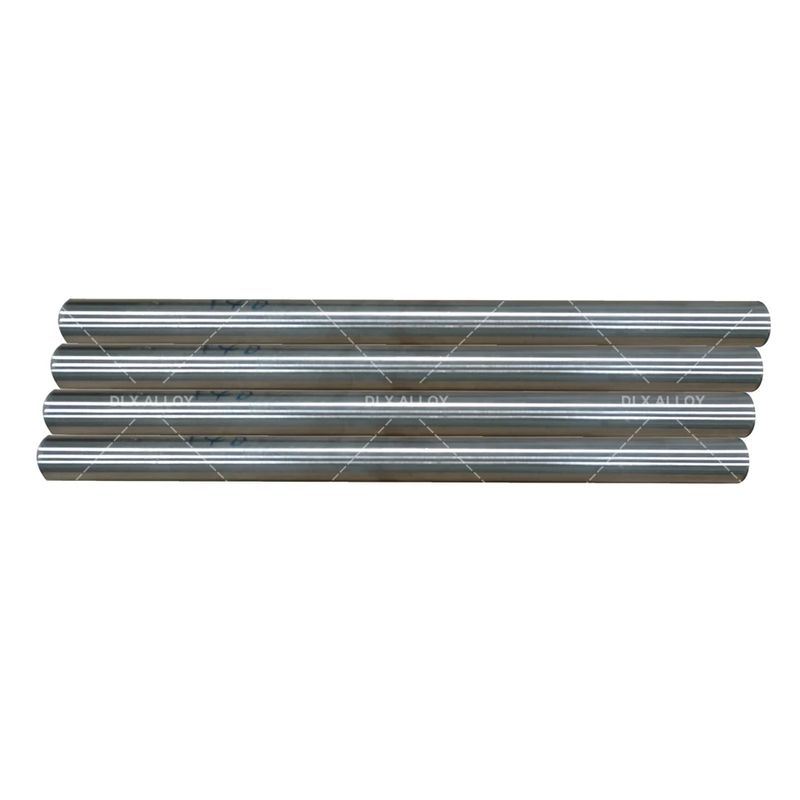
High Temperature Nickel Alloy Bar High Temperature Resistance For Critical Applications

High Temperature Nickel Alloy Bar High Temperature Resistance For Critical Applications

Brand Name: DLX
Model Number: High Temperature Nickel Alloy
MOQ: 15kg
Payment Terms: L/C,D/A,D/P,T/T,Western Union
Supply Ability: 500 tons per month
Detail Information
Place of Origin:
China
Certification:
CE,ISO9001,Rohs
Supply Ability:
500 tons per month
Highlight:

High Temperature Resistance Nickel Alloy

,

Critical Applications High Temperature Nickel Alloy

Product Description

Product Description:

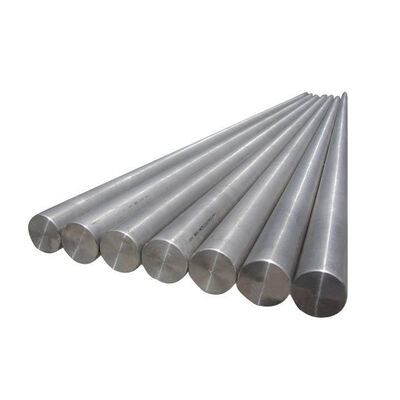
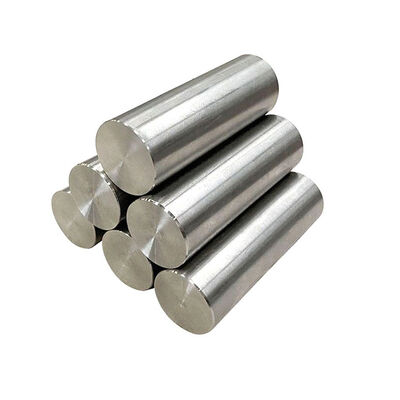
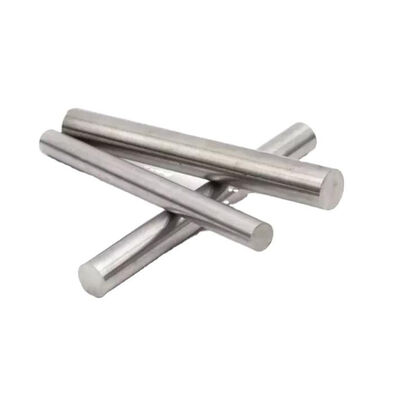
DLX Nimonic 75 high temperature nickel alloy bar is an 80/20 nickel-chromium solid-solution strengthened superalloy rod engineered specifically for structural components operating in extreme thermal environments up to 1200°C (2192°F). Formulated with controlled titanium and carbon additions, this material demonstrates superior creep-rupture strength, exceptional resistance to high-temperature oxidation, and outstanding mechanical stability under cyclic thermal loading.

Manufactured through advanced vacuum induction melting (VIM) followed by electroslag remelting (ESR), our high-temperature nickel alloy round bars provide uniform metallurgical grain structure and high purity. The material maintains excellent ductility, formability, and weldability, making it the preferred grade for aerospace combustion chambers, industrial gas turbine transition liners, high-temperature furnace fixtures, and chemical processing equipment requiring high load-bearing integrity at elevated temperatures.

Nickel Alloy Bar

Features

  • Outstanding Thermal Oxidation Resistance: Forms a dense, adherent chromia (Cr2O3) scale that prevents scaling, carburization, and deep degradation in thermal air environments up to 1200°C.
  • High Creep-Rupture Strength: Solid-solution strengthening provides sustained structural rigidity and prevents deformation under high stress and continuous thermal exposure.
  • High Metallurgical Homogeneity: Processed via VIM+ESR refining to eliminate non-metallic inclusions, ensuring consistent isotropic mechanical performance during machining.
  • Superior Hot & Cold Workability: Readily forged, turned, milled, and welded using standard inert-gas welding processes without spontaneous crack formation.
  • Non-Magnetic Stability: Retains stable non-magnetic characteristics across cryogenic to ultra-high service temperatures, eliminating magnetic eddy interference in sensitive equipment.

Technical Parameters 

Table 1: Chemical Composition (Standard Weight %)

Element Ni (Nickel) Cr (Chromium) Fe (Iron) Ti (Titanium) C (Carbon) Mn (Manganese) Si (Silicon) Cu (Copper) S (Sulfur)
Min % Balance 18.00 — 0.20 0.08 — — — —
Max % Balance 21.00 5.00 0.60 0.15 1.00 1.00 0.50 0.015

Table 2: Physical & Thermal Properties (Room Temperature & Elevated)

Physical Property Value Test Condition / Notes
Density 8.37 g/cm³ (0.302 lb/in³) At 20°C
Melting Range 1340°C - 1390°C Solidus to Liquidus
Specific Heat Capacity 460 J/(kg·K) At 20°C
Thermal Conductivity 13.2 W/(m·K) At 100°C
Electrical Resistivity 1.09 μΩ·m At 20°C
Coefficient of Thermal Expansion 12.8 × 10⁻⁶ /K 20°C - 100°C
Modulus of Elasticity (E) 207 GPa Tension modulus at 20°C
Magnetic Permeability 1.002 Non-magnetic (at 20°C, 200 Oersted)

Table 3: Mechanical Properties in Annealed Condition

Parameter Guaranteed Specification Typical Tested Value
Tensile Strength (Rm) ≥ 650 MPa 720 - 780 MPa
Yield Strength (Rp0.2) ≥ 280 MPa 320 - 360 MPa
Elongation (A5) ≥ 35 % 42 - 48 %
Hardness (Brinell) 160 - 200 HB 175 HB
Delivery State Annealed / Solution Treated Pickled / Bright Peeling / Polished
Application 
  • Aerospace & Aviation Engines: Combustion chamber outer rings, flame tubes, exhaust nozzle components, and turbine structural support rings.
  • Industrial Gas Turbines: Transition ducts, burner nozzles, heat shields, and hot-gas casing fasteners operating under continuous high-temperature stress.
  • High-Temperature Industrial Furnaces: Furnace conveyor rollers, radiant heating tube supports, retort fixtures, charging baskets, and thermocouple protection sheaths.
  • Thermal & Nuclear Power Plants: High-temperature flue gas duct dampers, superheater support clamps, and valve stems for extreme thermal service.
  • Chemical & Petrochemical Processing: Ethylene cracking furnace brackets, catalyst support grids, and incinerator components resistant to cyclic oxidizing atmospheres.

Nickel Alloy Bar

Real-World Problems This Material Solves

Many industries struggle with material degradation under extreme conditions:

  1. Thermal deformation of steel components
    Standard steel weakens at high temperature, leading to deformation. Nickel alloys retain strength even under prolonged heat exposure.
  2. Oxidation and scaling issues
    In high-temperature environments, metals often form oxide layers that weaken structure. Nickel alloys resist oxidation effectively.
  3. Creep failure under load
    Continuous stress at high temperature causes slow deformation in regular metals. Nickel alloys significantly reduce creep rate.
  4. Corrosion in chemical environments
    In petrochemical systems, acids and corrosive gases damage common metals. Nickel alloys provide strong resistance.
  5. Short service life of conventional materials
    Frequent replacement increases maintenance cost and downtime. Nickel alloy bars extend operational lifespan significantly.

Nickel Alloy Bar

Key Advantages of DLX Nickel Alloy Bar
  • Excellent high-temperature mechanical stability
  • Strong resistance to oxidation and corrosion
  • Superior creep resistance under continuous load
  • Stable performance in thermal cycling environments
  • Available in customized diameters and alloy grades
  • Suitable for extreme aerospace and energy applications
  • Long service life with reduced maintenance cost
Industry Challenges and DLX Solutions

One major challenge in high-temperature applications is material inconsistency during long-term operation. Some materials perform well initially but degrade quickly under cyclic heating.

DLX solves this by:

  • Simulating long-term thermal cycling conditions
  • Testing creep behavior under sustained load
  • Monitoring oxidation behavior in controlled environments
  • Adjusting alloy composition for specific industry requirements

This ensures consistent performance throughout the product lifecycle.

Application Value in Modern Engineering

As industries move toward higher efficiency and energy density, operating temperatures continue to rise. This places more stress on structural materials.

High temperature nickel alloy bars enable:

  • Safer high-temperature machinery operation
  • Improved energy efficiency in turbines and engines
  • Reduced failure rates in critical infrastructure
  • Longer maintenance intervals in industrial systems
  • Higher design flexibility for engineers

They are not just materials—they are performance enablers for modern engineering systems.

Our 12,000㎡ factory is equipped with complete capabilities for research, production, testing, and packaging. We strictly adhere to ISO 9001 standards in our production processes, with an annual output of 1,200 tons. This ensures that we meet both quantity and quality demands. Furthermore, all products undergo rigorous simulated environment testing including high temperature, high pressure, and corrosion tests before being dispatched, ensuring they meet customer specifications.For all our clients, we offer timely and multilingual after-sales support and technical consulting, helping you resolve any issues swiftly and efficiently.

0Cr27Al7Mo2 Alloy Resistance Wire with Global Grade Equivalents

Client Visits

Building Stronger Partnerships

0Cr27Al7Mo2 Alloy Resistance Wire with Global Grade Equivalents

We support all kinds of testing:

0Cr27Al7Mo2 Alloy Resistance Wire with Global Grade Equivalents

0Cr27Al7Mo2 Alloy Resistance Wire with Global Grade Equivalents

  1. What makes nickel alloy bars suitable for high temperature use?
    Their nickel-rich composition provides excellent thermal stability and oxidation resistance.
  2. What is the maximum operating temperature?
    Depending on grade, they can operate up to around 1100°C in specific conditions.
  3. Are they resistant to corrosion?
    Yes, especially in acidic and chemical processing environments.
  4. Where are these bars commonly used?
    They are widely used in aerospace, petrochemical, nuclear, and power generation industries.
  5. How does DLX ensure material quality?
    We control raw materials, perform strict testing, and simulate real operating conditions.
  6. Can these bars handle long-term stress at high temperature?
    Yes, they are designed for strong creep resistance under continuous load.
  7. Are custom sizes available?
    Yes, DLX provides full customization in diameter, length, and alloy grade.
  8. What is the main advantage over standard steel?
    They maintain strength and stability at much higher temperatures with longer service life.

Nickel Alloy Bar

Conclusion

High temperature nickel alloy bars are essential materials for modern critical applications where heat, stress, and corrosion resistance are required simultaneously. They ensure long-term reliability and safety in extreme environments.