
5s
+1
Submission successful!
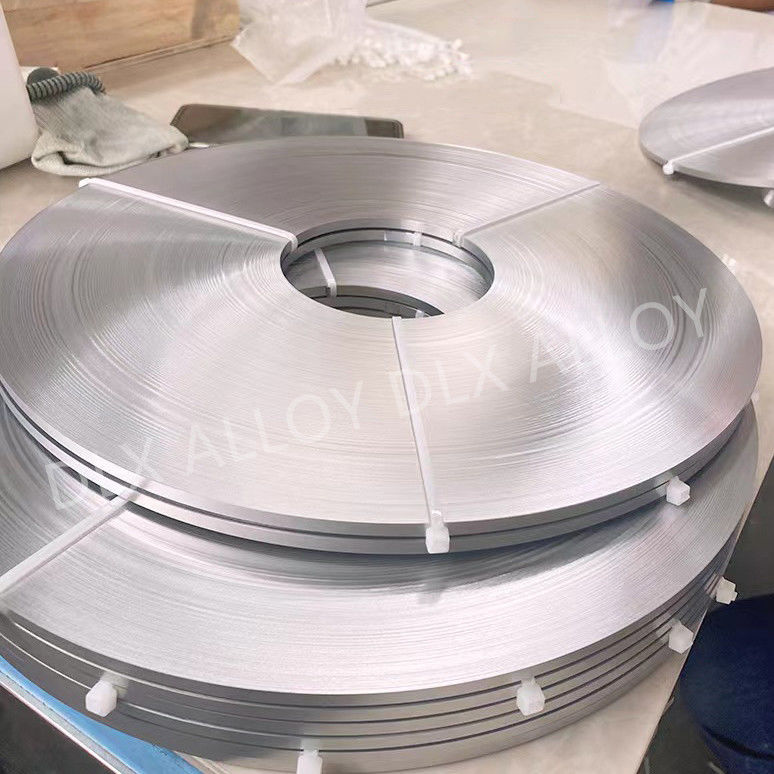
|
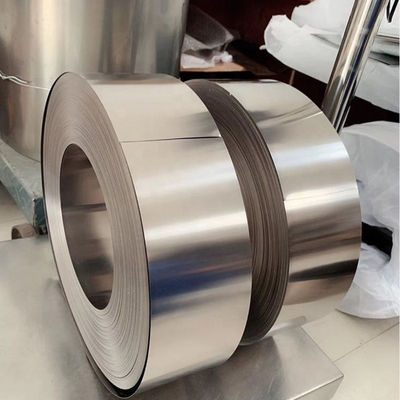
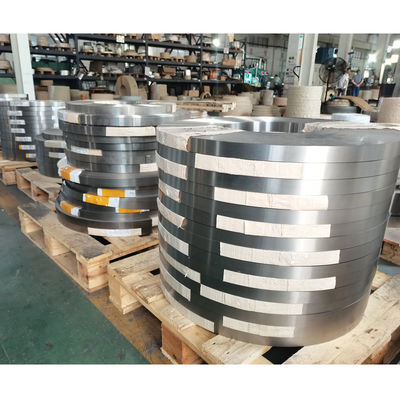
| Brand Name: | DLX |
| Model Number: | Pure Nickel strip |
| MOQ: | 2kg |
| Payment Terms: | L/C,T/T,Western Union |
| Supply Ability: | 500 tons per month |
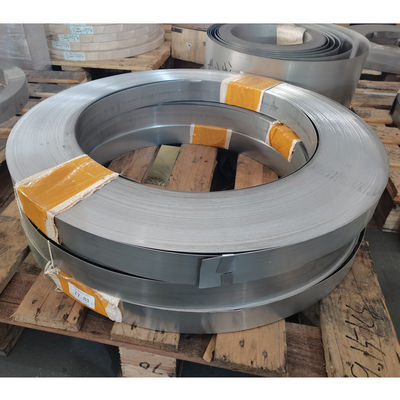
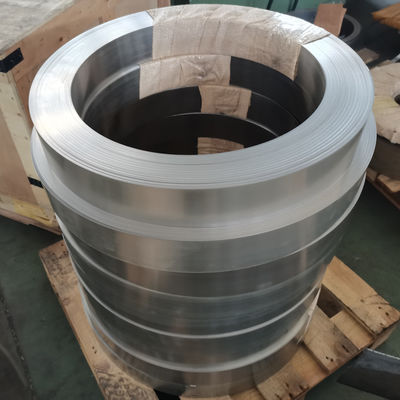
Battery spot welding is decided by the foil — thickness, surface and chemistry determine whether the weld holds or the tab lifts. This nickel foil for battery spot welding, rolled from 0.05 mm thin stock, gives the welding window your line needs: low resistance of 0.096 μΩ·m, a clean bright surface for stable contact, and uniform gauge across the coil so weld penetration stays repeatable. Ni200 and Ni201 are the standard grades, with N4/N6 also available; nickel plate for structural or jig applications is supplied per drawing from the same line.

Nickel foil, strip and plate are the same material at different thickness, and each serves a different job in battery production. Foil (thin section of the strip range, down to 0.05 mm) is for tab and connection welding where low heat input protects the cell; strip covers the 0.05-0.5 mm band for patterned and plain connectors; plate (thicker, per drawing) is for structural parts, jigs and busbar stock rather than weld joints. This page supplies foil and strip from the 0.05-0.5 mm range in widths up to 200 mm; plate is confirmed per drawing. All are solid commercial-purity nickel, not nickel-plated steel — specify solid nickel when through-thickness chemistry and weld consistency matter.
| Form | Size Range | Temper |
|---|---|---|
| Foil / strip (thickness * width) | 0.05-0.5 mm * 5-200 mm | M / 1/4H / 1/2H |
| Plate | Per drawing | M / 1/4H / 1/2H |
Note: standard foil/strip orders start at a 5 kg MOQ; N4 high-purity at 3 kg. The thickness and dimensions can be produced to customer requirements — submit your drawing for confirmation.
Spot welding fuses two layers with a short current pulse; thin nickel foil (0.05-0.15 mm) minimizes the heat input to the cell while still carrying the tab current, and its low resistivity (0.096 μΩ·m) keeps resistance heating at the joint low. The result is a strong weld with less thermal stress on the cell — the reason thin foil is the standard consumable for automated tab welding lines.
Ni201 (≥99.0% Ni, C ≤0.02%) and Ni200 (≥99.2%, C ≤0.15%) both weld cleanly in resistance spot welding; Ni201 is the typical choice for battery service where low carbon supports long-term reliability. N4 (≥99.9%) and N6 (≥99.5%) follow the GB system. Chemistry, gauge and surface are checked per batch, so the weld window stays consistent across the coil — the property automated lines depend on.
Spot welding is decided at the surface: oil, oxide and burrs are the first causes of failed welds. Foil and strip are produced with controlled surface finish and edge quality, and every batch passes composition, thickness, width and surface inspection before release. Batch records accompany the shipment, and export orders include EN 10204 3.1 mill certificates.
Choose by joint and structure: foil (0.05-0.15 mm) for tab welds with minimal heat input; strip (up to 0.5 mm) for patterned connectors and higher-current paths; plate (per drawing) for structural parts, busbars and jigs. All forms are rolled on the same nickel line, so grade chemistry is consistent whichever form your pack needs.
| Grade | Price (USD/kg, FOB) |
|---|---|
| N4 | 420-480 |
| Ni201 | 350-390 |
| Ni200 | 340-380 |
| N6 | 300-340 |
| Grade | Ni+Co / Ni (Min %) | Cu | Si | Mn | C | Mg | S | P | Fe |
|---|---|---|---|---|---|---|---|---|---|
| N4 (NP1) | 99.9 | ≤0.015 | ≤0.03 | ≤0.002 | ≤0.01 | ≤0.01 | ≤0.001 | ≤0.001 | ≤0.04 |
| N6 (NP2) | 99.5 | ≤0.10 | ≤0.10 | ≤0.05 | ≤0.10 | ≤0.10 | ≤0.005 | ≤0.002 | ≤0.10 |
| Ni201 | 99.0 | ≤0.25 | ≤0.35 | ≤0.35 | ≤0.02 | — | ≤0.01 | — | ≤0.40 |
| Ni200 | 99.2 | ≤0.25 | ≤0.35 | ≤0.35 | ≤0.15 | — | ≤0.01 | — | ≤0.40 |
| Property | Value |
|---|---|
| Density | 8.908 g/cm³ |
| Melting Point | 1435-1446°C |
| Curie Temperature | 358°C |
| Electrical Resistivity | 0.096 μΩ·m |
| Thermal Conductivity (Ni200) | 70.2 W/m·K |
| Tensile Strength (annealed) | ≥462 MPa |
| Elongation | ≥35% |
| Hardness | 90-120 HB |
Every batch passes chemical composition analysis, thickness and width measurement, mechanical property testing and surface inspection before release. Surface cleanliness at the weld zone is checked specifically — oil, oxide and burrs are the first causes of failed tab welds — and batch records accompany the shipment.
Foil and strip are supplied coiled with edge protection, packed in cartons or wooden cases as required; plate is packed with protective sheets in wooden cases. Delivery is 7-15 days for standard production, 3-7 days for small in-stock quantities, and 15-30 days for complex custom requirements confirmed against your drawing.
The reason battery lines trust our foil is simple: the coil that arrives welds like the coil we tested, because composition, gauge and surface are verified per batch on a nickel-only line running since 2002. DLX operates 12,000 m² of plant with ISO 9001 & SGS certified systems and 10,000 t/yr capacity, rolling Ni200/Ni201 and N4/N6 foil, strip and plate for battery customers across export markets.
Submit your drawing and quantity for a confirmed quote.
0.05-0.15 mm foil is typical for tab welds where low heat input protects the cell; 0.2-0.5 mm strip suits higher-current connectors. Tell us your cell type and weld current and we will confirm the gauge.
Yes — plate is supplied per drawing for structural parts, busbars and jigs, from the same nickel line and grade range. Confirm thickness, width and length, and the plate will be cut to spec.
Ni201 (≥99.0%, C ≤0.02%) is the typical battery choice; Ni200 (≥99.2%) is the economical standard; N4 (≥99.9%) and N6 (≥99.5%) follow the GB system. All weld cleanly in resistance spot welding.
Each batch is checked for composition, thickness, width and surface condition, with batch records provided. A sample coil lets you run weld tests before committing to production quantity.
Standard foil/strip starts at 5 kg; N4 high-purity at 3 kg. Samples are free for N6/Ni200 (0.5 kg); N4/Ni201 samples are charged and refunded on a first order of 50 kg or more.
Standard production ships in 7-15 days; small in-stock quantities in 3-7 days; custom requirements in 15-30 days after drawing confirmation. Export orders include EN 10204 3.1 mill certificates and batch test records.


 english
 français
 Deutsch
 Italiano
 Русский
 Español
 português
 Nederlandse
 ελληνικά
 日本語
日本語
 한국
한국
 中文
中文
 العربية
 हिन्दी
 Türkçe
 indonesia
 tiếng Việt
 ไทย
ไทย
 বাংলা
বাংলা
 فارسی
فارسی
 polski