
5s
+1
Submission successful!

|
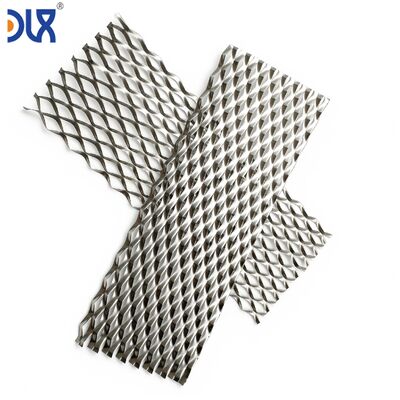
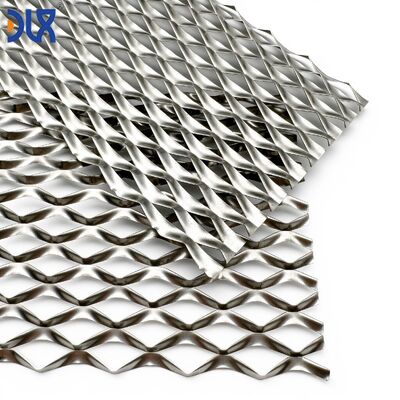
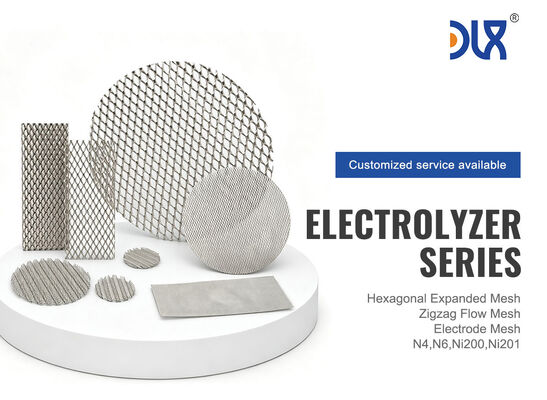
| Brand Name: | DLX |
| Model Number: | Pure Nickel |
| MOQ: | 2kg |
| Price: | Custom orders based on provided images |
| Payment Terms: | L/C,D/A,D/P,T/T,Western Union |
| Supply Ability: | 500 tons per month |

ISO9001 Factory Direct | Since 2002 | N4/N6/Ni200 | Robot-Compatible Packaging | Free Sample 5 Sheets
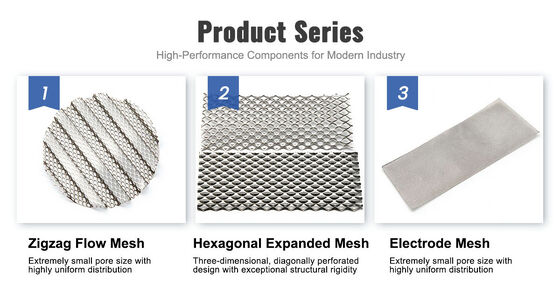
When an electrolyzer gigafactory produces one stack per hour, the mesh cannot be a craft product. It must arrive dimensionally identical to the qualification batch. It must unpack without manual handling. It must feed into a pick-and-place robot without jamming. It must land on the stack in the correct orientation and within the positional tolerance — every time, thousands of times. At Changzhou DLX Alloy Co., Ltd., our pure nickel corrugated mesh is manufactured not just to your dimensional drawing, but to your assembly line requirements: robot-grippable packaging, consistent sheet-to-sheet flatness, edge chamfer where the robot gripper contacts, and batch-level traceability that integrates with your manufacturing execution system. This is electrode component supply for mass production — not for laboratory prototypes.
At 10 stacks per year, an operator can inspect every mesh sheet by hand, reject the ones that are slightly bent, and manually position each sheet during stack assembly. At 10 stacks per week, manual inspection becomes a bottleneck. At 10 stacks per day — the production rate of a 1 GW/year electrolyzer factory — manual handling is not just slow; it introduces variability that no amount of end-of-line testing can fully compensate for. A mesh sheet that is 0.5 mm oversized contacts the adjacent cell frame. A sheet that arrives with a 3 mm bend refuses to lie flat under the robot's vacuum gripper. A sheet whose corrugation height is 0.1 mm below nominal creates a low-compression zone in the stack that shows up as a hot cell three months into field operation.
These failure modes do not exist in the laboratory. They emerge at production scale — and they are prevented by designing the mesh supply for the assembly process, not just for the electrochemical performance.
| Assembly Line Requirement | How Standard Mesh Supply Falls Short | How DLX Mesh Is Engineered for It |
|---|---|---|
| Dimensional repeatability — sheet to sheet, batch to batch | Mesh from different production batches shows dimensional drift as tooling wears. Operator adjusts robot pickup position weekly. Some sheets jam. | Forming roll wear monitored by SPC — tooling refurbished before dimensional drift exceeds 50% of your tolerance band. Every sheet measured for L * W. No drift between qualification batch and production batch 500. |
| Flatness under vacuum pickup | Mesh with residual forming stress curls when picked from the stack. Vacuum gripper loses suction on the curled edge. Robot faults. Operator intervenes. | Post-form solution annealed — zero residual stress. Mesh lies dead flat. Vacuum gripper achieves full-face contact on first pickup attempt. Robot cycle time maintained. |
| Edge condition — no snagging in automated feed | Burred or frayed mesh edges catch on adjacent sheets in the feed magazine. Sheets do not separate cleanly. Double-sheet pickup crashes the robot. | Edges laser-cut or shear-cut and deburred. Interleaved with tissue paper that prevents sheet-to-sheet adhesion. Single-sheet separation reliability >99.9%. |
| Orientation marking | No orientation indicator. Operator visually checks corrugation direction before placement. Human error rate: 1 in 200 sheets placed backward. | One corner marked with a laser-etched orientation dot visible to both human operators and machine vision systems. Zero orientation errors. |
| Robot-compatible packaging | Mesh arrives in a wooden crate. Operator unloads sheets by hand onto a feed table. Double handling. Contamination risk from gloves. | Sheets packed in vacuum-formed trays — each sheet in its own cavity. Tray dimensions matched to your robot cell layout. Robot picks directly from the tray. No operator handling between crate and stack. |
| Batch traceability for MES integration | Paper MTC in an envelope taped to the crate. Someone enters the heat number into the system. Someone makes a typo. | QR code on each tray linking to digital batch record: chemistry, pitch, amplitude, flatness pass/fail, inspection date. Scan at point of use. Auto-logged to your MES. No manual data entry. |
| Your Drawing Specifies | We Additionally Ask About | Why It Matters for Assembly |
|---|---|---|
| Mesh grade — N4/N6/Ni200/Ni201 | Any surface contamination limits (e.g., Fe <50 ppm at surface)? | Affects whether mesh needs cleanroom packaging — standard for PEM where iron contamination degrades membrane life |
| Substrate type — woven or expanded | Robot gripper type: vacuum, magnetic, or mechanical clamp? | Vacuum requires flat surface; magnetic doesn't work on nickel. Mechanical clamp needs defined edge geometry. |
| Pitch & amplitude | Stack compression force per unit area? | We verify that the corrugation profile does not collapse at your compression pressure. Springback test at your stack load confirms dimensional stability. |
| Sheet dimensions (L * W) | Tolerance requirement relative to cell frame? Is the mesh sitting inside a recess or spanning edge-to-edge? | Inside recess: clearance fit, typically -0.5/-1.0 mm from recess dimension. Edge-to-edge: flush or slight undersize to prevent frame contact. |
| Profile shape — sinusoidal or trapezoidal | What contacts the peaks and valleys in the stack? Flat plate, PTL, or membrane? | Trapezoidal recommended for flat plate contact (more contact area). Sinusoidal acceptable for PTL contact (PTL conforms to the wave profile). |
| Corrugation orientation | Flow direction — vertical, horizontal, or cross-flow? Are there manifold openings in the sheet? | We can punch manifold holes after corrugation. Hole position tolerance ±0.5 mm relative to sheet edges. No burrs around holes that could cut gaskets. |
In 2022, one of our electrolyzer customers — then producing 2 stacks per week — called with a problem. They had just commissioned a semi-automated stack assembly line capable of 1 stack per shift, and the mesh sheets from their existing supplier were failing at the robot pickup station. Sheets curled. Robot dropped them. Operator had to intervene every 4th or 5th cycle. The line was running at 60% of design throughput because the mesh was not designed for automated handling.
Their mesh supplier's response: "The mesh meets the drawing. The problem is your robot." Technically true — the mesh met the dimensional spec. Practically useless — the mesh could not function in the assembly process it was purchased for.
We replaced that supplier. Same drawing. Same dimensional spec. Different post-processing — specifically, a full solution anneal after corrugation to eliminate the residual stress that caused the curling, plus a deburring step on the cut edges that prevented sheet-to-sheet adhesion in the feed magazine, plus a simple interleaf tissue between sheets. The robot pickup success rate went from 80% to >99.9%. The line ran at design throughput. The mesh still met the drawing — but now it also met the assembly process.
That is the difference between a mesh supplier who reads your print and one who understands your factory.
Chemistry certified from ingot through finished mesh. Digital record linked to QR code on every tray.
| Element (%) | N4 | N6 | Ni200 | Ni201 |
|---|---|---|---|---|
| Ni+Co | ≥99.9 | ≥99.5 | — | — |
| Ni | — | — | ≥99.2 | ≥99.0 |
| Fe | ≤0.04 | ≤0.1 | ≤0.4 | ≤0.4 |
| Cu | ≤0.015 | ≤0.1 | ≤0.25 | ≤0.25 |
| C | ≤0.01 | ≤0.1 | ≤0.15 | ≤0.02 |
| Si | ≤0.03 | ≤0.1 | ≤0.35 | ≤0.35 |
| Mn | ≤0.002 | ≤0.05 | ≤0.35 | ≤0.35 |
| S | ≤0.001 | ≤0.005 | ≤0.01 | ≤0.01 |
| Control Point | What We Measure | Production Relevance |
|---|---|---|
| Chemistry SPC | Ni, Fe, Cu per ingot heat. Moving range chart for Fe content across heats. | Fe drift across heats = overpotential drift across production batches. We catch it before the wire is drawn. |
| Dimensional SPC | X-bar chart: pitch (10 measurements/sheet, 5 sheets/batch). R chart: within-sheet variation. | Pitch drift = flow channel geometry changes = cell performance changes. Cpk ≥1.33 maintained. Tooling refurbished at Cpk 1.33 threshold, not at Cpk 1.0 emergency. |
| Amplitude SPC | X-bar chart: amplitude (5 measurements/sheet). Verified post-anneal. | Amplitude sets the channel cross-section and the compressed stack height. Within-batch variation ≤0.05 mm from sheet 1 to sheet 500. |
| Flatness audit | Granite surface plate + feeler gauge. Per AQL sampling. Sheet must lie flat under own weight — zero gap to surface plate. | Curled sheet fails robot pickup. Visual pass/fail at inspection. Curled sheets scrapped before they reach packaging. |
| Sheet separation test | Operator attempts to separate sheets from feed stack without tissue paper. Must separate with <5N force. | Sheets that stick together cause double-pickup at the robot. Interleaf tissue standard. No adhesion. |
| Tray audit | Random tray selected per batch. All sheets removed and inspected. All sheets returned to correct cavities. Tray resealed. | Verifies that packing process did not damage sheets. Zero damage rate per tray = zero surprise when your robot unpacks. |
| QR code verification | Every tray QR scanned. Digital record verified to contain: grade, heat number, dimensional data batch, inspection pass/fail. | Scan at receiving. Batch auto-logged to your MES. Traceability complete without manual data entry. |
Third-party audit by SGS, BV, or TÜV. Full SPC data package available for customer quality engineering review. Free sample 5 sheets with qualification data package.
| Tray system | Vacuum-formed PET trays — one sheet per cavity. Cavity depth matched to your corrugated mesh total thickness + 0.5 mm clearance. Sheets cannot shift during transit. Tray outer dimensions matched to your robot cell feed station footprint. |
| Tray stacking | Trays stacked 10–20 per level in plywood crate. Interleaved with rigid separator boards between tray levels. Entire crate sealed with desiccant in barrier foil. |
| QR code placement | Laser-printed QR code on tray exterior — scannable without opening crate. Code links to batch digital record. Additional QR on crate exterior for warehouse scanning. |
| Orientation dot | 1.5 mm laser-etched dot on one corner of every sheet. Positioned outside the electrode active area. Visible under factory lighting. Machine vision compatible. |
| MOQ | 5 sheets — free sample with qualification data package. 50 sheets — production trial. 500+ sheets — production supply. |
| Lead Time | Existing tooling: 2 weeks for trial batch, 4 weeks for production. New tooling: add 3–4 weeks. |
| Shipping | Air for trial; sea (FCL) for production. Tray-in-crate system designed to survive 6-week ocean transit without tray deformation or sheet movement. |
| Payment | T/T for trial; T/T or L/C at sight for production. |
Can your tray system integrate directly with our robot cell?
Yes. Send us your robot cell feed station dimensions — tray outer dimensions, tray height, and pickup clearance requirements. We will size the trays to match your cell. If you use a standard tray format (e.g., Euro-norm 600*400 mm), we can design the cavity layout within that format to maximize sheets per tray while maintaining robot access clearance.
How do you ensure batch-to-batch consistency over a multi-year production program?
Forming roll wear is the primary source of dimensional drift in corrugated mesh. We monitor pitch and amplitude by SPC from the first sheet of every production batch. When Cpk trends toward 1.33, tooling is refurbished — not when your receiving inspection detects a dimensional deviation. In addition, we reserve a dedicated nickel ingot heat for long-running production programs. Same chemistry across years — no re-qualification triggered by a heat change.
What if our robot uses magnetic grippers?
Nickel is ferromagnetic — magnetic grippers work. However, pure nickel has lower magnetic permeability than steel, so your gripper magnet specification may need adjustment. We can supply test sheets for your automation team to characterize magnetic pickup force before finalizing tooling. Vacuum grippers are more common for nickel mesh and we optimize flatness specifically for vacuum pickup reliability.
Can you ship to our contract manufacturer while we retain quality oversight?
Yes. We ship to your specified destination — your facility or your contract manufacturer. The QR code system allows you to remotely verify batch data regardless of ship-to location. Digital batch records are accessible to your quality team via a secure portal. Physical inspection reports ship with the product for the receiving location's incoming QC. You maintain traceability visibility even if the product never passes through your facility.
What happens to the trays — do we return them?
Two options. Standard: trays are single-use recyclable PET. Your facility recycles them through your standard waste stream. Optional: returnable trays made from durable polypropylene. Trays are collected, inspected, cleaned, and reused for your next order. Returnable program has a per-tray deposit. Most production-scale customers choose recyclable for simplicity and lower logistics overhead. Your choice.


 english
 français
 Deutsch
 Italiano
 Русский
 Español
 português
 Nederlandse
 ελληνικά
 日本語
日本語
 한국
한국
 中文
中文
 العربية
 हिन्दी
 Türkçe
 indonesia
 tiếng Việt
 ไทย
ไทย
 বাংলা
বাংলা
 فارسی
فارسی
 polski