
5s
+1
Submission successful!

|
| Brand Name: | DLX |
| Model Number: | Nickel Capillary Tubing |
| MOQ: | 5KG |
| Payment Terms: | L/C,D/A,D/P,T/T,Western Union |
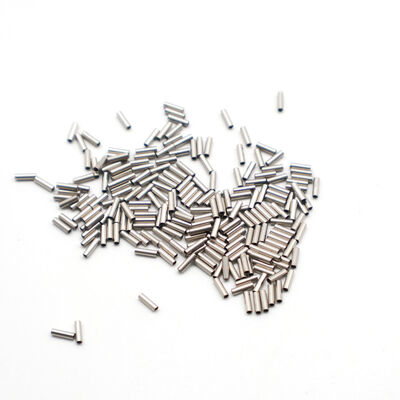
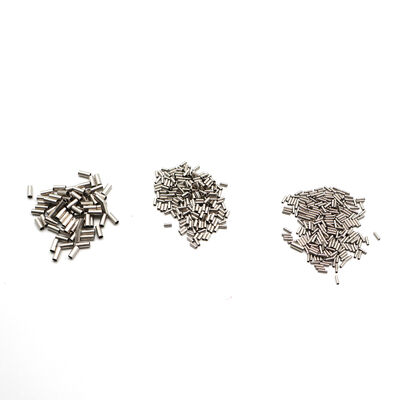
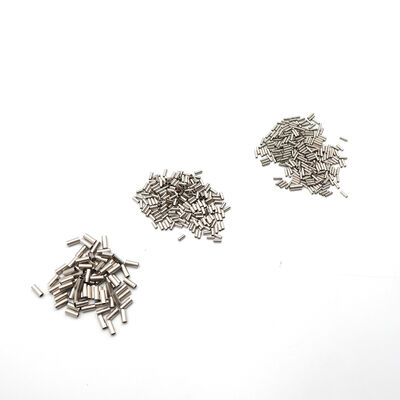
A general-purpose nickel capillary at 90–120 HB works for instrument air and low-pressure chemical dosing. It does not work for a 5,000 psi hydraulic control line on a subsea wellhead, where the tube wall must resist burst pressure at 150°C while immersed in produced water saturated with H₂S and CO₂. For those conditions, DLX supplies nickel capillary cold-drawn from pierced hollows over a floating mandrel — no longitudinal weld, no fusion zone, no weak plane. Manufactured to ASTM B163 and ASME SB-163 for seamless nickel heat-exchanger and condenser tube, with full EN 10204 3.1 MTC per heat and SGS third-party verification available. This is not the same capillary we ship for laboratory gas chromatography. It is purpose-built for oilfield service: hydraulic actuation lines, chemical injection capillaries, downhole pressure sensing conduits, and topside instrument tubing where a leak is a safety event, not a recalibration.

| Parameter | Range | Tolerance |
|---|---|---|
| Outer Diameter (OD) | 1.0 – 20 mm | ±0.05 mm |
| Wall Thickness | 0.15 – 2.5 mm | ±8% circumferential variation max |
| Length (Straight) | Up to 6 m | Cut tolerance ±2 mm |
| Length (Coiled) | Up to 2,000 m (thin-wall ≤ 3 mm OD) | Continuous single-length, no orbital welds |
| Delivery Condition | Cold-drawn; annealed (90–120 HB) or as-drawn temper on request | |
| Applicable Standards | ASTM B163 / ASME SB-163 (seamless nickel tube); ASTM B161, B725 for reference | |
Custom OD * wall combinations outside standard range on request. Specify MAWP at inquiry for wall thickness confirmation.
| Property | Seamless (Cold-Drawn) | Welded (Longitudinal Seam) |
|---|---|---|
| Burst Pressure at Equal Wall | 100% of calculated — no seam derating | Derated 15–25% — weld joint efficiency factor 0.75–0.85* |
| Sour Service (H₂S) | No SSC susceptibility — homogeneous microstructure | Weld HAZ is preferential SSC initiation site per NACE MR0175 |
| Cyclic Pressure Fatigue | No microstructural discontinuity to propagate cracks | Weld fusion line is primary fatigue crack initiation site |
| Wall Uniformity (360°) | ±8% — controlled by floating mandrel | ±15% — weld bead creates localized thick spot; HAZ may be thinner |
| Cost per Meter | 20–40% premium — more drawing passes | Lower — continuous strip-forming, higher throughput |
| Oil & Gas Fit | HPHT control lines, subsea umbilicals, sour service | Low-pressure utility air, non-critical conduit |
| OD (mm) | Wall (mm) | Calculated Burst (MPa) | Calculated Burst (psi) | MAWP at 4:1 SF (MPa) |
|---|---|---|---|---|
| 3.0 | 0.50 | 57 | 8,220 | 14.2 |
| 3.0 | 0.75 | 85 | 12,330 | 21.3 |
| 6.0 | 0.50 | 28 | 4,110 | 7.1 |
| 6.0 | 1.00 | 57 | 8,220 | 14.2 |
| 10.0 | 1.00 | 34 | 4,930 | 8.5 |
| 10.0 | 1.50 | 51 | 7,400 | 12.8 |
| 12.0 | 2.00 | 57 | 8,220 | 14.2 |
Calculated per Barlow's formula: P = (2 * S * t) / D where S = 170 MPa (yield strength, annealed Ni200). Hydrostatic proof test to 1.5* MAWP available on request. For applications requiring higher MAWP at equivalent OD, specify thickened wall or confirm maximum service pressure at inquiry.
| Environment | Condition | Ni200 | 316L Stainless |
|---|---|---|---|
| H₂S (Sour Gas) | ≤ 1 psi partial pressure, ≤ 150°C | No SSC — immune by NACE MR0175 definition | Susceptible to SSC in HAZ — requires post-weld heat treatment |
| CO₂ (Sweet Corrosion) | Dissolved CO₂, pH 4–5, ≤ 100°C | Corrosion rate < 0.01 mm/year | 0.1–0.5 mm/year — pitting risk at welds |
| Chloride SCC | > 1,000 ppm Cl⁻, > 60°C | Immune — no chloride SCC mechanism in pure nickel | Susceptible above 60°C — especially at welds and cold-worked areas |
| Produced Water | 50,000–200,000 ppm TDS, 80–150°C | General corrosion < 0.02 mm/year | Pitting and crevice corrosion — not recommended without inhibition |
| Standard | Title | Relevance to Nickel Capillary |
|---|---|---|
| ASTM B163 | Seamless Nickel and Nickel Alloy Condenser and Heat-Exchanger Tubes | Primary standard — directly governs seamless nickel capillary tube for pressure-boundary and heat-transfer service. This is the correct standard for oil & gas capillary. |
| ASME SB-163 | Seamless Nickel and Nickel Alloy Condenser and Heat-Exchanger Tubes (ASME Boiler & Pressure Vessel Code Edition) | Pressure-vessel code equivalent of ASTM B163. Required when the capillary is part of an ASME Section VIII or B31.3 pressure system. |
| ASTM B161 | Nickel Seamless Pipe and Tube | Applicable for larger-diameter, heavier-wall seamless nickel tube. Reference when capillary dimensions approach small-bore pipe sizing. |
| ASTM B725 | Welded Nickel and Nickel-Copper Alloy Tube | Reference standard for welded alternative. DLX capillary is seamless and exceeds the integrity requirements of this standard. |
| NACE MR0175 / ISO 15156 | Materials for Use in H₂S-Containing Environments in Oil and Gas Production | Nickel 200 (UNS N02200) is listed as acceptable for sour service without environmental cracking susceptibility. |
ASTM B163 is the correct and directly applicable standard for seamless nickel capillary tube. ASTM A240 (stainless steel plate) and ASTM A182 (forged steel fittings) are not applicable to nickel capillary tube — they govern entirely different material families and product forms. DLX certifies to B163 chemistry and mechanical property limits on every shipment.
| Grade | Ni Content | Oil & Gas Application Fit | Reference Price (FOB, USD/kg) |
|---|---|---|---|
| Ni200 | ≥ 99.6% | Standard — hydraulic control lines, chemical injection, topside instrument tubing | 62 – 70 |
| Ni201 | ≥ 99.0% (C ≤ 0.02%) | High-temperature — downhole sensor conduits, steam tracing, flare pilot lines above 315°C | 66 – 75 |
| N4 | ≥ 99.9% (Ni+Co) | Critical service — subsea wellhead control lines, H₂S-rich sour gas environments | 82 – 92 |
| N6 | ≥ 99.5% (Ni+Co) | General utility — pneumatic control lines, non-critical instrument air, protective conduit | 52 – 60 |
Prices FOB Shanghai, 5–500 kg orders. Volume pricing for annual contracts. MOQ: 5 kg. SGS third-party inspection available on request. Standard delivery 7–25 working days.
| Element | N4 | N6 | Ni200 | Ni201 |
|---|---|---|---|---|
| Ni+Co | ≥ 99.9% | ≥ 99.5% | — | — |
| Ni | — | — | ≥ 99.2% | ≥ 99.0% |
| Cu | ≤ 0.015 | ≤ 0.10 | ≤ 0.25 | ≤ 0.25 |
| Si | ≤ 0.03 | ≤ 0.10 | ≤ 0.35 | ≤ 0.35 |
| Mn | ≤ 0.002 | ≤ 0.05 | ≤ 0.35 | ≤ 0.35 |
| C | ≤ 0.01 | ≤ 0.10 | ≤ 0.15 | ≤ 0.02 |
| Mg | ≤ 0.01 | ≤ 0.10 | — | — |
| S | ≤ 0.001 | ≤ 0.005 | ≤ 0.01 | ≤ 0.01 |
| P | ≤ 0.001 | ≤ 0.002 | — | — |
| Fe | ≤ 0.04 | ≤ 0.10 | ≤ 0.40 | ≤ 0.40 |
Source: DLX Alloy product catalog. EN 10204 3.1 MTC with full composition included on every shipment. SGS third-party verification available.
| Property | Value | Unit |
|---|---|---|
| Tensile Strength (Rm) | ≥ 462 | MPa |
| Elongation (A5) | ≥ 35 | % |
| Hardness | 90 – 120 | HB (annealed) |
| Modulus of Rigidity (Shear Modulus) | ~ 76 | GPa (KN/mm²) |
| Density | 8.89 | g/cm³ |
| Melting Point | 1435 – 1446 | °C |
| Curie Temperature | 358 | °C |
| Max Service Temperature | 600 | °C |
| Electrical Resistivity (20°C) | 0.096 * 10⁻⁶ | Ω·m |
| Thermal Conductivity | 70.2 | W/m·K |
| CTE (20–100°C) | 13.3 * 10⁻⁶ | m/m·°C |
| Specific Heat | 456 | J/kg·°C |
| Tube Construction | Seamless — cold-drawn over mandrel, no longitudinal weld | |
| Material Standard | ASTM B163 / ASME SB-163; NACE MR0175 reference | |
Source: DLX Alloy product catalog. Curie temperature 358°C from published nickel physical property data. EN 10204 3.1 MTC with each shipment.
| Parameter | Standard Range | Notes |
|---|---|---|
| Grades | Ni200, Ni201, N4, N6 | Monel available for seawater service |
| Construction | Seamless, cold-drawn | No longitudinal weld — HPHT rated |
| OD Range | 1.0 – 20 mm | ±0.05 mm tolerance |
| Wall Thickness | 0.15 – 2.5 mm | Specify MAWP for wall calc confirmation |
| Length | Straight to 6 m; coiled to 2,000 m | Coiled for thin-wall ≤ 3 mm OD |
| Standards | ASTM B163 / ASME SB-163; NACE MR0175 | Full material certification per heat |
| Third-Party Testing | SGS accepted | Arrange at inquiry |
| MOQ | 5 kg | Sample for pressure qualification available |
Delivery: 7–25 working days. Expedited service available. Air freight < 30 kg; sea freight for bulk. Departure: Shanghai.
Changzhou DLX Alloy Co., Ltd. certifies its seamless nickel capillary to ASTM B163 and ASME SB-163 — not because those standards sound authoritative, but because they are the standards that actually govern seamless nickel tube for pressure-boundary and heat-transfer service. Oil and gas procurement engineers and third-party inspectors know the difference between B163 (nickel tube) and A240 (stainless plate). Since 2002, our 12,000 m² nickel-only facility in Changzhou has drawn seamless nickel tube for upstream, midstream, and downstream oil and gas applications — from subsea hydraulic control lines to onshore refinery instrument tubing. ISO9001 certified, 500 tons monthly capacity, serving energy sector customers across 40+ countries. Every shipment includes a heat-specific EN 10204 3.1 MTC with measured chemistry and mechanical properties documented against the ASTM B163 specification limits.
ASTM B163 governs seamless nickel and nickel alloy condenser and heat-exchanger tubes — this is the correct standard for nickel capillary in any pressure-boundary or heat-transfer application. ASTM A240 governs stainless steel plate, sheet, and strip — not tube, and not nickel. ASTM A182 governs forged alloy-steel pipe flanges and fittings — not capillary tube, and not nickel. Citing A240 or A182 on a nickel capillary product is a material specification error. DLX certifies to B163 per heat on every shipment.
Yes. Nickel 200 (UNS N02200) is listed as acceptable for sour service per NACE MR0175/ISO 15156 without environmental cracking susceptibility. It is not subject to sulfide stress cracking and resists hydrogen embrittlement at typical wellhead partial pressures. For highly aggressive sour gas environments with H₂S above 1 psi and temperatures above 150°C, N4 grade (99.9% Ni) or Monel 400 capillary is recommended. Specify H₂S concentration and operating conditions for a material recommendation.
Burst pressure follows Barlow's formula: P = (2 * S * t) / D. For annealed Ni200 (S ≈ 170 MPa yield), a 6mm OD * 1mm wall capillary yields approximately 57 MPa (8,220 psi) burst and a recommended MAWP of 14.2 MPa at 4:1 safety factor. Refer to the Burst Pressure Reference Table above for common OD/wall combinations. Provide your target MAWP at inquiry for wall thickness confirmation.
Yes. SGS third-party inspection is accepted and arranged at our Changzhou facility. The inspector witnesses material identification, dimensional verification, sampling, and mechanical testing. BV, TÜV, and DNV may also be accommodated — confirm when ordering. The inspection report is included with your shipping documentation.
Yes. For thin-wall capillary (≤ 3 mm OD, wall ≤ 0.5 mm), we supply continuous coiled lengths of 500–2,000 meters per spool — drawn as a single continuous length with no orbital welds. Specify your required continuous length, OD, wall, and delivery condition at inquiry. We confirm feasibility and spool capacity within 24 hours.


 english
 français
 Deutsch
 Italiano
 Русский
 Español
 português
 Nederlandse
 ελληνικά
 日本語
日本語
 한국
한국
 中文
中文
 العربية
 हिन्दी
 Türkçe
 indonesia
 tiếng Việt
 ไทย
ไทย
 বাংলা
বাংলা
 فارسی
فارسی
 polski