5s
+1
Submission successful!

|
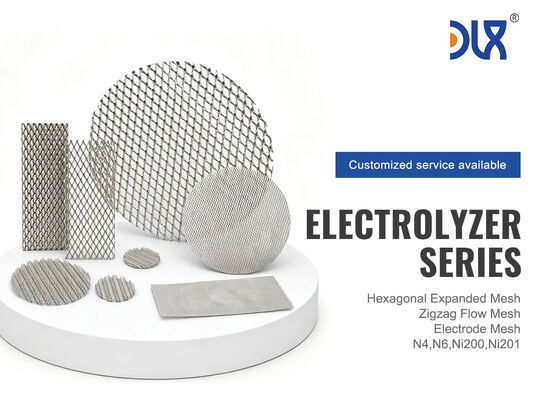
| Brand Name: | DLX |
| Model Number: | Pure Nickel |
| MOQ: | 5kg |
| Price: | Custom orders based on provided images |
| Payment Terms: | L/C,D/A,T/T,D/P,Western Union |
| Supply Ability: | 500 tons per month |
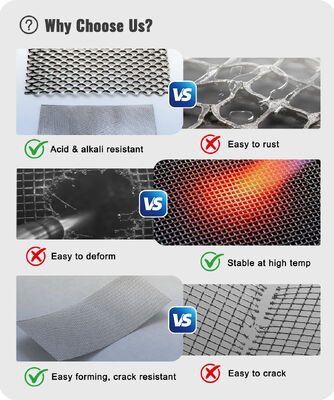
ISO9001 Factory Direct | Since 2002 | N4/N6/Ni200/Ni201 | Custom Every Parameter | 3-7 Day Trial Ship
The global green hydrogen electrolyzer market is scaling from gigawatts to terawatts — and every megawatt of capacity requires thousands of precisely engineered nickel electrode mesh sheets, each one a potential failure point in a multi-million-dollar stack. At Changzhou DLX Alloy Co., Ltd., we supply that mesh to electrolyzer OEMs who cannot afford field failures. Our approach is simple but uncommon: we manufacture the nickel wire ourselves, we weave or weld the mesh in-house, and we treat every mesh sheet as a functional electrode component — not as a commodity mesh product. Custom wire diameter, mesh count, weave pattern, sheet dimensions, surface condition, and post-weave annealing are all adjustable to your cell design. Full EN 10204 3.1 MTC with wire-to-sheet traceability.
In 2020, a 1 MW alkaline electrolyzer stack contained roughly 200 electrode mesh sheets. If one sheet had a broken wire that caused a local hot spot during operation, the stack could continue running — the defect was small relative to total electrode area.
By 2026, 20 MW stacks are in production, and 100 MW modules are on the drawing board. A 20 MW stack might contain 3,000 to 5,000 mesh sheets. At this scale, even a 0.1% defect rate means 3 to 5 mesh sheets with potential issues per stack — and each one can create a localized overpotential, accelerate membrane degradation, or in a worst case, cause an internal short circuit that takes the entire stack offline.
The mesh is no longer a commodity. It is a critical component whose quality directly determines stack efficiency, stack life, and stack warranty cost. Electrolyzer OEMs scaling to 20 MW and beyond are shifting their mesh procurement from "buy by the roll, cut in-house, hope it works" to "partner with a manufacturer who treats mesh as an engineered electrode component."
That partnership is what DLX offers.
| Step | What You Provide | What We Do | Typical Timeline |
|---|---|---|---|
| 1. Initial consultation | Electrolyzer type (ALK/PEM/AEM), operating temperature, KOH concentration, current density target, cell active area dimensions | Recommend nickel grade (N4/N6/Ni200/Ni201), mesh type, and initial wire diameter + mesh count range for your operating conditions | 24–48 hours |
| 2. Sample specification | Selected mesh count, wire diameter, weave pattern, and sheet dimensions | Draw wire to specified diameter, weave trial sheets (typically 3–5 sheets), anneal, flatten, inspect, ship with MTC | 1–2 weeks for stock wire diameters; 4–6 weeks for new wire diameters |
| 3. Your evaluation | Test mesh in your single-cell or short-stack setup: electrochemical performance, compression behavior, catalyst coating adhesion, long-duration stability | Technical support during evaluation — adjust wire diameter, mesh count, or surface condition based on your test results | Per your test protocol |
| 4. Optimization loop | Feedback: "Current density at 1.8V improved but gas bubble release at the mesh/membrane interface needs improvement." Or: "Compression set after 500 hours is 0.1mm more than target." | Iterate mesh specification — adjust weave pattern for gas release, adjust post-anneal flatness for compression — produce new trial batch | 2–4 weeks per iteration |
| 5. Production qualification | Finalized specification, annual volume forecast, quality requirements (AQL, defect categories) | Establish dedicated production schedule, implement customer-specific in-process inspection checkpoints, first-article qualification | 4–8 weeks |
| Parameter | Options | Impact on Electrolyzer Performance |
|---|---|---|
| Nickel grade | N4 (99.9%+), N6 (99.5%+), Ni200 (99.2%+), Ni201 (low C) | Higher purity = lower overpotential and less trace metal dissolution into electrolyte. Ni201 for elevated-temp ALK designs above 315°C. |
| Wire diameter | 0.10–0.80 mm | Thinner wire = more geometric surface area per gram of nickel = higher catalyst utilization. Thicker wire = longer mechanical life, lower replacement frequency. |
| Mesh count | 10–200 wires/inch | Higher count = more uniform current density but potentially slower gas bubble release from the electrode gap. Balance is cell-specific. |
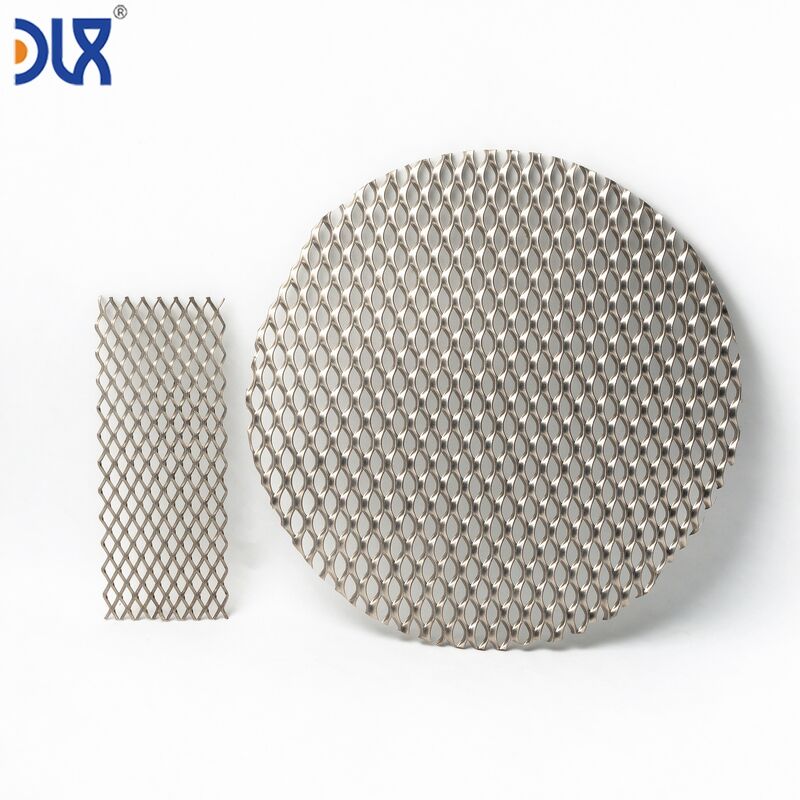
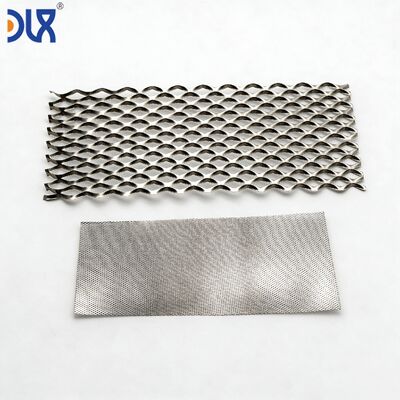
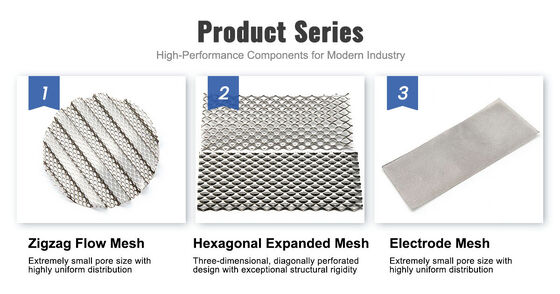
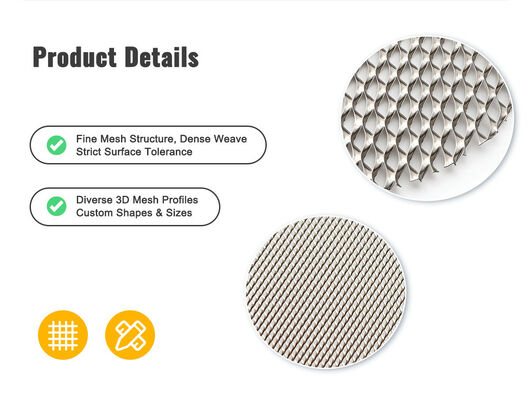
| Weave type | Plain, plain Dutch, twill, welded, expanded | Dutch weave: tight filtration-grade surface for zero-gap. Twill: flexible under compression. Welded: rigid for structural electrodes. Expanded: flat surface for PEM flow fields. |
| Sheet dimensions | Custom L * W, laser or shear cut | Cut to your cell frame — no trimming waste, no burrs. ±0.5 mm dimensional tolerance. |
| Surface condition | Bright annealed, matte, Ra-specified | Bright: lowest contamination, ready for coating. Ra-specified: optimized for catalyst adhesion. All annealed after weave for flatness. |
| Post-treatment | Annealed + flattened, as-woven, pre-oxidized | Annealed + flattened: standard for stack compression. Pre-oxidized: for applications where initial burn-in time reduction matters. |
Visit a conventional mesh procurement route: a wire mill in Jiangsu melts nickel and draws wire. A mesh weaving shop in Hebei buys that wire and weaves it. A trading company in Shanghai consolidates, packages, and exports. The electrolyzer OEM receives mesh sheets and doesn't know which facility the wire came from, what tooling touched it, or what annealing atmosphere was used.
At DLX, the process is linear and transparent. Our melting furnace produces pure nickel ingots. Our wire drawing line reduces that to your specified diameter — with in-line diameter monitoring and intermediate controlled-atmosphere annealing at every appropriate reduction stage. The wire moves directly to our mesh fabrication area without intermediate transport or handling by third parties. The mesh is woven or welded to your specification, solution annealed in the same controlled-atmosphere furnaces used for our aerospace-grade nickel wire, and flattened. Finally, each sheet is inspected against your acceptance criteria, interleaved with acid-free tissue, and packed flat for shipment.
No trading company in the middle. No subcontractor whose facility you've never audited. No wire that spent weeks in a warehouse collecting surface contamination before it reached the weaving shop. This is the supply chain hydrogen electrolyzer OEMs are demanding as they scale — and it is the supply chain we have been building since 2018.
Source: DLX Alloy product catalog. Full chemistry certified per wire heat used for your mesh.
| Element (%) | N4 | N6 | Ni200 | Ni201 |
|---|---|---|---|---|
| Ni+Co | ≥99.9 | ≥99.5 | — | — |
| Ni | — | — | ≥99.2 | ≥99.0 |
| Fe | ≤0.04 | ≤0.1 | ≤0.4 | ≤0.4 |
| Cu | ≤0.015 | ≤0.1 | ≤0.25 | ≤0.25 |
| C | ≤0.01 | ≤0.1 | ≤0.15 | ≤0.02 |
| Si | ≤0.03 | ≤0.1 | ≤0.35 | ≤0.35 |
| Mn | ≤0.002 | ≤0.05 | ≤0.35 | ≤0.35 |
| S | ≤0.001 | ≤0.005 | ≤0.01 | ≤0.01 |
| Stage | Inspection | Why It Matters for Your Electrolyzer |
|---|---|---|
| Wire chemistry | OES per melt heat; PMI spot check before weaving | Fe >0.1% at the electrode surface → increased overpotential → lower stack efficiency → higher LCOH |
| Wire surface | Microscopy at 5*; surface contamination check | Lubricant residue from wire drawing must be fully removed before weaving — any carbon residue on the mesh surface inhibits catalyst coating adhesion |
| Weave inspection | Mesh count verification per sheet; visual scan for broken wires, missed weaves | One broken wire in a zero-gap electrode = local current concentration = accelerated membrane degradation at that point |
| Post-anneal flatness | Granite surface plate measurement; deviation recorded per sheet | Stack compression must be uniform across all cells. Non-flat mesh → uneven compression → channels for gas cross-over |
| Dimensional | L * W ±0.5 mm; cut edge inspection under magnification | Oversized sheet edges can contact adjacent cell frames under compression → internal short circuit |
| Documentation | EN 10204 3.1 MTC + mesh inspection report + flatness report + certificate of conformance | Full traceability — from nickel ingot chemistry to your electrode mesh sheet. Required for project finance due diligence. |
Third-party inspection by SGS, BV, or TÜV available. All shipments documented with full melt-to-mesh traceability.
| Sheet protection | Each sheet interleaved with acid-free tissue. Stacked flat between rigid backing boards. No metal-to-metal contact between sheets during transit. |
| Crating | Flat-packed in desiccant-sealed polyethylene, enclosed in plywood crate with internal bracing. For production volumes: custom crate dimensions to maximize container utilization. |
| Identification | Grade, wire heat number, mesh count, sheet dimensions, quantity, DLX traceability code on exterior crate label and packing list. |
| Trial order MOQ | 3–5 sheets for initial evaluation. No minimum charge for first-time electrolyzer OEM evaluation. |
| Production MOQ | 50 sheets per specification. Annual supply agreements available with reserved melt capacity. |
| Lead Time | 3–7 days for trial with stock wire; 4–6 weeks for new custom wire diameter + new weave. Production: 2–4 weeks per batch under supply agreement. |
| Shipping | Air (DHL, FedEx) for trial and urgent orders; sea (FCL) for production volumes — full container loads with optimized crate packing. |
| Payment | T/T for trial orders; T/T or L/C at sight for production. |
Yes — this is the core of our service. Send us your cell operating parameters (temperature, KOH concentration, current density target, active area dimensions, membrane type) and we will recommend an initial wire diameter, mesh count, and weave pattern. We produce 3–5 evaluation sheets. You test them in your single-cell setup, provide electrochemical data, and we iterate until the mesh performance matches your stack design targets.
Once your specification is qualified, we reserve a dedicated nickel melt heat for your production. Same chemistry across the entire order. In-process inspection at each stage (wire drawing, weaving, annealing, cutting) with statistical sampling per AQL. Every sheet visually inspected before packing. If your order spans multiple melts, we match the chemistry across heats to your approved range.
It is scrapped at our facility and not counted toward your order quantity. The non-conformance is recorded in our ISO9001 system, root cause is identified (broken wire from weaving, flatness deviation from annealing, dimensional error from cutting), and corrective action is implemented before the next production batch.
Yes. Mesh sheets are interleaved, stacked flat, sealed with desiccant in polyethylene, and crated in seaworthy plywood with internal bracing. Our packaging is designed to survive 4–6 weeks of ocean transit plus customs handling at destination without sheet movement, surface damage, or moisture ingress.
Yes. For qualified production specifications with forecast annual volumes, we offer multi-year supply agreements with reserved production capacity, fixed or indexed pricing, and scheduled delivery cadence. This gives you supply certainty for your stack manufacturing ramp — and gives us the visibility to reserve your melt capacity, wire drawing time, and mesh line schedule.


 english
 français
 Deutsch
 Italiano
 Русский
 Español
 português
 Nederlandse
 ελληνικά
 日本語
日本語
 한국
한국
 中文
中文
 العربية
 हिन्दी
 Türkçe
 indonesia
 tiếng Việt
 ไทย
ไทย
 বাংলা
বাংলা
 فارسی
فارسی
 polski