
5s
+1
Submission successful!

|
| Brand Name: | DLX |
| Model Number: | CuNi1 Wire |
| MOQ: | 10kg |
| Payment Terms: | L/C,D/A,D/P,T/T,Western Union,VTB |
| Supply Ability: | 500 tons per month |
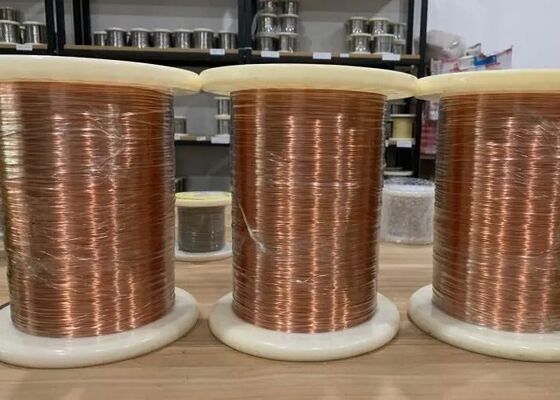
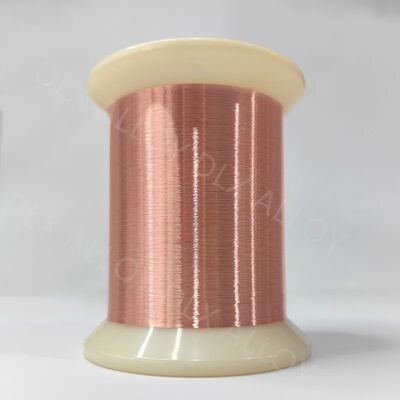
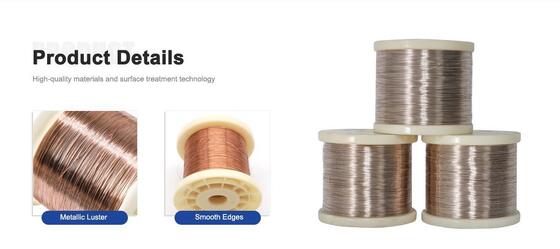
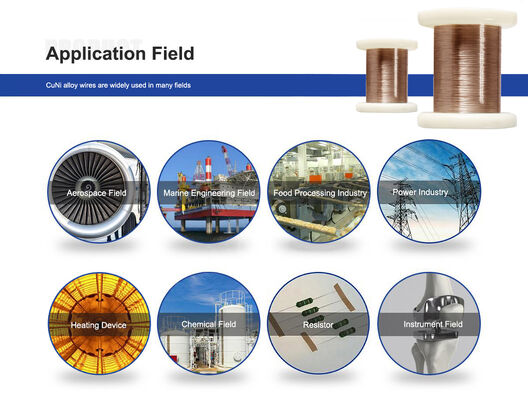
DLX manufactures high-precision CuNi1 (NC005) copper-nickel alloy wire and strip engineered for water electrolysis hydrogen generation systems and electrochemical applications. Composed of approximately 99% copper and 1% nickel with trace manganese deoxidizers, CuNi1 combines high electrical conductivity (approx. 58% IACS) with enhanced mechanical strength and alkaline corrosion resistance compared to pure copper. In alkaline water electrolysis (AEL) and specialized electrochemical cell assemblies, CuNi1 serves as a dependable material for internal current distribution, electrode busbar interconnects, lead-out conductors, and low-temperature thermal stabilization circuits, preventing electrolytic oxidation and minimizing interface contact degradation.1. Chemical Composition (%)
| Alloy Grade | Cu (%) | Ni (%) | Mn (%) | Fe (%) | Total Impurities (%) |
|---|---|---|---|---|---|
| CuNi1 (NC005) | Balance (≥98.5) | 0.80 – 1.30 | 0.10 – 0.30 | ≤0.10 | ≤0.30 |
2. Physical and Electrical Properties
| Technical Parameter | Metric Value | Condition / Testing Note |
|---|---|---|
| Electrical Resistivity at 20°C | 0.03 ± 0.003 μΩ·m | Standard annealed condition |
| Electrical Conductivity | ≥55% IACS (approx. 32 MS/m) | High electrical efficiency |
| Temperature Coefficient of Resistance (TCR) | < 100 × 10⁻⁶ / °C (20–200°C) | Stable electrical transmission |
| Density | 8.90 g/cm³ | Standard dense alloy matrix |
| Melting Point | 1085 °C | Solidus temperature |
| Maximum Continuous Working Temperature | 200 °C | In electrolytic/atmospheric service |
| Tensile Strength (Annealed M-state) | 210 – 280 MPa | Uniform elongation ≥25% |
| Tensile Strength (Hard Drawn Y-state) | 380 – 450 MPa | High stiffness for rigid pins/leads |
| Thermal Conductivity | 220 W/(m·K) | Rapid heat dissipation |
3. Product Dimension and Form Range
| Product Form | Dimension Range | Tolerance Standard |
|---|---|---|
| Round Wire | Diameter 0.08 mm – 7.50 mm | ±0.002 mm to ±0.02 mm (Tight tolerance) |
| Flat Wire & Ribbon | (0.05 – 0.35 mm) × (0.5 – 6.0 mm) | Uniform edge, burr-free finish |
| Cold-Rolled Strip | (0.10 – 2.50 mm) × (5.0 – 180 mm) | Precision slit edges |
| Solid Rod | Diameter 8.0 mm – 50.0 mm | Straightness ≤1.0 mm/m |
Q1: Why is CuNi1 preferred over pure copper in alkaline electrolysis hydrogen equipment?
A: While pure copper offers lower resistivity, it suffers from rapid oxidation, mechanical softening at elevated temperatures, and surface degradation in hot alkaline mists. CuNi1 introduces 1% nickel, significantly improving alkaline corrosion resistance, creep strength, and weldability while maintaining over 55% IACS electrical conductivity.
Q2: What is the maximum continuous operating temperature for CuNi1 wire in electrolytic cells?
A: CuNi1 alloy wire is rated for continuous operation up to 200°C. Within this operating range, it retains stable resistivity (0.03 μΩ·m) and mechanical tensile strength without structural embrittlement.
Q3: Which supply forms of CuNi1 are available for electrolyzer manufacturing?
A: DLX supplies CuNi1 as round wire (0.08 mm to 7.50 mm), flat wire/ribbon for precision electrode connections, cold-rolled strip for busbar links, and solid rods for terminal studs. Custom sizes and narrow-width slit ribbons are provided based on technical drawings.
Q4: How does DLX ensure electrical resistivity and dimensional tolerance consistency?
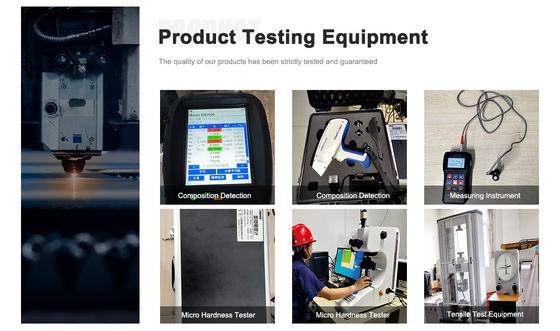
A: Each batch is cold-drawn with diamond dies to maintain tight diameter tolerances (down to ±0.002 mm). Electrical resistivity is verified using digital four-probe micro-ohmmeters across different spool sections to ensure batch-to-batch repeatability.
Q5: What is the standard packaging and minimum order quantity (MOQ) for CuNi1 wire?
A: Standard MOQ is 5 kg for standard stock diameters. Wire products are supplied on precision plastic spools (DIN125 to DIN250) vacuum-sealed in anti-corrosion film and packaged inside reinforced export cartons or wooden cases.


 english
 français
 Deutsch
 Italiano
 Русский
 Español
 português
 Nederlandse
 ελληνικά
 日本語
 한국
 中文
 العربية
 हिन्दी
 Türkçe
 indonesia
 tiếng Việt
 ไทย
 বাংলা
 فارسی
 polski
