
5s
+1
Submission successful!
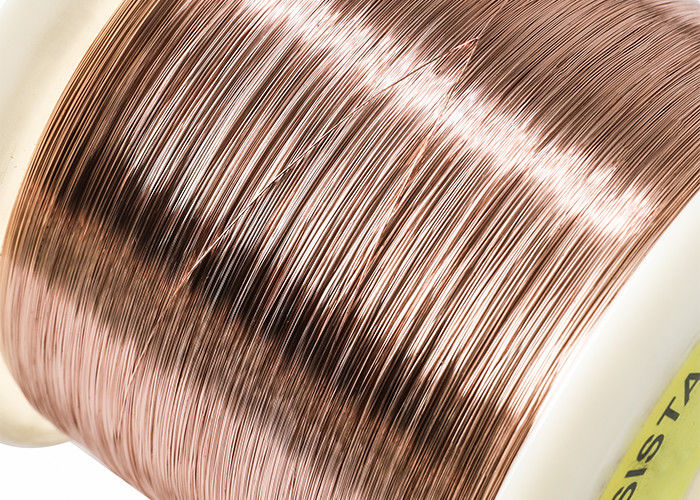
|
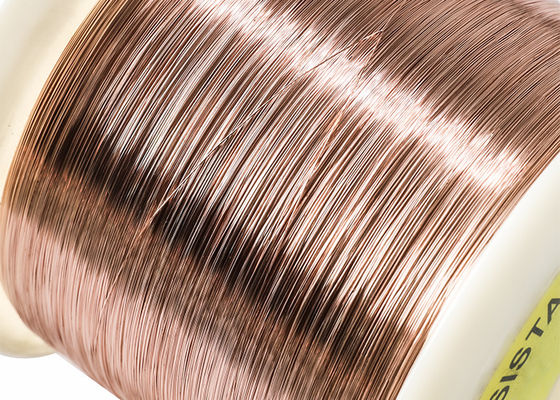
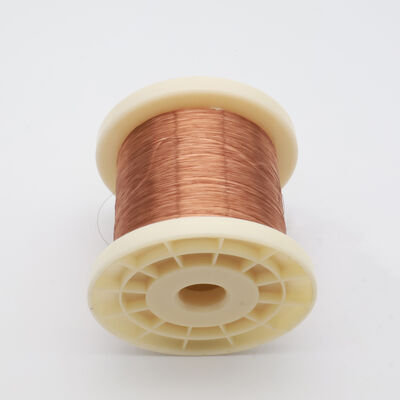
| Brand Name: | DLX |
| Model Number: | CuNi2 |
| MOQ: | 5 kg |
| Payment Terms: | L/C,D/A,D/P,T/T,VTB |
| Supply Ability: | 500 tons per month |
Engineered for stable low-resistance circuitry and moderate heating, DLX precision CuNi2 copper nickel wire delivers an electrical resistivity of 0.05 μΩ·m, ultra-low thermal EMF against copper, and tight diameter tolerances for thermal overload relays, circuit breakers, and heating cables.

In low-voltage switchgear, thermal overload protection, and specialized heating assemblies, consistent electrical resistance and high mechanical formability are essential. DLX CuNi2 alloy wire addresses these engineering demands by providing precise resistance calibration combined with excellent ductility. Its low resistivity allows design engineers to achieve target resistance ratings in compact coil configurations without unnecessary bulk.
Manufactured via high-purity Vacuum Induction Melting (VIM), continuous precision wire drawing, and atmosphere-controlled bright annealing, our CuNi2 wire features a flawless surface finish, uniform chemical composition across the entire spool length, and superior weldability/solderability suitable for automated high-speed winding and crimping processes.
| Element | Nickel (Ni) | Manganese (Mn) | Silicon (Si) | Carbon (C) | Iron (Fe) | Copper (Cu) |
|---|---|---|---|---|---|---|
| Content (%) | 1.00 - 2.50 | ≤ 0.50 | ≤ 0.15 | ≤ 0.05 | ≤ 0.20 | Balance |
| Parameter | Benchmark Value | Engineering Significance |
|---|---|---|
| Electrical Resistivity (20°C) | 0.05 ± 0.003 μΩ·m | Precise electrical calibration |
| Temperature Coefficient of Resistance (TCR) | < 120 × 10⁻⁶ / °C | Minimal drift from 20°C to 600°C |
| Density | 8.90 g/cm³ | Standard copper-nickel mass density |
| Melting Point | 1085°C - 1090°C | High thermal safety margin |
| Max Continuous Operating Temp. | 300°C (572°F) | Long-term operational reliability |
| Thermal EMF vs. Copper (0–100°C) | -12 μV/°C | Low parasitic thermal voltage generation |
| Temper / Condition | Wire Diameter (mm) | Tensile Strength (MPa) | Elongation A100 (%) | Hardness (HB) |
|---|---|---|---|---|
| Soft Annealed (M) | 0.03 - 1.00 | 220 - 320 | ≥ 20 | 60 - 80 |
| Soft Annealed (M) | 1.00 - 8.00 | 240 - 350 | ≥ 25 | 65 - 85 |
| Hard Drawn (Y) | 0.05 - 5.00 | 400 - 600 | ≤ 3 | 110 - 140 |
| Supply Format | Dimension Range | Diameter / Width Tolerance | Standard Packaging |
|---|---|---|---|
| Fine Precision Wire | Ø 0.03 mm - Ø 0.20 mm | ±0.002 mm | DIN 100 / DIN 125 plastic spools in cartons |
| Medium Wire | Ø 0.20 mm - Ø 1.20 mm | ±0.005 mm | DIN 160 / DIN 200 spools, vacuum sealed |
| Heavy Gauge Wire | Ø 1.20 mm - Ø 8.00 mm | ±0.010 mm | Coils / pails (25 kg - 100 kg) on pallets |
| Flat Ribbon / Strip | (0.05–0.5) × (0.5–10) mm | ±0.008 mm | Pancake coils or spools upon drawing |
DLX CuNi2 wire delivers continuous, linear electrical resistance strictly maintained within a ±3% tolerance across continuous spool lengths up to 5,000 meters. This microstructural uniformity prevents resistance hotspots and guarantees predictable tripping thresholds in sensitive relay assemblies.
Through closed-loop vacuum induction melting and secondary refining, non-metallic inclusions and gaseous impurities are suppressed. The resulting high metallurgical purity prevents micro-void formation during fine wire drawing down to 0.03 mm.
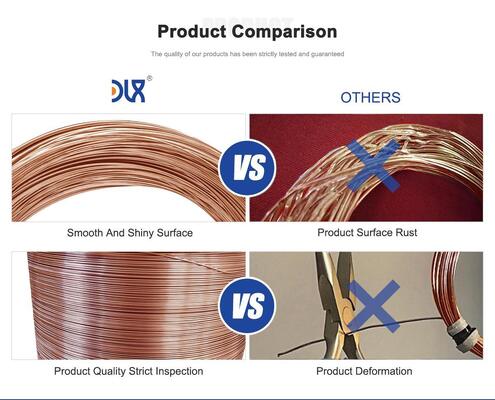
Utilizing diamond drawing dies and continuous laser micrometer monitoring, diameter tolerances are strictly held down to ±0.002 mm. The smooth, burr-free surface eliminates wire jamming and breakage during automated high-speed coil winding.
With uniform elongation reaching up to ≥25% in the soft annealed state, DLX CuNi2 wire withstands tight-radius mandrel winding without surface micro-cracking. Its clean, bright-annealed surface enables fluxless crimping, resistance spot welding, and soft soldering.
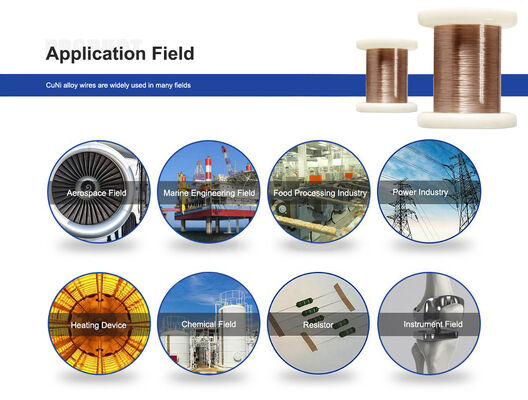
Employed as auxiliary heater elements and low-ohm sensing coils in motor protection relays and industrial switchgear to provide repeatable current-triggered thermal expansion.
Integrated into residential and commercial miniature circuit breakers (MCBs) as the calibrated resistive tripping element for precise overcurrent protection.
Utilized in automotive seat warmers, steering wheel heating circuits, electric blanket cables, and pipe freeze-protection traces requiring uniform, moderate heat generation.
Applied in low-value laboratory shunts, motor start-up rheostats, and power meters requiring stable resistivity under ambient temperature variations.
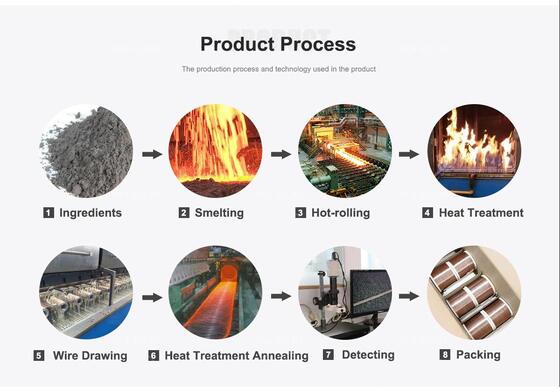
DLX Alloy operates an integrated manufacturing workflow covering vacuum melting, hot forging, continuous cold drawing, hydrogen atmosphere bright annealing, and spooling. Every process is verified at dedicated quality gates to ensure complete batch traceability.
With an aggregate monthly production capacity of 500 tons across our precision resistance alloy and nickel alloy lines, DLX delivers secure supply continuity, rapid prototype batching, and steady fulfillment for high-volume Tier-1 programs.
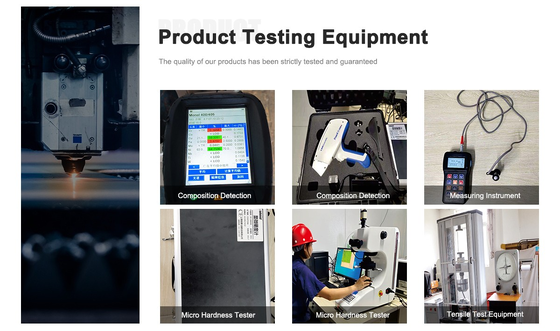
Every shipment undergoes 100% digital resistance measurement per meter at a controlled 20°C ambient, optical emission spectrometry (OES) chemical assays, tensile testing, and eddy current surface flaw detection.
Our metallurgical engineering team works directly with B2B design specialists to select optimal wire tempers, match target linear resistance ratings, and customize spool configurations for automated manufacturing lines.
Q1: What are the primary engineering advantages of CuNi2 compared to higher-nickel alloys like CuNi44 or NiCr alloys?
A1: CuNi2 offers a much lower resistivity (0.05 μΩ·m) than CuNi44 (0.49 μΩ·m) or NiCr8020 (1.09 μΩ·m), making it the optimal choice for low-temperature heating and low-resistance sensing where shorter wire lengths and high ductility are required without generating excessive thermal load.
Q2: Can DLX calibrate CuNi2 wire to a specific linear resistance per meter (Ω/m)?
A2: Yes. By combining precise wire diameter drawing (down to ±0.002 mm) with atmosphere-controlled annealing parameters, DLX can deliver wire calibrated to your exact linear resistance specifications for automated assembly.
Q3: Which spool dimensions are available for automated high-speed de-reeling?
A3: We supply wire wound on DIN 100, DIN 125, DIN 160, and DIN 200 plastic spools featuring precision traverse layering to prevent overlapping, snagging, and wire deformities during high-speed winding operations.
Q4: What is the Minimum Order Quantity (MOQ) and lead time for trial validation?
A4: We maintain standard wire diameters in stock with trial MOQs as low as 1 kg for fine wire and 5 kg for standard sizes, ready for dispatch within 3–7 business days. Custom diameter production runs typically require 10–15 business days.
Q5: What documentation and test reports are supplied with each shipment?
A5: Every batch is delivered with complete Material Test Certificates (MTC) detailing full chemical heat assays, measured mechanical values (tensile strength, elongation), calibrated resistivity at 20°C, and dimensional inspection records.


 english
 français
 Deutsch
 Italiano
 Русский
 Español
 português
 Nederlandse
 ελληνικά
 日本語
 한국
 中文
 العربية
 हिन्दी
 Türkçe
 indonesia
 tiếng Việt
 ไทย
 বাংলা
 فارسی
 polski