
5s
+1
Submission successful!
|
| Brand Name: | DLX |
| Model Number: | Nickel Plated Steel Strip |
| MOQ: | 5kg |
| Payment Terms: | L/C,D/A,D/P,T/T,VTB |
| Supply Ability: | 500 tons per month |
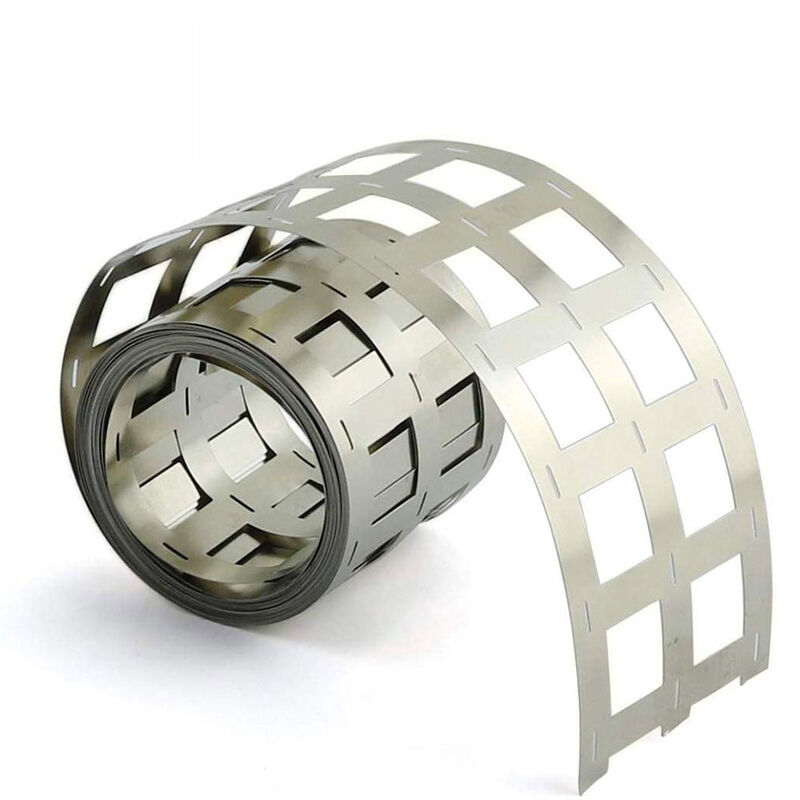
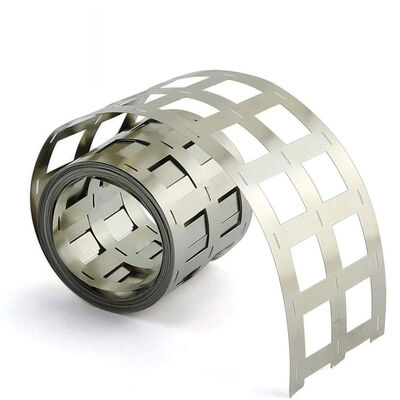
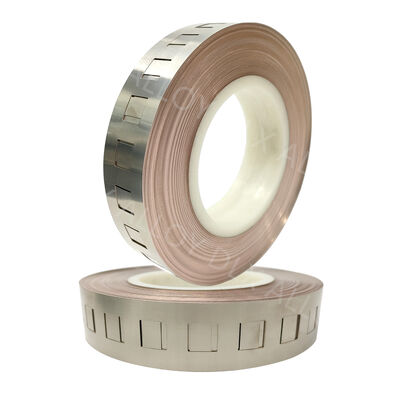
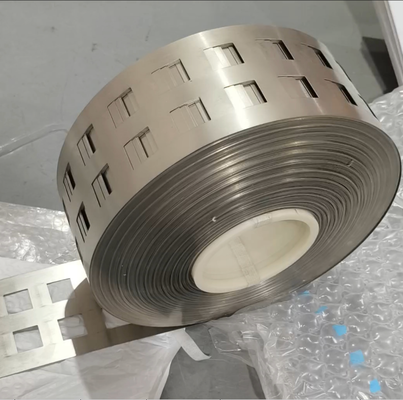
DLX heavy-duty and precision-slit nickel plated steel strip (pre-nickel coated SPCC/SPCD cold-rolled steel) is engineered for high-current busbar connections and series-parallel interconnects in lithium-ion battery modules (18650, 21700, 32700, and prismatic cell packs). Providing superior structural stiffness, localized Joule heating during resistance spot welding, and corrosion-resistant electrical paths, this material serves as a high-reliability, cost-optimized busbar solution for light electric mobility, industrial power tools, residential energy storage systems (ESS), and backup power supplies.
Designed to meet the rigorous thermal and mechanical demands of automated battery assembly lines, DLX nickel plated steel busbar strip features a continuous electrolytic nickel plating (purity ≥99.5%, coating thickness 2.0–4.0 μm per side) metallurgically bonded to a premium low-carbon steel core. This engineered composition delivers low electrical contact resistance while preventing plating micro-cracking and delamination during progressive die punching, stepped busbar forming, and multi-point automated spot/laser welding.
| Thickness | Thickness Tolerance | Width Range | Width Tolerance | Coil ID/OD |
|---|---|---|---|---|
| 0.15 mm | ±0.005 mm | 6.0 mm - 45.0 mm | ±0.05 mm | 100 mm / 400 mm |
| 0.20 mm (Standard Busbar) | ±0.008 mm | 8.0 mm - 80.0 mm | ±0.08 mm | 150 mm / 450 mm |
| 0.30 mm (High-Current) | ±0.010 mm | 10.0 mm - 120.0 mm | ±0.10 mm | 200 mm / 500 mm |
| 0.40 mm (Heavy-Duty Busbar) | ±0.015 mm | 12.0 mm - 150.0 mm | ±0.12 mm | 200 mm / 550 mm |
Custom Dimension: Precision slitting and stamped multi-cell ladder busbars per customer CAD/STEP drawings.
| Parameter | Value |
|---|---|
| Nickel Plated Layer | Pure Nickel (Ni + Co) ≥ 99.50% (Standard); 99.78% (Typical Test Value) |
| Substrate Metal (SPCC Low Carbon Steel) | Carbon (C) ≤ 0.08%; Manganese (Mn) ≤ 0.45%; Phosphorus (P) ≤ 0.030%; Sulfur (S) ≤ 0.030%; Iron (Fe) Balance |
| Property | Value |
|---|---|
| Base Metal Density | 7.85 g/cm³ (20°C) |
| Tensile Strength (Rm) | 270 - 410 MPa (Soft Annealed to 1/4 Hard Temper) |
| Yield Strength (Rp0.2) | ≥ 190 MPa |
| Elongation at Break (A50mm) | ≥ 30% |
| Hardness Range | 95 - 130 HV |
| Electrical Resistivity | 0.125 - 0.145 μΩ·m (20°C) |
| Corrosion Resistance | Neutral Salt Spray Test (ASTM B117) ≥ 48 Hours without red rust |
| Parameter | Value |
|---|---|
| Available Forms | Wide slit coil, pancake coil, pre-cut flat busbar strips, stepped punched ladder tabs |
| Temper Condition | Soft annealed (for easy forming) / 1/4 hard (for structural vibration resistance) |
| Minimum Order Quantity (MOQ) | 5 kg for standard stock coils; 50 kg for custom slitting widths |
| International Certifications | RoHS compliant, REACH certified, ISO 9001:2015 quality audited |
High-Efficiency Resistance Spot Welding: The concentrated electrical resistance of the steel core generates precise Joule heating (Q = I²Rt) directly at the weld interface, creating robust, spatter-free weld nuggets (>160 N shear strength) without thermal degradation to cell seals.
Burr-Free Slit Edges for Automated Feeders: High-precision tungsten carbide shearing maintains burr heights ≤0.01 mm, preventing insulation jacket punctures and tooling jams in automated high-speed cell interconnection lines.
Deep-Drawing & 180° Bending Formability: Annealed substrate and ductile electro-diffusion nickel plating allow multi-plane stepped bends and relief stamping without plating flaking, micro-voids, or peel-off.
Low Surface Contact Resistance & Thermal Control: Mirror-smooth surface finish (Ra ≤ 0.4 μm) ensures uniform current distribution across busbar contact pads, minimizing thermal rise under high continuous discharge.
Cost-Effective Structural Interconnects: Delivers 30% to 40% material cost savings compared to solid pure nickel busbars while offering higher mechanical modulus against shock and vibration.
High-Power Cylindrical Cell Modules: Series-parallel busbar links for 18650, 21700, and 32700 lithium battery packs in electric motorcycles, golf carts, and commercial lawn care equipment.
Light Electric Vehicle (LEV) Battery Packs: Multi-lane matrix busbars and bridging tabs for 48V, 60V, and 72V e-bike and e-scooter power systems.
Commercial & Residential Energy Storage (ESS): Inter-cell connecting busbars for solar energy storage racks, UPS backup power modules, and portable power stations.
Industrial Power Tool Battery Enclosures: High-vibration resistant battery tabs for 18V/20V/54V heavy-duty cordless power tool battery enclosures.
Stamped Battery Hardware & Terminals: Pre-punched fuse links, PCB solder lugs, and battery enclosure terminal connectors.
DLX (Changzhou Dlx Alloy Co., Ltd.) has specialized in precision strip processing and electrical contact materials since 2002, operating an advanced 12,000 m² facility.
Precision Rotary Slitting & Tension Leveling: Automated slitting lines deliver strip widths from 2.0 mm to 250 mm with camber tolerance kept under 1.5 mm per 1000 mm, ensuring flat, jam-free feeding in automated busbar spot welders.
Full Lot Traceability & Strict Quality Assurance: Every master coil is backed by X-ray fluorescence (XRF) coating thickness verification, 180° reverse bend tests, and 3.1 Material Test Certificates (MTC).
Rapid Sampling & Flexible Supply Chain: Supporting battery pack R&D and high-volume assemblers with stock busbar coils available from 5 kg MOQ with global 7–15 day delivery.
Q1: Why use nickel plated steel strip instead of pure nickel for battery busbar connections?
Nickel plated steel provides greater tensile strength and structural rigidity, preventing busbar sag in large battery packs. It also facilitates easier resistance spot welding by concentrating heat at the contact point while reducing overall material costs by 30-40% compared to pure nickel (Ni200/Ni201).
Q2: What thickness of nickel plated steel strip is recommended for battery busbar interconnections?
For standard 18650 packs (current per cell < 5A), 0.15mm is the industry standard. For high-drain 21700 and 32700 packs or multi-parallel busbar trunks carrying 10A-25A, 0.20mm to 0.30mm thicknesses are recommended to reduce resistive voltage drops.
Q3: Can DLX supply pre-punched busbar tabs with custom slot patterns?
Yes. DLX produces both continuous slit coils and custom progressive die-stamped busbar tabs with welding relief slots, alignment holes, and multi-cell ladder configurations according to your CAD drawings.
Q4: How do you prevent corrosion and rust on cut edges of the busbar strip?
We apply a micro-thin dry VCI protective layer during high-precision slitting. Finished coils are vacuum-sealed inside moisture-barrier aluminum foil bags with desiccant, providing over 12 months of corrosion protection in warehouse environments.
Q5: What spot welding parameters are ideal for 0.20mm and 0.30mm nickel plated busbars?
For 0.20mm-0.30mm busbar strips, we recommend using capacitive discharge or DC inverter welders with alumina copper (CuCrZr) slotted welding tips, applying 35–60 Joules of energy with 3.0–4.5 kg electrode pressure.


 english
 français
 Deutsch
 Italiano
 Русский
 Español
 português
 Nederlandse
 ελληνικά
 日本語
 한국
 中文
 العربية
 हिन्दी
 Türkçe
 indonesia
 tiếng Việt
 ไทย
 বাংলা
 فارسی
 polski
