5s
+1
Submission successful!

|
| Brand Name: | DLX |
| Model Number: | pure nickel |
| MOQ: | 5kg |
| Payment Terms: | L/C,D/A,D/P,T/T,VTB |
| Supply Ability: | 1200 tons per month |
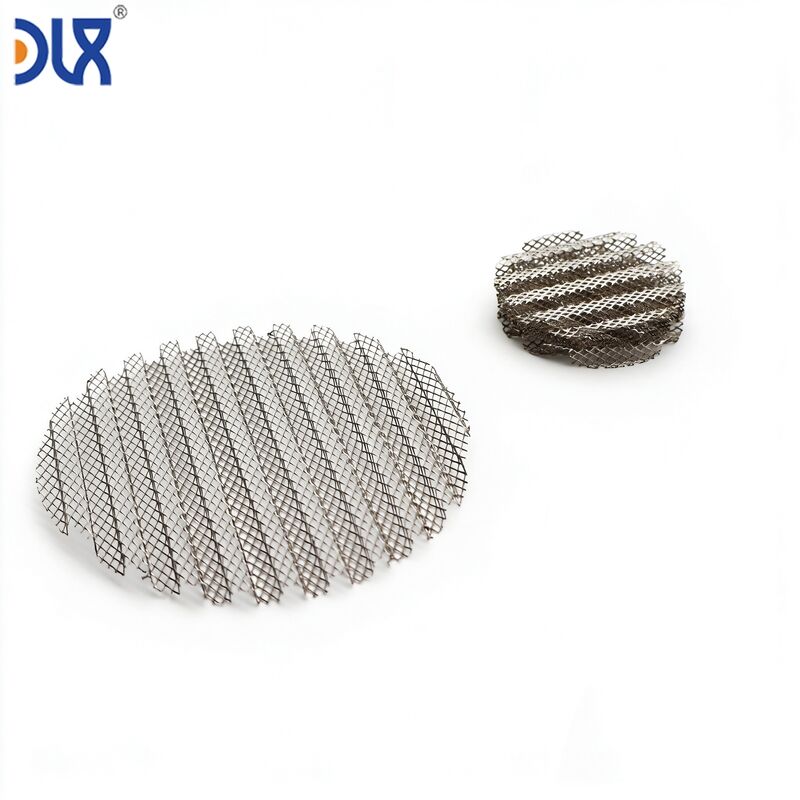
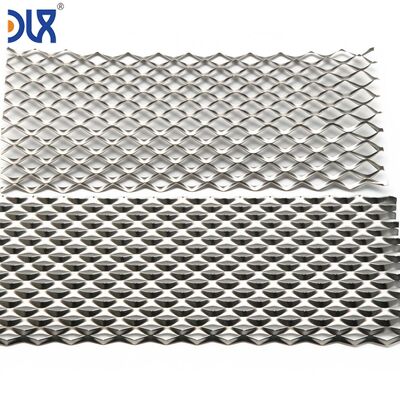
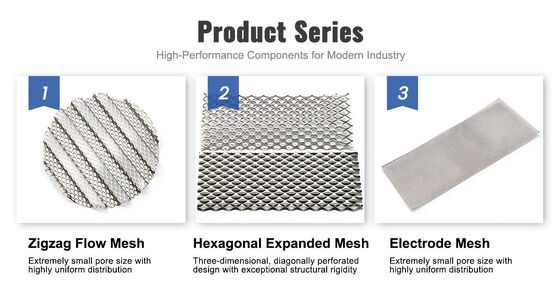
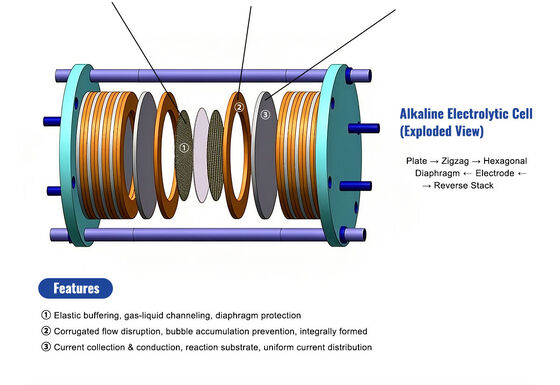
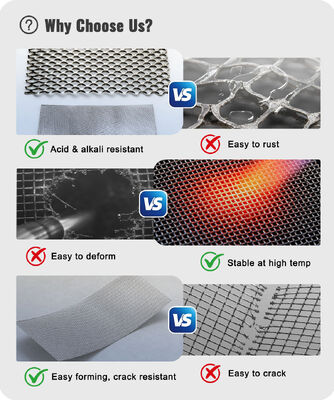
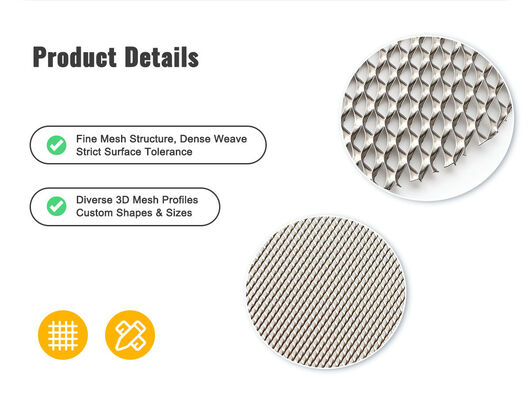
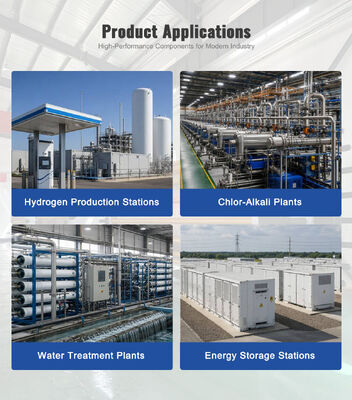
DLX high-purity industrial grade pure nickel mesh (N4 / Ni201, N6 / Ni200) is engineered specifically for demanding electrochemical and electrolysis environments. Featuring superior chemical resistance in concentrated hot alkaline solutions (KOH/NaOH), low hydrogen evolution overpotential, and exceptional electrical conductivity, our nickel mesh provides robust current distribution and structural support for alkaline water electrolysis (AWE) cells, chlor-alkali membranes, and advanced energy storage systems. Available in plain weave, twill weave, expanded mesh, and perforated sheet with fully customized slit widths, cut-to-size dimensions, and zero-burr edge finishing.
In industrial electrolysis equipment—especially pressurized alkaline water electrolyzers and chlor-alkali systems—the anode and cathode substrate materials must withstand severe caustic corrosion while maintaining maximum active surface area and low contact resistance.
DLX manufactures precision pure nickel mesh using certified N4 (Ni ≥ 99.9%) and N6 (Ni ≥ 99.5%) raw materials. Our manufacturing process ensures uniform aperture distribution, flat surface topography, and high mechanical flexibility without micro-cracking during cell compression. Whether utilized as gas diffusion layers (GDL), electrode catalyst substrates, current collectors, or spacer meshes, DLX nickel mesh delivers long-term electrochemical stability and minimal degradation over multi-year continuous operation.
| Parameter | N4 (UNS N02201 Equivalent) | N6 (UNS N02200 Equivalent) |
|---|---|---|
| Nickel Purity (Ni + Co) | ≥ 99.90% | ≥ 99.50% |
| Carbon Content (C) | ≤ 0.02% (Extra-low carbon for anti-embrittlement) | ≤ 0.10% |
| Weave / Structure Types | Plain Weave, Twill Weave, Expanded, Perforated | Plain Weave, Twill Weave, Expanded, Perforated |
| Mesh Count (Woven) | 10 mesh to 300 mesh per inch | 10 mesh to 200 mesh per inch |
| Wire Diameter Range | 0.05 mm – 1.0 mm (Customizable) | 0.08 mm – 1.2 mm (Customizable) |
| Expanded Mesh Thickness (SWD × LWD) | 0.1 mm – 2.0 mm (e.g., 1×2mm, 1.5×3mm, 2×4mm) | 0.1 mm – 2.5 mm (e.g., 1×2mm, 2×4mm, 3×6mm) |
| Density | 8.908 g/cm³ | 8.908 g/cm³ |
| Melting Point | 1435°C – 1446°C | 1435°C – 1446°C |
| Resistivity (20°C) | ~0.096 μΩ·m | ~0.096 μΩ·m |
| Surface Finish | Bright, degreased, ultrasonic cleaned, zero-oil | Bright, degreased, ultrasonic cleaned, zero-oil |
| Custom Dimensions | Roll width: 50 mm – 1500 mm; Cut discs / sheets per drawing | Roll width: 50 mm – 1500 mm; Cut discs / sheets per drawing |
Q1: What is the main difference between N4 and N6 pure nickel mesh for electrolysis applications?
A1: N4 features an ultra-low carbon content (C ≤ 0.02%) and higher purity (Ni ≥ 99.90%), making it ideal for high-temperature alkaline electrolysis where preventing carbon-induced intergranular embrittlement is critical. N6 (Ni ≥ 99.50%) is widely adopted for standard industrial chlor-alkali and lower-temperature water electrolysis electrodes with exceptional cost-performance balance.
Q2: Can DLX supply custom stamped shapes and zero-burr cut pieces for zero-gap electrolyzers?
A2: Yes. In zero-gap alkaline electrolyzer stacks, even microscopic burrs can puncture composite diaphragms. DLX utilizes precision CNC laser cutting and roller deburring to provide pre-cut discs, circular sheets, and specialized tabs with smooth edge radii according to your engineering drawings.
Q3: How does the mesh open area percentage affect hydrogen evolution efficiency?
A3: The open area ratio (typically 40%–65% for woven/expanded mesh) balances active surface contact area with rapid bubble release dynamics. A properly designed aperture allows generated H₂ and O₂ bubbles to evacuate instantly, reducing ohmic resistance and preventing localized cell overheating.
Q4: Does the nickel mesh arrive clean and ready for direct stack assembly?
A4: Yes. We provide specialized industrial degreasing and ultrasonic cleaning to remove all residual drawing lubricants and particulate contaminants. The finished mesh arrives bright, clean, dry, and packed under vacuum or protective film.
Q5: What is the typical Minimum Order Quantity (MOQ) and lead time for custom dimensions?
A5: For standard mesh specifications in stock, delivery can be arranged within 3–7 business days. For customized weave counts, specialized wire diameters, or tailored slit widths, our trial MOQ starts as low as 5–10 square meters with standard production cycles of 10–20 days.


 english
 français
 Deutsch
 Italiano
 Русский
 Español
 português
 Nederlandse
 ελληνικά
 日本語
 한국
 中文
 العربية
 हिन्दी
 Türkçe
 indonesia
 tiếng Việt
 ไทย
 বাংলা
 فارسی
 polski