5s
+1
Submission successful!

|
| Brand Name: | DLX |
| Model Number: | Pt-Ir Alloy Ring |
| MOQ: | 12 kg |
| Payment Terms: | L/C,D/A,D/P,T/T,Western Union |
| Supply Ability: | 500 tons per month |
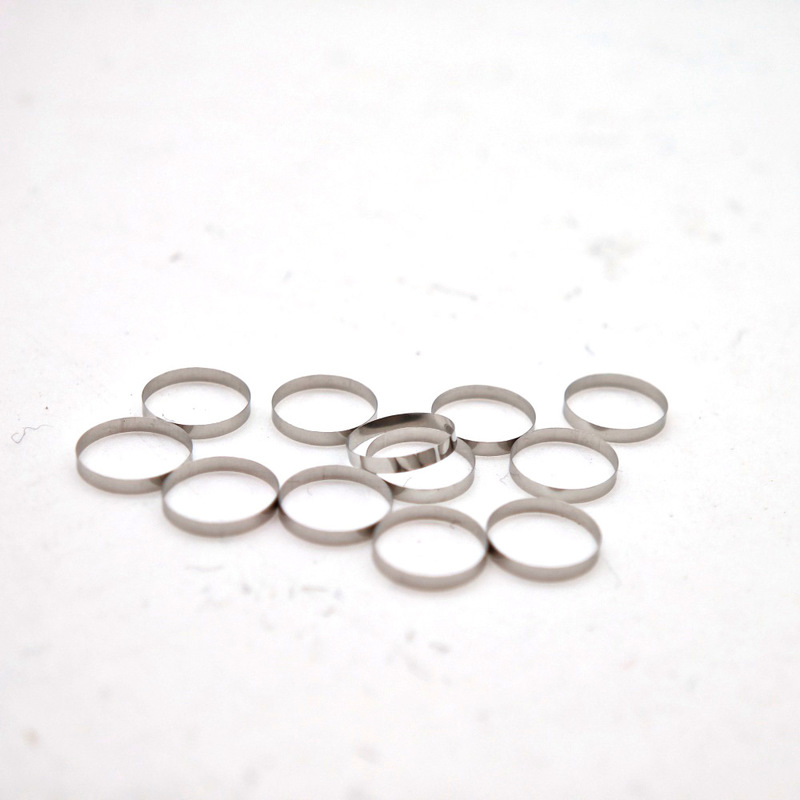
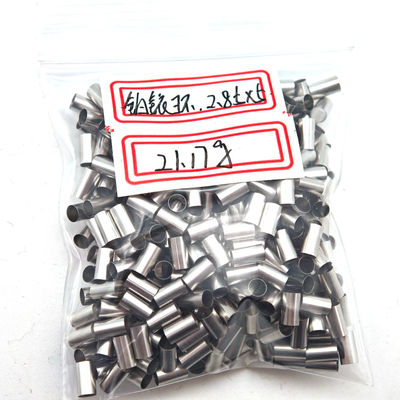
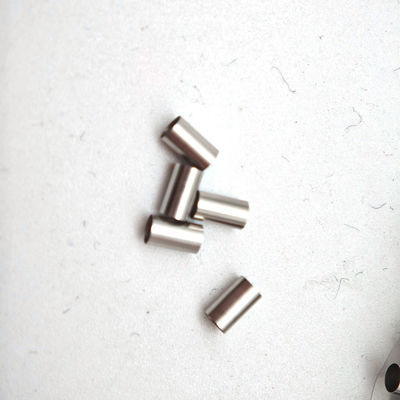
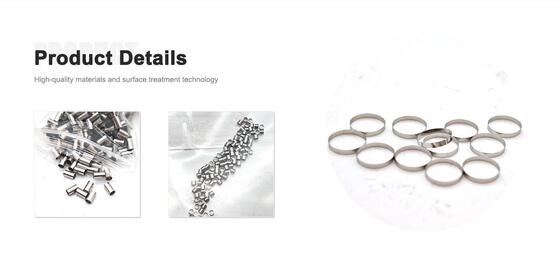
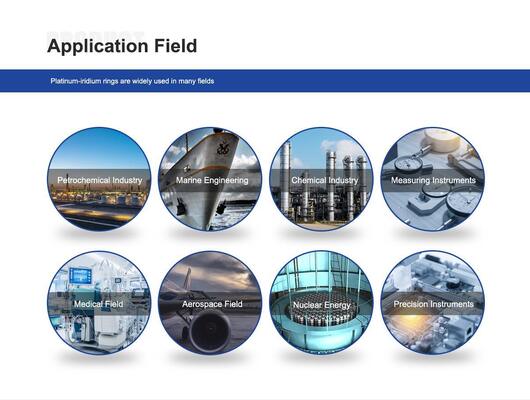
DLX Pt90Ir10 Alloy Rings are engineered from high-purity binary platinum-iridium alloy (90% Platinum / 10% Iridium) to deliver an optimal balance of electrical conductivity, mechanical hardness, and superior oxidation resistance in operating environments up to 1800°C. By incorporating 10% iridium into the pure platinum matrix, Pt90Ir10 rings exhibit more than double the Vickers hardness of unalloyed platinum, substantially enhancing wear resistance and anti-galling performance under continuous mechanical and electrical friction. These precision rings serve as the benchmark material for high-reliability sensor collars, electrical slip ring contacts, analytical probe supports, and biocompatible medical marker bands.
In demanding sensor manufacturing, aerospace instrumentation, and medical technology, ring components must withstand severe thermal cycling, corrosive process media, and electrical arc erosion without dimensional distortion or signal drift. Standard base metal or nickel alloy rings suffer from rapid oxidation and escalating contact resistance under such conditions. DLX Pt90Ir10 alloy rings resolve these critical engineering challenges through refined crystalline metallurgy and high-precision CNC micro-fabrication.
Manufactured via high-vacuum induction melting (VIM), precision rotary forging, and multi-axis CNC Swiss micro-machining, our Pt90Ir10 rings feature ultra-low gas content, zero surface micro-porosity, and tight dimensional tolerances down to ±0.005 mm. Supplied with radiused chamfers, optical-polished surfaces, and complete burr-free perpendicularity, DLX rings ensure seamless feeding and integration into automated precision assembly lines.
| Element | Platinum (Pt) | Iridium (Ir) | Iron (Fe) | Silicon (Si) | Copper (Cu) | Total Trace Impurities | Total Noble Purity |
|---|---|---|---|---|---|---|---|
| Pt90Ir10 (PtIr10) | Balance (~90.0%) | 9.80 - 10.20 | ≤ 0.005 | ≤ 0.003 | ≤ 0.003 | ≤ 0.050 | ≥ 99.95% |
| Property | Annealed State (Soft) | Hard Drawn / Cold Worked State | Test / Reference Condition |
|---|---|---|---|
| Density | 21.56 g/cm³ | 21.56 g/cm³ | Room temperature reference |
| Melting Point | 1800°C | 1800°C | Solidus temperature |
| Tensile Strength (Rm) | 380 - 480 MPa | 750 - 900 MPa | Tensile strain test |
| Yield Strength (Rp0.2) | 180 - 240 MPa | 620 - 780 MPa | 0.2% offset proof stress |
| Vickers Hardness | 120 - 150 HV | 220 - 260 HV | Micro-indentation profile |
| Elongation (A50) | ≥ 20% | ≤ 3% | Longitudinal gauge |
| Electrical Resistivity | 25.0 µΩ·cm | 26.5 µΩ·cm | 20°C electrical probe |
| Temperature Coeff. of Resistance | 0.0013 /°C | 0.0012 /°C | 0°C to 100°C thermal range |
| Modulus of Elasticity | 200 GPa | 210 GPa | Dynamic resonance method |
The 90/10 platinum-iridium ratio delivers dependable electrical conductivity alongside elevated mechanical hardness (up to 260 HV in hard condition). This balanced metallurgy prevents contact welding, material transfer, and surface pitting during repetitive electrical switching and continuous slip-ring sliding contact.
Every heat of Pt90Ir10 alloy is produced via high-vacuum induction melting (VIM) using virgin precious metals. This advanced refining suppresses interstitial gas elements (oxygen, nitrogen, hydrogen) and trace non-metallic inclusions, ensuring high material density, uniform grain morphology, and zero micro-cracking during precision crimping or swaging.
Utilizing specialized CNC Swiss micro-turning centers and diamond tooling, DLX maintains outer diameter, inner diameter, and wall concentricity tolerances within ±0.005 mm. Precisely chamfered edges and perpendicular faces guarantee consistent automated feeding and snag-free installation into micro-sensor housings.
Pt90Ir10 maintains complete chemical inertness in oxidizing gases, aggressive acids, and high-temperature furnace atmospheres up to 1800°C. Furthermore, its high elemental density (21.56 g/cm³) provides distinct radiopacity under fluoroscopy and X-ray imaging, making it a reliable material for medical marker bands.
DLX Alloy operates an integrated manufacturing chain dedicated to precious metal alloys, including vacuum induction melting, hot forging, precision cold rotary swaging, continuous hydrogen atmosphere annealing, and multi-axis CNC Swiss machining. Full in-house control guarantees batch-to-batch chemical precision and consistent mechanical performance.
Supported by our extensive alloy manufacturing infrastructure with a total monthly capacity of 500 tons across special and precision alloy lines, DLX provides dependable supply chain continuity, flexible batch sizing, and rapid delivery for Tier-1 industrial and OEM programs worldwide.
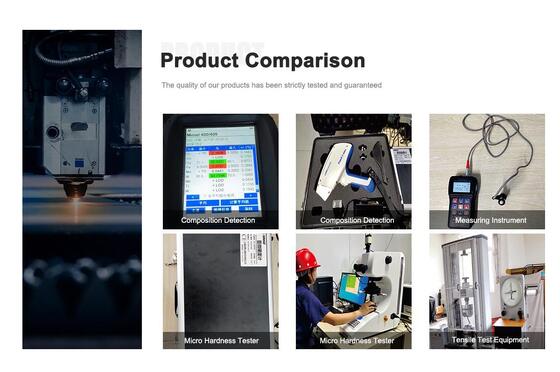
Every production batch is verified through rigorous analytical protocols, including Inductively Coupled Plasma Optical Emission Spectrometry (ICP-OES) for trace impurity assays, non-contact optical coordinate measuring machines (CMM) for ring geometry validation, and metallographic grain analysis.
To assist clients in managing noble metal expenditure, DLX offers a closed-loop precious metal recovery service. We help customers recycle production scrap, swarf, and retired Pt90Ir10 rings, refining them back into high-purity alloy feedstocks for subsequent manufacturing orders.
Q1: Why is Pt90Ir10 (90/10) the primary alloy formulation for platinum-iridium rings?
A1: Pt90Ir10 represents the optimal metallurgical balance between formability and mechanical strength. While pure platinum is excessively soft (60–80 HV) and prone to mechanical deformation, the addition of 10% iridium doubles its hardness (120–150 HV annealed, up to 260 HV hard) and significantly improves tensile strength and wear endurance without sacrificing corrosion resistance or electrical conductivity.
Q2: What dimensional capabilities and tolerances does DLX achieve for Pt90Ir10 micro rings?
A2: We produce precision Pt90Ir10 rings with outer diameters ranging from 0.50 mm to 150.0 mm and wall thicknesses down to 0.05 mm. Standard outer diameter and inner diameter tolerances are held within ±0.005 mm, with cut-length tolerances controlled within ±0.010 mm.
Q3: Can DLX supply Pt90Ir10 rings with custom chamfers and burr-free, polished edges?
A3: Yes. We operate precision CNC micro-turning and rotary electrochemical deburring systems capable of producing micro-rings as short as 0.30 mm in length. All cut edges can be precision chamfered, radiused, or optical-polished (Ra ≤ 0.2 µm) to ensure snag-free assembly in automated lines.
Q4: What surface finish and cleanliness levels are provided for medical and sensor applications?
A4: Our rings are supplied with bright annealed or micro-polished surface finishes achieving surface roughness down to Ra ≤ 0.2 µm. All finished components undergo multi-stage ultrasonic degreasing and cleanroom passivation to guarantee zero oil residue, particulate contamination, or machining trace.
Q5: What are your commercial terms regarding Minimum Order Quantity (MOQ) and prototype orders for Pt90Ir10 rings?
A5: Recognizing the high intrinsic value of platinum-iridium materials, DLX does not enforce prohibitive bulk minimums. We offer flexible dynamic MOQs starting from small prototype batches (e.g., 10 to 50 pieces for micro-rings or sensor collars), supporting development validation through full-scale production.


 english
 français
 Deutsch
 Italiano
 Русский
 Español
 português
 Nederlandse
 ελληνικά
 日本語
 한국
 中文
 العربية
 हिन्दी
 Türkçe
 indonesia
 tiếng Việt
 ไทย
 বাংলা
 فارسی
 polski