
5s
+1
Submission successful!

|
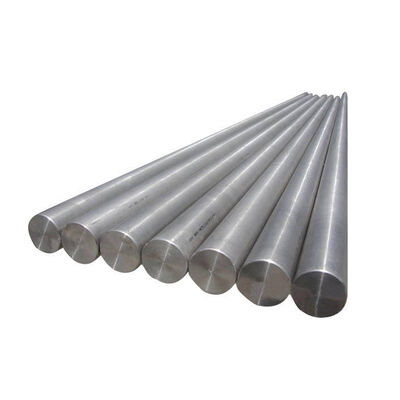
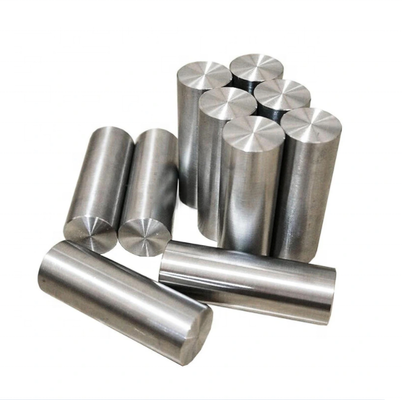
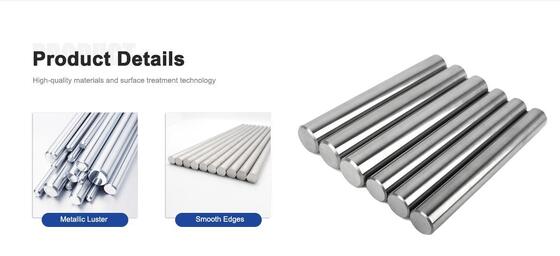
| Brand Name: | DLX |
| Model Number: | 1J50 |
| MOQ: | 10 kg |
| Payment Terms: | L/C,D/A,D/P,T/T,VTB |
| Supply Ability: | 1200 tons per month |
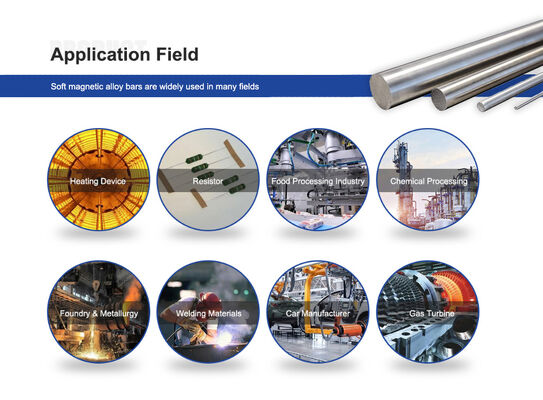
DLX Alloy supplies ultra-pure 1J50 (50Ni-Fe) soft magnetic alloy rods engineered for high-efficiency electromagnetic cores, precision current transformers, and magnetic shielding components. Manufactured via vacuum induction melting (VIM) with tight dimensional tolerances and exceptional magnetic permeability.

1J50 is a balanced 50% nickel-iron (50Ni-Fe) precision soft magnetic alloy specifically formulated to deliver an optimal balance of high saturation magnetic induction (Bs≈1.55 T) and high initial/maximum magnetic permeability. Compared to conventional electrical steels and high-nickel alloys, 1J50 rod provides significantly higher magnetic flux density while maintaining low core loss and minimal coercive force in medium-to-high magnetic field environments.
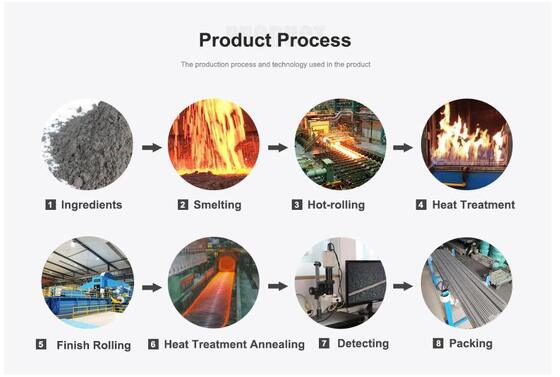
Manufactured through advanced Vacuum Induction Melting (VIM) followed by precision electroslag refining and multi-pass hot/cold forging processes, DLX 1J50 precision alloy bars exhibit exceptional chemical homogeneity, ultra-low non-metallic inclusion levels, and uniform grain structure. This ensures highly predictable magnetic behavior and consistent machining performance across every production batch, making it the premier material choice for mission-critical electromagnetic cores, sensitive relays, and magnetic actuators.
| Element | Nickel (Ni) | Silicon (Si) | Manganese (Mn) | Carbon (C) | Phosphorus (P) | Sulfur (S) | Iron (Fe) |
|---|---|---|---|---|---|---|---|
| Nominal (%) | 49.00 – 51.50 | 0.15 – 0.30 | 0.30 – 0.60 | ≤0.030 | ≤0.020 | ≤0.020 | Balance |
Note: Ultra-pure melt control ensures total residual gas content (O2+N2+H2) is maintained below 40 ppm to guarantee optimum magnetic domain movement.
| Physical & Magnetic Property | Metric Value | Imperial / Alternate Unit |
|---|---|---|
| Density | 8.25 g/cm3 | 0.298 lb/in3 |
| Curie Temperature (Tc) | 500 ∘C | 932 ∘F |
| Electrical Resistivity | ≈0.45 μΩ⋅m | 45 μΩ⋅cm |
| Saturation Magnetic Induction (Bs) | 1.50−1.60 T | 15,000−16,000 Gauss |
| Initial Permeability (μ0) | ≥3.0 mH/m | ≥25,000 μ |
| Maximum Permeability (μm) | ≥60 mH/m | ≥75,000−100,000 μ |
| Coercive Force (Hc) | ≤12.0 A/m | ≤0.15 Oe |
| Thermal Expansion Coefficient (20−100∘C) | 9.5×10⁻⁶ /K | 5.28×10⁻⁶ /∘F |
| Parameter | Specification / Tolerance Range |
|---|---|
| Delivery States | Hot Rolled / Cold Drawn / Centerless Ground / Annealed / Solution Treated |
| Diameter Range | 3.0 mm to 150.0 mm (Custom bar stock available upon request) |
| Dimensional Tolerance | ISO h7 / h8 / h9; ground bars within ±0.01 mm |
| Tensile Strength (Rm) | 450−550 MPa (Soft Annealed); ≥750 MPa (Cold Worked) |
| Hardness | 130−160 HV (Soft Annealed); 190−240 HV (Cold Drawn) |
| Straightness | ≤0.5 mm/m (High-precision straightened for automatic CNC feeding) |
A: 1J50 (50% Ni-Fe) provides a significantly higher saturation magnetic induction (Bs≈1.55 T vs. ≈0.75 T for 1J79/1J85). When electromagnetic cores must operate at higher magnetic field strengths without reaching magnetic saturation, 1J50 allows for a much smaller component cross-section, whereas 1J79/1J85 is preferred for weak-signal applications requiring maximum initial permeability.
A: Cold working, cutting, and grinding induce internal mechanical stresses that degrade the soft magnetic properties of 1J50. To restore maximum magnetic permeability and minimize coercive force, components should undergo high-temperature magnetic annealing in a dry hydrogen atmosphere (dew point ≤−40∘C) or high vacuum at 1100∘C−1200∘C, followed by controlled furnace cooling. DLX provides detailed annealing curve recommendations tailored to your part geometry.
A: We supply 1J50 rods ranging from 3.0 mm to 150.0 mm. For precision automatic Swiss-lathe machining, we provide centerless ground bars with tight diameter tolerances within ±0.01 mm (h7/h8 precision grades), surface roughness Ra≤0.4 μm, and straightness ≤0.5 mm/m.
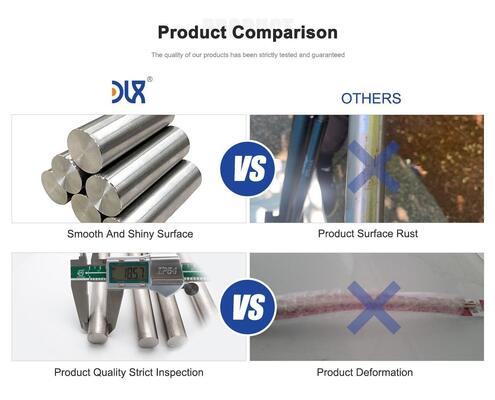
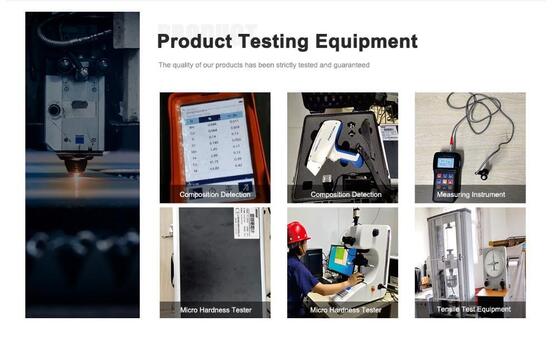
A: Through strict vacuum induction melting temperature curves, ultra-pure virgin raw material selection, and standardized homogenization soaking. Every production heat is verified using closed-circuit permeameters and hysteresis loop tracers, providing full material test reports with verified Bs, μm, and Hc data before dispatch.


 english
 français
 Deutsch
 Italiano
 Русский
 Español
 português
 Nederlandse
 ελληνικά
 日本語
 한국
 中文
 العربية
 हिन्दी
 Türkçe
 indonesia
 tiếng Việt
 ไทย
 বাংলা
 فارسی
 polski