5s
+1
Submission successful!

|


| Brand Name: | DLX |
| Model Number: | 6J40 |
| MOQ: | 5kg |
| Payment Terms: | L/C,D/A,D/P,T/T,VTB |
| Supply Ability: | 1200 tons per month |
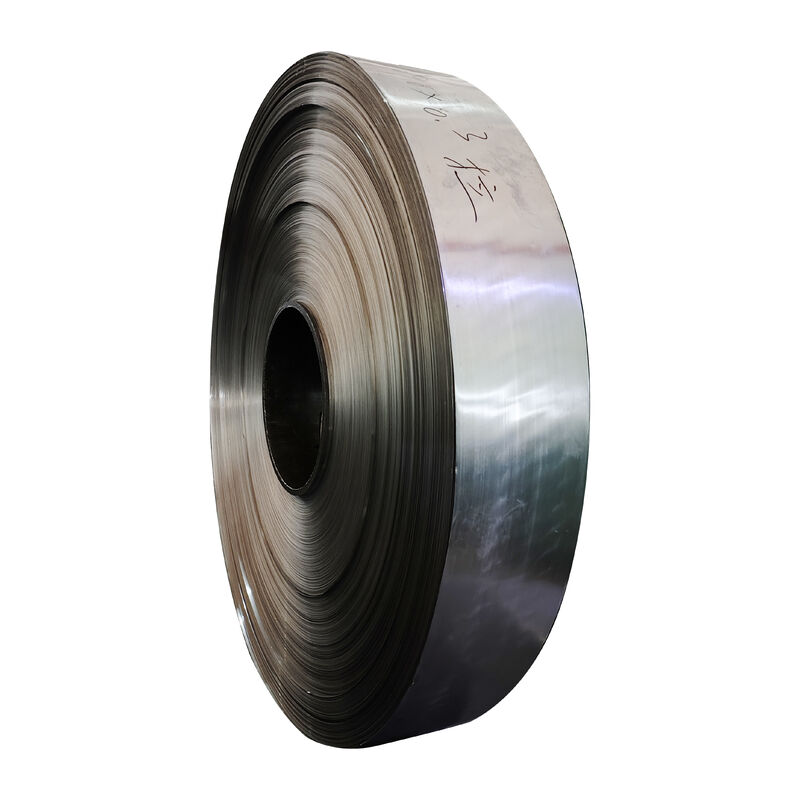
Engineered for precision current sensing, high-stability shunts, and instrumentation resistors, our 6J40 (Cu55Ni45 Constantan) precision resistance alloy strip provides near-zero temperature coefficient of resistance (TCR), high electrical resistivity, and stable thermal EMF performance against copper.
Our 6J40 Cu55Ni45 alloy strip is produced via vacuum induction melting (VIM), continuous precision cold rolling, and protective atmosphere bright annealing. This refined manufacturing route eliminates harmful non-metallic inclusions and ensures homogeneous grain boundaries, providing electronic component designers with unmatched batch-to-batch repeatability.
By maintaining strict control over minor alloying elements (such as Mn, Fe, and Si), our 6J40 strip exhibits a flat resistance-temperature characteristic between -40°C and +100°C, virtually eliminating thermal measurement drift in critical battery management and power metering circuits.
| Element | Nickel (Ni) | Manganese (Mn) | Iron (Fe) | Carbon (C) | Silicon (Si) | Copper (Cu) |
|---|---|---|---|---|---|---|
| Standard % | 40.0 – 44.0 | 1.0 – 2.0 | ≤ 0.50 | ≤ 0.05 | ≤ 0.15 | Balance (Cu ~55%) |
| Property Parameter | Typical Engineering Value | Unit |
|---|---|---|
| Electrical Resistivity at 20°C | 0.49 ± 0.03 | μΩ·m |
| Temperature Coefficient of Resistance (TCR, 20~100°C) | -40 to +40 (Ultra-precision grade: ±15) | × 10⁻⁶ / °C (ppm/°C) |
| Thermal EMF vs. Copper (0~100°C) | ~ +45 | μV/°C |
| Density | 8.90 | g/cm³ |
| Melting Point | 1220 – 1280 | °C |
| Thermal Conductivity (20°C) | 21.5 | W/(m·K) |
| Tensile Strength (Soft Annealed / M-State) | 420 – 540 | MPa |
| Elongation at Break (Annealed) | ≥ 25 | % |
| Hardness (Annealed Condition) | 90 – 130 | HV |
| Dimension Form | Thickness Range | Width Range | Thickness Tolerance | Width Tolerance |
|---|---|---|---|---|
| Precision Strip / Ribbon | 0.02 mm – 3.0 mm | 2.0 mm – 350 mm | ± 0.003 mm | ± 0.05 mm |
| Foil / Ultra-thin Strip | 0.01 mm – 0.05 mm | 5.0 mm – 150 mm | ± 0.002 mm | ± 0.03 mm |
| Supply Delivery States | Soft Annealed (M), Half-Hard (Y2), Full-Hard (Y) | Custom burr-free slitting & edge leveling |
Q1: What is the core electrical difference between 6J40 Cu55Ni45 and Manganin (6J12 / 6J13)?
A1: 6J40 (Constantan) provides higher nominal resistivity (0.49 μΩ·m vs. 0.43 μΩ·m) and a broader temperature stability range with superior oxidation resistance. While 6J40 generates a higher thermal EMF against copper (~45 μV/°C), it is widely preferred for AC current shunts, SMD current sensors, and general precision power resistors.
Q2: What dimensional tolerances can be guaranteed on cold-rolled 6J40 strips?
A2: We achieve thickness tolerances as tight as ±0.003 mm and width tolerances within ±0.05 mm on precision slitted coils. This tight dimensional control ensures linear resistance deviation remains within ±1.5% across entire production batches.
Q3: Which delivery tempers and surface conditions are available for 6J40?
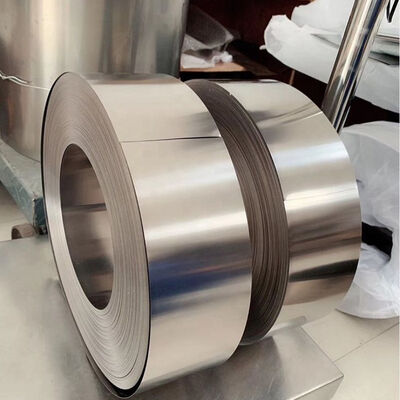
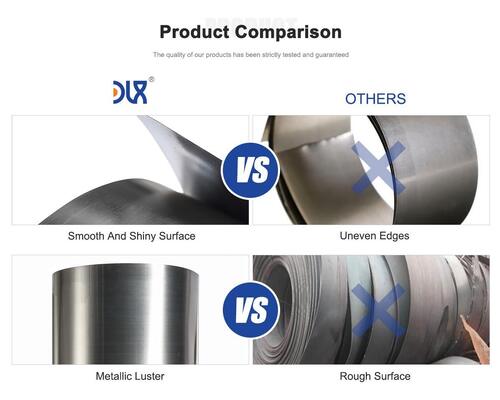
A3: We supply 6J40 in bright soft annealed (M), quarter-hard, half-hard (Y2), and full-hard (Y) conditions. All strips feature a clean, bright, oil-free surface suitable for direct stamping, deep drawing, and continuous reel-to-reel bonding.
Q4: What are the standard packaging and minimum order quantity (MOQ) terms?
A4: Products are delivered on precision plastic spools, heavy-duty cardboard cores, or self-supporting coils wrapped in VCI anti-corrosion barrier packaging and sealed inside export wooden cases. MOQ is dynamically tailored according to required thickness, width, and slitting parameters.


 english
 français
 Deutsch
 Italiano
 Русский
 Español
 português
 Nederlandse
 ελληνικά
 日本語
 한국
 中文
 العربية
 हिन्दी
 Türkçe
 indonesia
 tiếng Việt
 ไทย
 বাংলা
 فارسی
 polski