
5s
+1
Submission successful!

|
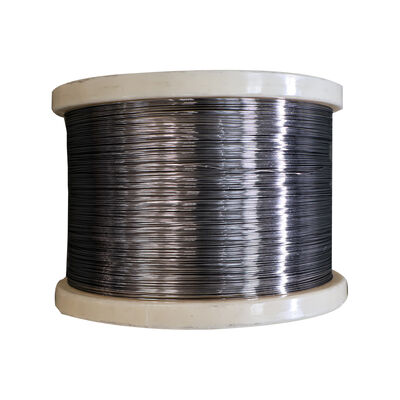
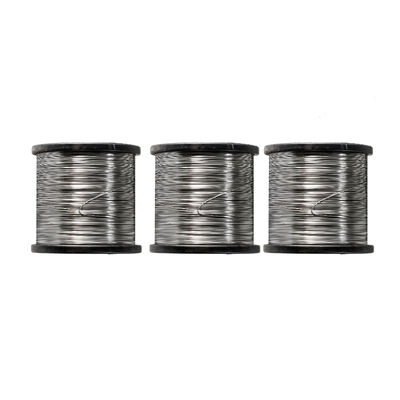
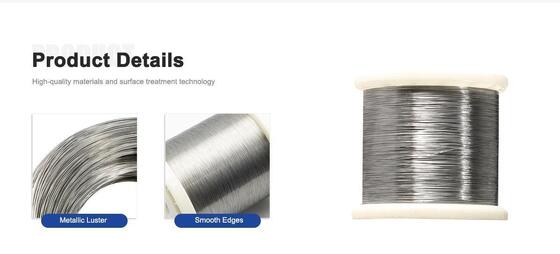
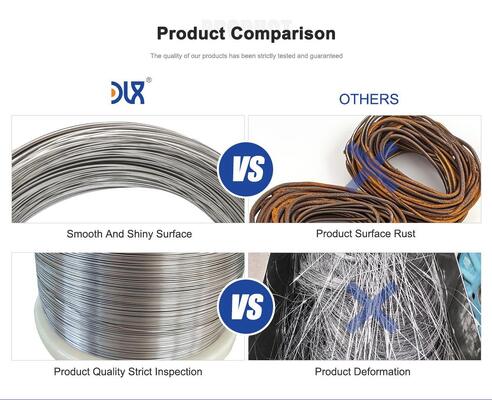
| Brand Name: | DLX |
| Model Number: | 6J22 |
| MOQ: | 5kg |
| Payment Terms: | L/C,D/A,D/P,T/T,VTB |
| Supply Ability: | 1200 tons per month |
Engineered specifically for high-precision foil and wire strain gauges, our 6J22 Nickel-Chromium-Aluminum resistance alloy wire delivers outstanding thermal-electrical stability, ultra-low temperature coefficient of resistance (TCR), and flat resistance-temperature curves across wide operational ranges.
Modern electronic weighing, structural health monitoring, and precision aerospace sensors demand sensing grid materials that maintain unwavering electrical resistance across fluctuating ambient temperatures. Standard resistance alloys often suffer from elevated thermal drift and parasitic thermoelectric voltages at terminal connections.
6J22 nickel-chromium-aluminum alloy resolves these engineering challenges through balanced solid-solution matrix heat treatment. It exhibits a broad, flat resistance-versus-temperature curve around ambient and elevated working zones, drastically reducing temperature compensation complexity in Full-Bridge and Half-Bridge strain gauge configurations. With high tensile strength in fine gauges and superior oxidation resistance, 6J22 alloy wire guarantees long-term zero-drift performance in demanding sensor environments.
| Element | Ni (Nickel) | Cr (Chromium) | Al (Aluminum) | Fe (Iron) | Mn (Manganese) | Si (Silicon) | C, P, S (Impurities) |
|---|---|---|---|---|---|---|---|
| Composition (%) | Balance (~73.0) | 19.0 – 21.0 | 2.5 – 3.5 | 2.0 – 4.0 | ≤0.60 | ≤0.50 | ≤0.020 total |
| Property Parameter | Metric Value | Engineering Context / Performance Advantage |
|---|---|---|
| Electrical Resistivity at 20°C | 1.33±0.05 μΩ·m | High specific resistance enables ultra-compact sensing grids |
| Temperature Coefficient of Resistance (TCR) | ±5×10⁻⁶ / °C (−60°C to +100°C) | Exceptional thermal curve stability; minimal thermal output |
| Thermal EMF vs. Copper (0–100°C) | ≤+1.0 μV/°C | Eliminates parasitic voltage noise at leadwire joints |
| Density | 8.10 g/cm3 | Uniform mass distribution for precision drawing |
| Melting Point | 1390°C–1420°C | High solidus boundary for stable elevated operation |
| Thermal Conductivity | ≈13.8 W/(m·K) | Controlled heat dissipation in enclosed load cells |
| Tensile Strength (Annealed/Hardened) | 800–1350 MPa (Diameter dependent) | High breaking load prevents breakage during ultra-fine grid winding |
| Elongation (A100) | ≥15% (Soft Condition) | Excellent ductility for precision photo-etching and winding |
A: While Constantan is widely used for general-purpose strain gauges due to its high strain sensitivity, 6J22 provides much higher specific resistivity (1.33 μΩ·m vs. 0.49 μΩ·m) and significantly higher fatigue life at elevated temperatures, making 6J22 the preferred material for high-resistance, compact load cells and high-temperature stress analysis.
A: Yes. By adjusting secondary low-temperature heat treatment parameters, we can shift the TCR inflection peak to match the thermal expansion coefficient of specific test materials (e.g., carbon steel 11×10−6/K, aluminum 23×10−6/K), minimizing thermal apparent strain.
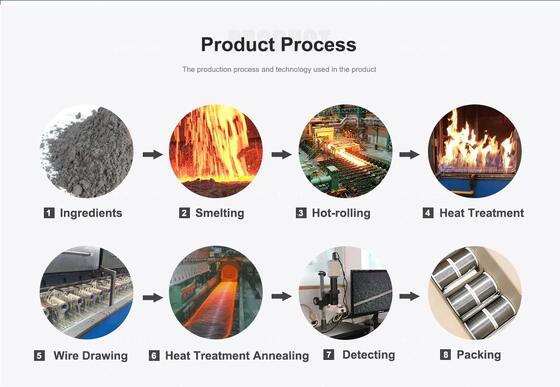
A: Our precision diamond drawing line can draw 6J22 wire down to an ultra-fine diameter of 0.018 mm (18 μm) with uniform mechanical strength and defect-free surface finish.
A: MOQ is dynamically configured based on wire gauge and spooling requirements. For ultra-fine gauges (<0.05 mm), order quantities start from individual precision spools (approx. 0.5 kg to 2 kg) to support prototyping and batch validation.
A: All fine wires are precision-wound on dynamic balanced spools (such as DIN 80, DIN 100, or customized reels) with regulated traverse pitch and tension, sealed in nitrogen-purged moisture-barrier packaging to guarantee smooth, high-speed payoff.


 english
 français
 Deutsch
 Italiano
 Русский
 Español
 português
 Nederlandse
 ελληνικά
 日本語
 한국
 中文
 العربية
 हिन्दी
 Türkçe
 indonesia
 tiếng Việt
 ไทย
 বাংলা
 فارسی
 polski