5s
+1
Submission successful!

|
| Brand Name: | DLX |
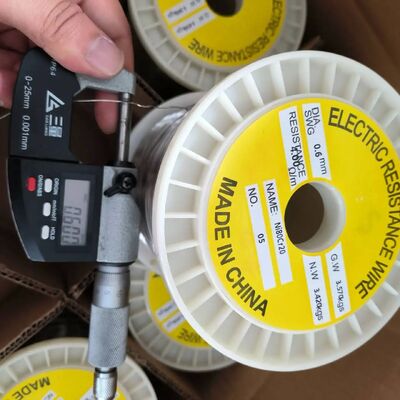
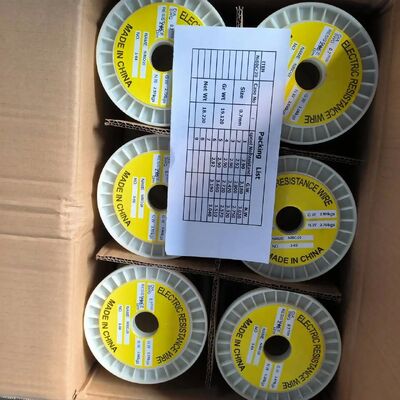
| Model Number: | Nichrome Wire Cr20Ni80 |
| MOQ: | 10kg |
| Payment Terms: | L/C,D/A,D/P,T/T,Western Union |
| Supply Ability: | 500 tons per month |
As the world transitions to cleaner energy sources, hydrogen production through water electrolysis has emerged as a key player in the global quest for sustainable energy solutions. Electrolysis, which involves splitting water molecules into hydrogen and oxygen using electricity, is highly reliant on the materials used in the electrodes. Cr20Ni80 Nichrome Wire, an alloy composed of 20% chromium and 80% nickel, is one such material that has proven to be indispensable in ensuring efficient, long-lasting hydrogen production. At DLX, we offer premium Cr20Ni80 Nichrome Wire that guarantees reliability and performance for hydrogen electrolysis applications, both at industrial and experimental scales.
The Cr20Ni80 Nichrome Wire is a high-performance alloy that offers excellent resistance to corrosion, superior electrical conductivity, and high-temperature stability. These properties make it an ideal material for electrolytic hydrogen production, where the electrodes are exposed to harsh electrolytic environments, high currents, and extreme temperatures.
In water electrolysis systems, the Cr20Ni80 Nichrome Wire is typically used for the electrode material that conducts electricity during the electrolysis process. Its ability to resist corrosion, even in highly alkaline and acidic electrolytes, ensures that the system remains efficient and durable over long operational periods.
Whether used in large-scale industrial electrolysis plants or small-scale experimental setups, DLX's Cr20Ni80 Nichrome Wire provides the optimal combination of performance and reliability for hydrogen generation.
| Performance material | Cr10Ni90 | Cr20Ni80 | Cr30Ni70 | Cr15Ni60 | Cr20Ni35 | Cr20Ni30 |
|---|---|---|---|---|---|---|
| Ni | 90 | Rest | Rest | 55.0~61.0 | 34.0~37.0 | 30.0~34.0 |
| Cr | 10 | 20.0~23.0 | 28.0~31.0 | 15.0~18.0 | 18.0~21.0 | 18.0~21.0 |
| Fe | ≤1.0 | ≤1.0 | Rest | Rest | Rest | |
| Maximum temperature℃ | 1300 | 1200 | 1250 | 1150 | 1100 | 1100 |
| Melting point ℃ | 1400 | 1400 | 1380 | 1390 | 1390 | 1390 |
| Density g/cm³ | 8.7 | 8.4 | 8.1 | 8.2 | 7.9 | 7.9 |
| Resistivity(μΩ*m,20℃) | 1.09±0.05 | 1.18±0.05 | 1.12±0.05 | 1.00±0.05 | 1.04±0.05 | |
| Elongation at rupture | ≥20 | ≥20 | ≥20 | ≥20 | ≥20 | ≥20 |
| Specific heat(J/g.℃) | 0.44 | 0.44 | 0.44 | 0.44 | 0.44 | 0.44 |
| Thermal conductivity(KJ/m.h℃) | 60.3 | 45.2 | 45.2 | 43.8 | 43.8 | |
| Coefficient of linear expansion (20~1000℃) | 18 | 17 | 17 | 19 | 19 | |
| Micrographic structure | Austenite | Austenite | Austenite | Austenite | Austenite | |
| Magnetic properties | Nonmagnetic | Nonmagnetic | Nonmagnetic | Nonmagnetic | Nonmagnetic |
As the world moves towards decarbonization, hydrogen is rapidly becoming a key component of the global energy mix. Hydrogen's versatility as a clean fuel makes it ideal for various applications, including transportation, energy storage, and industrial processes. The shift to hydrogen is driving the growth of hydrogen production technologies, especially water electrolysis, which is a clean method for producing hydrogen from water.
Electrolysis systems are expected to play a pivotal role in scaling up hydrogen production, especially as governments and industries invest heavily in green hydrogen infrastructure. As demand grows, the need for materials that can operate efficiently and reliably in electrolysis systems will increase. This is where materials like Cr20Ni80 Nichrome Wire come into play. With its combination of high conductivity, corrosion resistance, and mechanical strength, Cr20Ni80 is perfectly suited for the growing hydrogen production industry.
DLX's Cr20Ni80 Nichrome Wire is the ideal choice for reliable, long-term performance in hydrogen electrolysis applications. With its excellent corrosion resistance, high conductivity, and durability, this wire ensures that your electrolysis system operates efficiently, whether for industrial-scale production or experimental research.


 english
 français
 Deutsch
 Italiano
 Русский
 Español
 português
 Nederlandse
 ελληνικά
 日本語
日本語
 한국
한국
 中文
中文
 العربية
 हिन्दी
 Türkçe
 indonesia
 tiếng Việt
 ไทย
ไทย
 বাংলা
বাংলা
 فارسی
فارسی
 polski