
5s
+1
Submission successful!
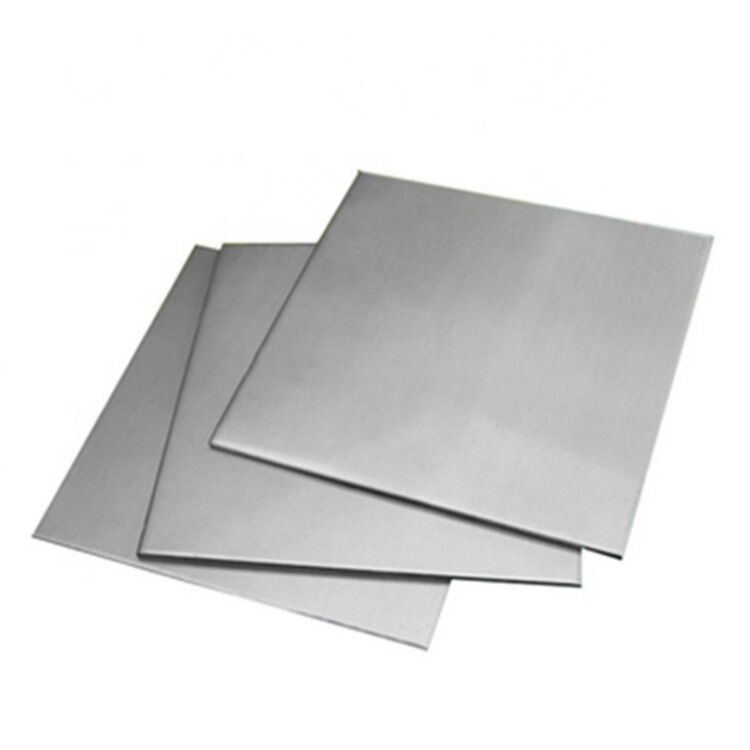
|
| Brand Name: | DLX |
| Model Number: | incoloy 800H |
| MOQ: | 5kg |
| Payment Terms: | L/C,D/A,D/P,T/T,VTB |
| Supply Ability: | 1200 tons per month |
Commercial heat treatment environments, carburizing furnaces, and sealed quench systems subject internal carriers to violent temperature swings and intense thermal stresses. Standard heat-resistant steels frequently fail from thermal fatigue cracking, weld boundary embrittlement, and permanent distortion. Thermal fatigue resistant Incoloy 800H sheet addresses these operating challenges through a high nickel-chromium base augmented by strictly controlled carbon and titanium-aluminum micro-alloying, ensuring predictable thermal expansion behavior and long-term geometric integrity.
Produced through precise vacuum refining and high-temperature solution heat treatment, our thermal fatigue resistant Incoloy 800H sheet maintains a controlled coarse austenitic grain structure (Grain Size 5 or coarser). This specialized metallurgical profile maximizes high-temperature creep-rupture strength and high stress endurance up to 1100°C (2010°F), preventing basket sag under heavy mechanical payloads while providing excellent formability and weldability for complex fabrications.

| Parameter | Standard Value / Specification Range |
|---|---|
| Material Grade | Incoloy 800H / High-Carbon Nickel-Iron-Chromium Solution Treated Alloy |
| Thickness Range | 2.0 mm to 25.0 mm (Precision hot rolled / cold rolled & descaled) |
| Width & Length | Width up to 2000 mm; Length up to 6000 mm (Custom cut-to-size available) |
| Delivery Condition | Solution Annealed (Coarse grain controlled, descaled / pickled finish) |
| Chemical Composition (Ni) | 30.0% - 35.0% (Provides stable austenitic matrix & thermal fatigue resistance) |
| Chemical Composition (Cr) | 19.0% - 23.0% (Imparts high-temperature oxidation & carburization resistance) |
| Chemical Composition (Fe) | Balance |
| Chemical Composition (C) | 0.05% - 0.10% (Tightly controlled for optimum creep strength) |
| Chemical Composition (Al + Ti) | 0.85% - 1.20% (Maintains precipitation stability & rupture life) |
| Density | 7.94 g/cm³ |
| Melting Point Range | 1357°C to 1385°C |
| Maximum Service Temperature | Up to 1100°C (2010°F) in continuous thermal processing |
| Tensile Strength (Room Temp) | ≥ 450 MPa |
| Yield Strength (0.2% Offset) | ≥ 180 MPa |
| Elongation (A50mm) | ≥ 35% |
| Solution Annealed Hardness | 130 - 180 HBW (Optimal for cold forming and welding) |
Withstands rapid cycling between 1000°C furnace heat and ambient liquid quench baths. The microstructurally stable matrix dissipates localized thermal stress, preventing corner cracking and surface micro-fissures in fabricated heat treating baskets.
Tightly controlled carbon content and solution annealing deliver superior load-bearing capacity above 600°C. Resists bottom sagging and structural distortion under heavy payloads of automotive gears and industrial forgings.
Forms a tightly adherent, self-healing chromium oxide layer that blocks carbon diffusion and high-temperature scaling. Prevents embrittlement and surface spalling in endothermic, vacuum, and carbonitriding atmospheres.
Offers smooth cold shearing, precision laser cutting, and press-brake bending. Ensures crack-free TIG/MIG welding and basket assembly with standard high-nickel consumables, requiring no pre-heating or post-weld stress relief.
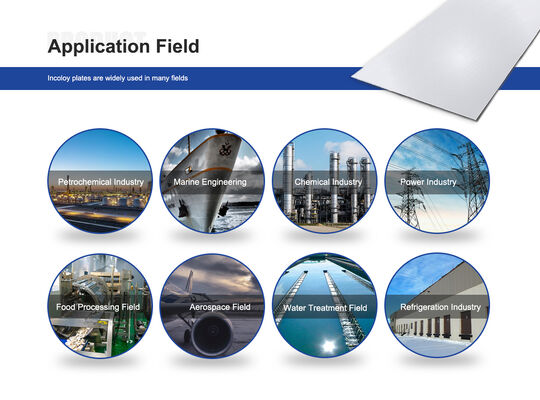
Serves as the primary structural plate material for stacking heat treatment baskets, furnace trays, corrugated liners, quenching grids, and modular carrier frames operating in continuous and batch industrial furnaces.
Applied in industrial furnace muffles, radiant tubes, retort liners, damper doors, and structural support beams where prolonged high-temperature exposure and cyclic thermal stress are continuous.
Utilized for hydrocarbon cracking furnace components, pigtail support assemblies, high-temperature duct liners, and catalyst containment baskets requiring thermal fatigue and corrosion endurance.
Deployed in steam superheater tube supports, thermal baffle plates, industrial incinerator hardware, and gas turbine exhaust components subjected to high-temperature thermal cycling and mechanical vibration.
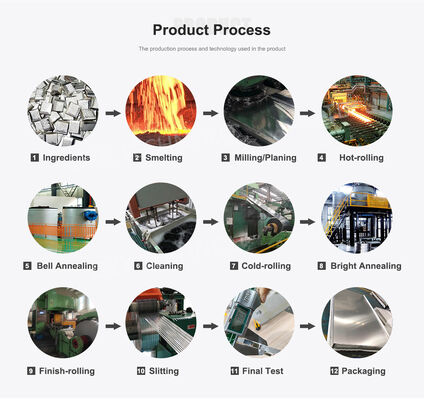
DLX operates complete in-house production facilities encompassing vacuum induction melting (VIM), electroslag remelting (ESR), heavy-duty hot rolling, and precision cold rolling. This complete process chain guarantees ultra-clean metallurgy, low residual trace elements, and batch-to-batch chemical uniformity.
Equipped with high-precision fiber laser cutting tables, waterjet cutting systems, and heavy-duty plate leveling machines. DLX provides cut-to-drawing sheet components, beveled welding edges, perforated basket side plates, and ready-to-assemble structural parts tailored to customer blueprints.
With a centralized production capacity of 1,200 tons per month across high-temperature nickel and iron-base alloy product lines, DLX supports dynamic minimum order quantities based on plate thickness, custom cut dimensions, and project schedules to accommodate both specialized engineering prototypes and high-volume commercial production.
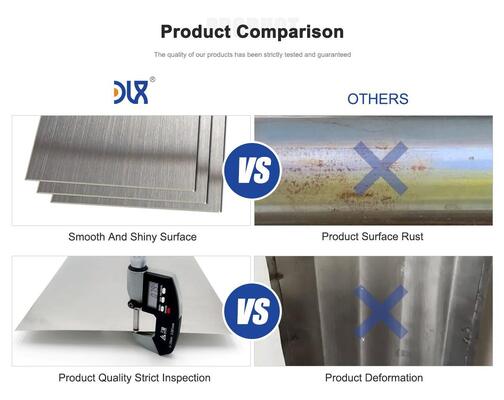
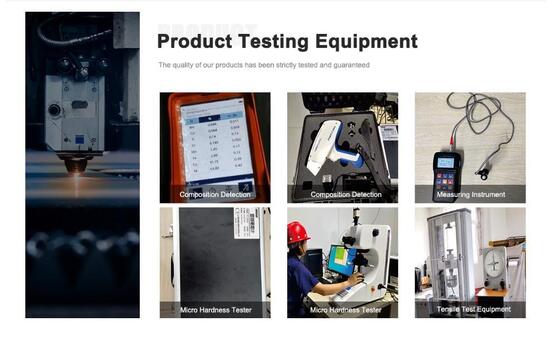
Every sheet lot undergoes rigorous verification, including 100% positive material identification (PMI), automated ultrasonic testing (UT), elevated temperature tensile tests, optical grain size confirmation, and surface dimensional laser scanning before dispatch.
Standard 304 and 310S stainless steels suffer rapid carbide sensitization, thermal fatigue cracking, and severe sagging under repeated quenching. Incoloy 800H features a higher Ni-Cr matrix stabilized with controlled carbon, aluminum, and titanium, tripling basket service life by eliminating thermal shock distortion and grain-boundary embrittlement.
All sheets undergo continuous solution annealing above 1150°C with controlled rapid cooling. This develops a uniform coarse austenitic grain structure (Grain Size 5 or coarser), ensuring maximum elevated-temperature creep-rupture strength and high fatigue endurance.
Yes. We provide full CNC pre-fabrication services, including precision laser cutting, plasma cutting, oil-drainage hole perforation, edge beveling, and press-brake forming according to your engineering CAD drawings.
Each batch includes a comprehensive Certified Material Test Report (MTR) covering spectral chemical composition, room and elevated-temperature mechanical properties, hardness, grain size verification, and non-destructive testing (NDT) results.


 english
 français
 Deutsch
 Italiano
 Русский
 Español
 português
 Nederlandse
 ελληνικά
 日本語
 한국
 中文
 العربية
 हिन्दी
 Türkçe
 indonesia
 tiếng Việt
 ไทย
 বাংলা
 فارسی
 polski