5s
+1
Submission successful!

|
| Brand Name: | DLX |
| Model Number: | Nitinol Tube |
| MOQ: | 5kg |
| Payment Terms: | D/A,L/C,D/P,T/T,Western Union |
| Supply Ability: | 500 tons per month |
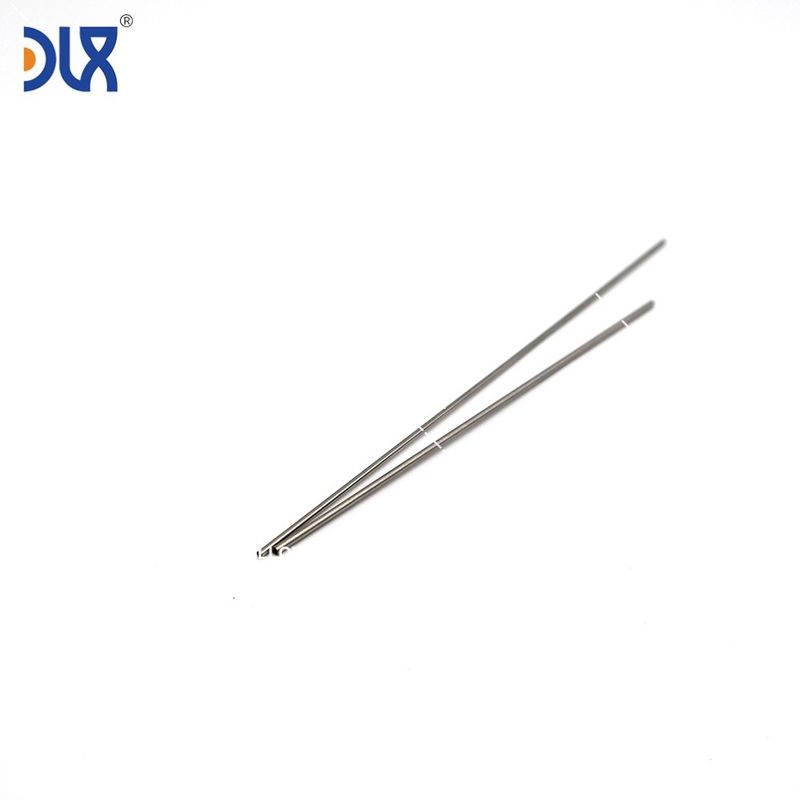
Superelastic Nitinol tubing is one of the most advanced functional materials available today, combining unique mechanical properties with exceptional reliability in demanding environments. At DLX, we manufacture high-quality Nitinol tubing using precise composition control and advanced processing techniques to ensure consistent superelastic performance and long-term stability.
Nitinol, a nickel-titanium alloy, is widely known for its two key characteristics: superelasticity and shape memory effect. Superelasticity allows the material to undergo large deformation and return to its original shape without permanent damage, while the shape memory effect enables it to recover a pre-defined form when exposed to a specific temperature.
Our superelastic Nitinol tubing is engineered specifically for industries that demand flexibility, durability, and precision, including medical devices, aerospace systems, robotics, and high-end industrial applications.
DLX Nitinol tubing is carefully produced with a near-equiatomic ratio of nickel and titanium, typically around 55% Ni and 45% Ti. This composition is critical for achieving optimal transformation temperatures and mechanical properties.
Key features include:
Superelastic Nitinol tubing is widely used in minimally invasive medical devices. Its flexibility allows navigation through complex anatomical pathways without causing trauma.
Typical applications include:
Its ability to return to its original shape ensures reliability during procedures and long-term implantation.
In aerospace, weight reduction and durability are critical. Nitinol tubing provides both.
Applications include:
The material performs reliably under extreme temperature variations and mechanical stress.
For high-precision systems, Nitinol tubing offers unique advantages:
Its responsiveness and repeatability make it ideal for next-generation smart systems.
Many conventional alloys fail under cyclic stress, leading to cracks and eventual failure.
Solution:
DLX Nitinol tubing provides superior fatigue resistance, maintaining performance even after millions of cycles. This makes it especially valuable in dynamic applications like stents and robotic joints.
Traditional materials struggle to maintain integrity when bent into tight or complex shapes.
Solution:
Thanks to its superelasticity, Nitinol tubing can be deformed significantly and still return to its original form, allowing designers more freedom without compromising durability.
Exposure to bodily fluids or extreme environments can degrade standard materials.
Solution:
DLX Nitinol tubing forms a stable oxide layer that enhances corrosion resistance, making it suitable for both medical and aerospace environments.
Industries often face a compromise between lightweight design and structural strength.
Solution:
Nitinol offers a high strength-to-weight ratio, enabling lighter designs without sacrificing mechanical performance.
Understanding the technical parameters of Nitinol tubing is essential for selecting the right product:
At DLX, we provide precise control over these parameters to meet specific application needs.
| Parameter | DLX Nitinol Tubing | Standard Alloy Tubing |
|---|---|---|
| Material Composition | Ni-Ti (55/45) | Stainless Steel / Others |
| Recoverable Strain | Up to 8% | <1% |
| Tensile Strength | 900–1400 MPa | 400–800 MPa |
| Fatigue Resistance | Excellent | Moderate |
| Corrosion Resistance | High | Medium |
| Biocompatibility | ممتاز | Limited |
| Density | Low | Higher |
| Flexibility | Very High | Low |
At DLX, we focus on delivering not just materials, but solutions. Our advantages include:
We work closely with customers to understand their technical requirements and provide tailored Nitinol tubing solutions that enhance product performance and reduce long-term costs.
The demand for superelastic Nitinol tubing continues to grow rapidly across multiple industries:
DLX is continuously investing in R&D to stay ahead of these trends and provide cutting-edge solutions.
Our 12,000㎡ factory is equipped with complete capabilities for research, production, testing, and packaging. We strictly adhere to ISO 9001 standards in our production processes, with an annual output of 1,200 tons. This ensures that we meet both quantity and quality demands. Furthermore, all products undergo rigorous simulated environment testing including high temperature, high pressure, and corrosion tests before being dispatched, ensuring they meet customer specifications.For all our clients, we offer timely and multilingual after-sales support and technical consulting, helping you resolve any issues swiftly and efficiently.
Client Visits
Building Stronger Partnerships
We support all kinds of testing:
It is mainly used in medical devices, aerospace components, and precision engineering applications where flexibility and durability are critical.
Superelasticity allows the material to undergo large deformation and return to its original shape without permanent damage due to phase transformation.
Yes, it is biocompatible and widely used in implants and surgical devices.
Yes, we offer full customization for diameter, wall thickness, and length.
It can be customized, but commonly ranges between -20°C to 100°C depending on application.
Nitinol offers higher flexibility, better fatigue resistance, and superelastic properties, which stainless steel does not have.
We provide polished, oxidized, and special-treated surfaces depending on requirements.
Medical, aerospace, robotics, and advanced manufacturing industries benefit the most.


 english
 français
 Deutsch
 Italiano
 Русский
 Español
 português
 Nederlandse
 ελληνικά
 日本語
日本語
 한국
한국
 中文
中文
 العربية
 हिन्दी
 Türkçe
 indonesia
 tiếng Việt
 ไทย
ไทย
 বাংলা
বাংলা
 فارسی
فارسی
 polski