
5s
+1
Submission successful!
|
| Brand Name: | DLX |
| Model Number: | Inconel 600 |
| MOQ: | 5 |
| Payment Terms: | L/C,T/T,Western Union |
| Supply Ability: | 500 tons per month |
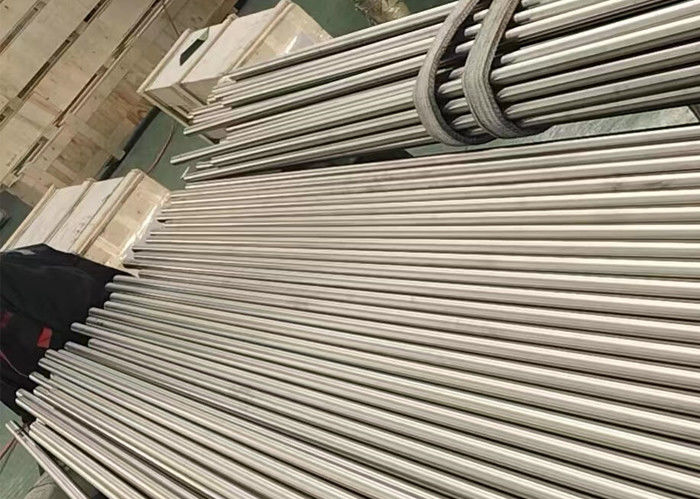
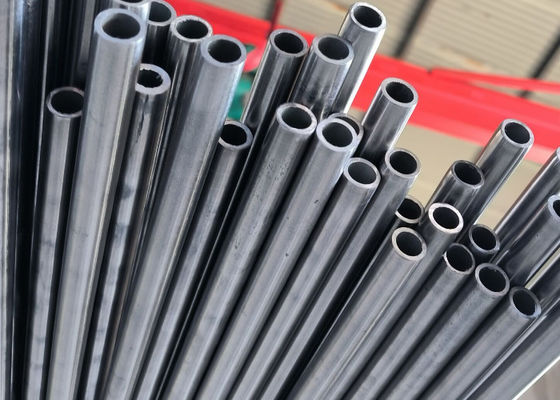
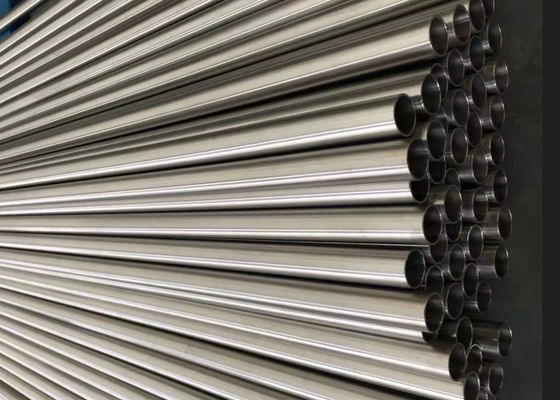
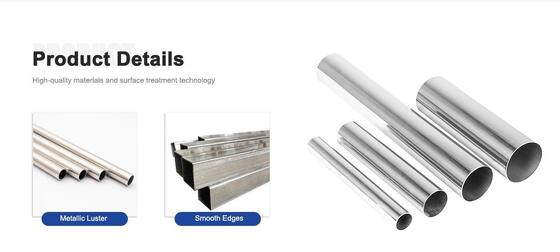
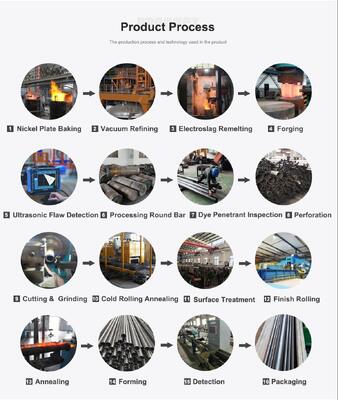
With a melting range of 1354–1413°C and reliable service performance to 1095°C, Inconel 600 tube from Changzhou DLX Alloy Co., Ltd. bridges the gap between stainless steel — which loses strength and oxidation resistance above 800°C — and more expensive nickel superalloys. The high nickel content (≥72%) gives it an austenitic structure that is immune to chloride stress corrosion cracking, while the chromium content forms a tenacious protective oxide scale that regenerates faster than it spalls under thermal cycling. At DLX, our Inconel 600 tube production has been refined over two decades of nickel alloy specialization — cold drawn from solution-annealed hollows with precisely controlled reduction ratios and bright annealed to ASTM grain size specifications. Full EN 10204 3.1 MTC with eddy current testing on every length.

| Temperature Zone | Inconel 600 Behavior | Stainless Steel at Same Temperature |
|---|---|---|
| 300–500°C | Full strength retention — no sensitization. Tensile ≥550 MPa maintained. Cr₂O₃ scale forming and stable. | 304/316 begin carbide precipitation at grain boundaries (sensitization). Intergranular corrosion risk in service. |
| 500–800°C | Creep strength maintained through solid-solution nickel matrix. Oxide scale adherent — no spalling through thermal cycles. | 304/316: significant strength loss. 310/321: better oxidation but susceptible to sigma phase embrittlement after long exposure. |
| 800–1000°C | Reliable oxidation resistance. Carburization resistance from high nickel content — carbon diffusion rate ~10* slower than in iron-based alloys. | Most stainless grades scale rapidly. 310/309 survive but with heavy oxide and potential for carburization embrittlement. |
| 1000–1095°C | Maximum continuous service. Requires design allowance for creep. Oxide scale protective but requires consideration for dimensional change. | No stainless grade rated for continuous service. Creep life measured in hours, not years. |
| 1354–1413°C | Solidus–liquidus melting range. Design margin: minimum 259°C between max service (1095°C) and initial melting (1354°C). | Stainless melting begins at ~1400°C but loses all structural strength below melting point — incipient melting at grain boundaries possible above 1250°C. |
| Application | Operating Conditions | Why Inconel 600 Tube |
|---|---|---|
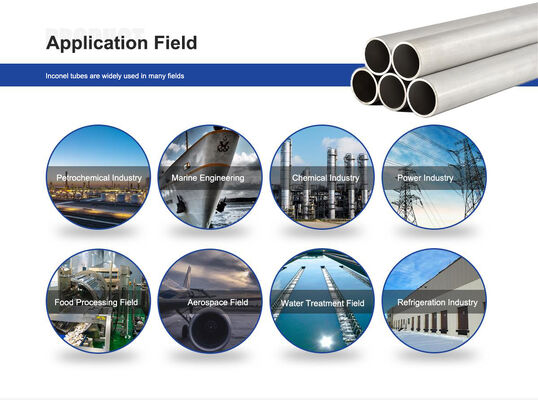
| Ethylene furnace tubes | 800–1050°C, hydrocarbon gas + steam, carburizing atmosphere | High nickel content resists carbon diffusion into the tube wall — no carburization embrittlement that leads to premature rupture in stainless tubes |
| Heat treating furnace muffles | 900–1095°C, oxidizing or neutral atmosphere, thermal cycling | Oxide scale regenerates faster than it spalls. No progressive wall thinning from oxidation over years of cycling |
| Caustic soda evaporator tubes | 200–400°C, concentrated NaOH (50–70%) | Nickel is inherently resistant to caustic attack — no stress corrosion cracking in caustic environments where stainless fails in hours |
| Nuclear steam generator tubing | 280–330°C, primary water chemistry, 40+ year design life | Proven 40-year service record in PWR steam generators. Low cobalt variant available for primary circuit applications |
| Thermocouple protection tubes | 800–1100°C, oxidizing or reducing atmosphere | Gas-tight, oxidation-resistant, and non-contaminating to the thermocouple junction. Withstands direct flame impingement in combustion monitoring |
| Food processing heat exchangers | 100–200°C, acidic food products, CIP cleaning chemicals | Resists both product-side organic acids and cleaning-side caustic and acid CIP cycles without pitting or chloride SCC |
Inconel 600 was one of the first nickel-chromium alloys we mastered at DLX. Unlike newer grades like 625 — which rely on molybdenum and niobium for their properties — 600 is metallurgically simpler: nickel for structure and corrosion resistance, chromium for oxidation protection, and iron for economy. But simple chemistry does not mean simple processing. The narrow window between full recrystallization and excessive grain growth during annealing, the tendency toward work hardening during cold drawing, and the requirement for a clean, bright surface without pickling damage — these are where twenty years of focused nickel alloy experience separate a usable tube from one that fails inspection.
Since 2002, our team has drawn Inconel 600 tube for furnace manufacturers in Europe, chemical plant operators in the Middle East, and heat exchanger builders across Asia. The feedback loop from thousands of tons delivered has tightened our process parameters to a level of repeatability that a general tube mill — running carbon steel one shift and nickel alloy the next — cannot match.
Source: DLX Alloy product catalog. EN 10204 3.1 MTC with full composition included on every shipment.
| Element | Ni | Cr | Fe | C | Mn | Si | Cu | S |
|---|---|---|---|---|---|---|---|---|
| % | ≥72.0 | 14.0–17.0 | 6.0–10.0 | ≤0.15 | ≤1.0 | ≤0.5 | ≤0.5 | ≤0.015 |
| Property | ASTM B163 / B167 |
|---|---|
| Tensile Strength | ≥550 MPa |
| Yield Strength (0.2% offset) | ≥240 MPa |
| Elongation in 50mm | ≥30% |
| Hardness | ≤92 HRB |
| Property | Value |
|---|---|
| Melting Range | 1354–1413°C |
| Density | 8.47 g/cm³ |
| Maximum Continuous Service | 1095°C |
| Thermal Conductivity (20°C) | 14.9 W/m·K |
| Mean CTE (20–100°C) | 13.3 * 10⁻⁶ /°C |
| Tube Type | Seamless — ASTM B163 (condenser & heat exchanger), ASTM B167 (general purpose) |
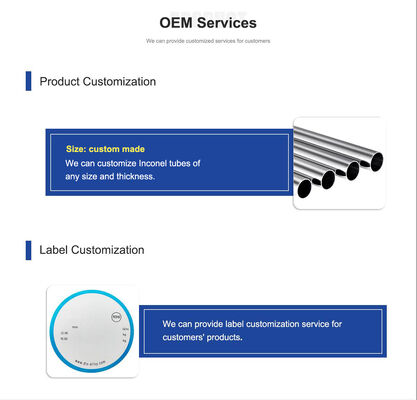
| OD Range | 6.0–76.2 mm; other sizes on request |
| Wall Thickness | 0.71 mm minimum depending on OD |
| Length | Straight random (up to 12m) or cut-to-length |
| Surface Finish | Bright annealed (standard), pickled |
| Heat Treatment | Solution annealed 1010–1050°C, rapid cooled |
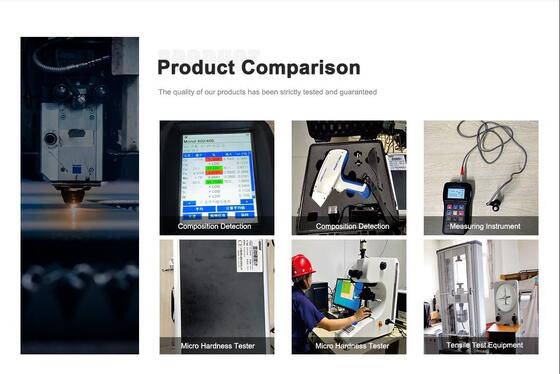
| Testing | Eddy current (100% per ASTM E426), PMI, tensile, flattening, flaring, grain size |
| Stage | What We Check | What We Prevent |
|---|---|---|
| Hollow | PMI + OES — verifying Ni ≥72%, Cr in range, carbon ≤0.15% | Off-spec nickel — the single most common cause of Inconel 600 failing to meet ASTM minimums. Caught before any processing cost is added. |
| Cold drawing | OD & wall per pass; reduction ratio vs target | Over-reduction in a single pass — creates residual stress that causes distortion during annealing. Corrected by adjusting pass schedule in real time. |
| Annealing | Furnace profile — soak time at 1010–1050°C, cooling rate | Under-annealing: incomplete recrystallization = low elongation = tube cracks during U-bending. Over-annealing: excessive grain growth = low tensile = leaks under pressure. |
| NDT | 100% eddy current per ASTM E426; hydrotest if specified | A missed longitudinal defect in a furnace tube becomes a through-wall leak at 1000°C — detected and scrapped before it leaves our facility. |
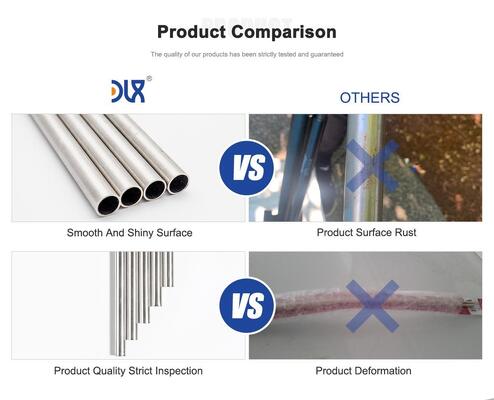
| Documentation | EN 10204 3.1 MTC + ECT report + grain size cert | Incomplete documentation that fails your customer's incoming inspection. Every report pre-verified before the tube is packed. |
Third-party witnessing by SGS, BV, or TÜV available. Full hollow-to-tube traceability on every shipment.
| Tube protection | Plastic end caps on every tube. VCI anti-corrosion paper wrap. For small-OD thin-wall tube: individual sleeves to prevent transit ovality. |
| Crating | Seaworthy plywood crates with steel edge reinforcement. Bundles steel-strapped to internal crate framing — tubes cannot shift during ocean transit. |
| Identification | Grade 600, heat number, OD * wall, DLX traceability code stenciled on each tube and on the crate exterior. |
| MOQ | 50m per size. Trial orders for first-time buyers welcomed. |
| Lead Time | 3–7 days for stock sizes; 20–35 days for custom production. |
| Shipping | Air (DHL, FedEx), sea (FCL/LCL), or your forwarder. |
| Payment | T/T, L/C at sight |


 english
 français
 Deutsch
 Italiano
 Русский
 Español
 português
 Nederlandse
 ελληνικά
 日本語
日本語
 한국
한국
 中文
中文
 العربية
 हिन्दी
 Türkçe
 indonesia
 tiếng Việt
 ไทย
ไทย
 বাংলা
বাংলা
 فارسی
فارسی
 polski